
Stonefly (Plecoptera): freshwater insects of cold, running water
Stoneflies (order Plecoptera) are aquatic insects whose nymphs live in well-oxygenated streams and rivers. About 3,500 species exist worldwide; they are important bioindicators and have an ancient fossil record.
Overview
Stoneflies, belonging to the order Plecoptera, are a group of mostly aquatic insects whose immature stages live in flowing fresh water and whose adults are terrestrial. Roughly 3,500 species have been described worldwide, and new species continue to be recorded. Stoneflies are absent from Antarctica and are most diverse in cool, well-oxygenated streams and rivers where turbulence keeps oxygen levels high and reduces pollution sensitivity.
Image gallery
10 Images




Characteristics
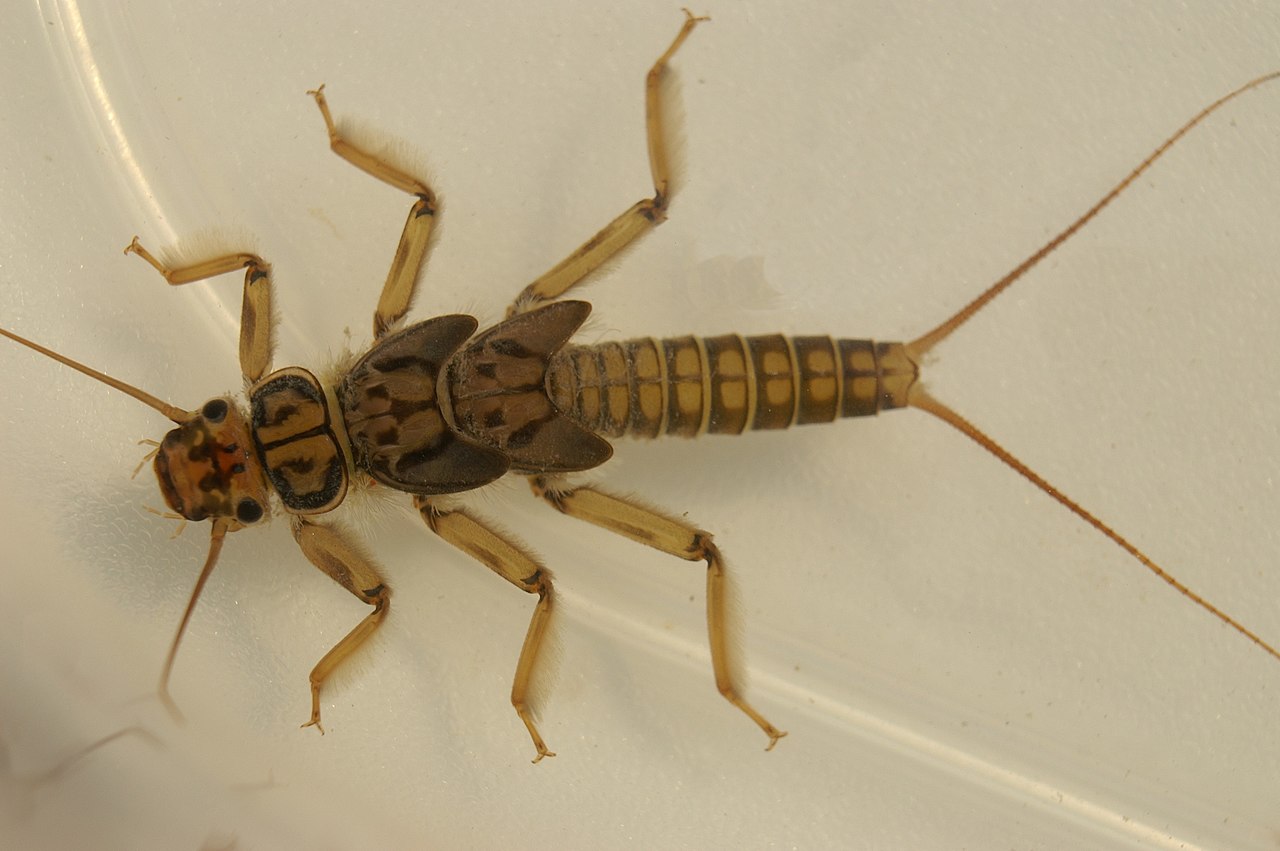
Stonefly nymphs (often called larvae in older literature) are elongate and dorsoventrally flattened, with gills often on the thorax or at the base of the legs. They typically possess claws on their legs that help them cling to stones and vegetation in fast currents. Many species require cold water because oxygen dissolves more readily at lower temperatures; warm, stagnant water is generally unsuitable. Adult stoneflies have two pairs of membranous wings that fold flat over the abdomen at rest and long antennae. Adults are poor fliers compared with other insects and are often found near the streams where they developed.
Life cycle and ecology
Stoneflies undergo incomplete metamorphosis (hemimetabolous development): eggs hatch into aquatic nymphs that pass through a series of molts before emerging as terrestrial adults. For most species the nymphal stage lasts months to a year, but some genera, such as Pteronarcys in North America, have multi-year nymphal periods. Nymphs are important grazers and predators in stream food webs and form prey for fish and other aquatic predators. Because many species need clean, oxygen-rich water, their presence, diversity, and abundance are widely used in freshwater biomonitoring and water-quality assessments.
Fossil history and evolution
Stoneflies are considered one of the more primitive orders within the Neoptera (insects that can fold their wings over the abdomen). Close relatives or stem groups related to Plecoptera are known from Carboniferous and Lower Permian deposits, while unequivocal stonefly fossils appear slightly later in the fossil record. The long lineage of plecopteran-like insects highlights their longstanding association with freshwater habitats.
Human relevance and conservation
Stoneflies have practical importance beyond ecology. Anglers value certain stonefly species as key food items for trout, and artificial fly patterns often imitate stonefly nymphs and adults. Because many species are sensitive to pollution, warming, and changes in flow, declines in stonefly diversity can signal degraded watershed health. Conservation of headwater streams and riparian zones helps protect stonefly populations and the broader freshwater communities they support.
Identification notes and distinctions
- Adults: two pairs of wings folded flat over the back, long antennae, and a generally weak flight.
- Nymphs: claws on the legs for gripping, gills present (location and form vary by family), and streamlined bodies adapted to flowing water.
- Biological indicator: high sensitivity to low oxygen and pollutants makes many species useful in stream health indices.
Further information
For more on taxonomy, life history, and distribution see the following resources:
- General overview of aquatic insects
- Order Plecoptera summary
- Distribution notes (Antarctic absence)
- Neopteran relationships
- Carboniferous insect records
- Lower Permian fossils
- Geological time context
- Stonefly fossil evidence
- Nymph anatomy and ecology
- Leg claw structure
- Adaptations for flowing water
- Stream habitat requirements
- Riverine environments
- Oxygen saturation effects
- Turbulent water habitats
- Rapids and riffles
- Adult wing posture
- Pteronarcys and long-lived nymphs
Related articles
Author
AlegsaOnline.com Stonefly (Plecoptera): freshwater insects of cold, running water Leandro Alegsa
URL: https://en.alegsaonline.com/art/94051