
Ozone (O3): properties, atmospheric role, health effects and uses
Ozone is a reactive allotrope of oxygen found in the stratosphere as a protective layer and in the troposphere as a pollutant. This article explains its chemistry, formation, effects, uses and measurement.
Overview
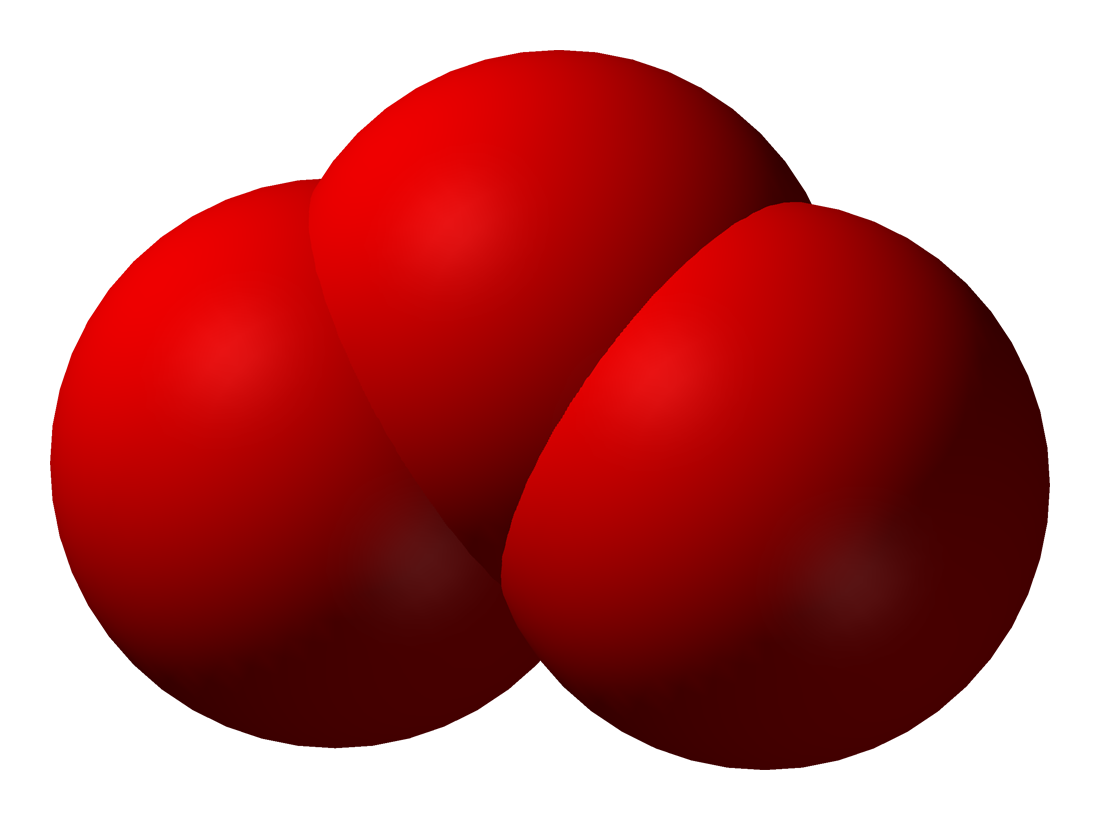
Ozone is a triatomic molecule of oxygen with the formula O3. It is an allotrope of oxygen that is chemically distinct from the diatomic oxygen (O2) that all aerobic life depends on. In its standard state ozone is a pale blue gas with a characteristic sharp odor and a strong tendency to react with other substances. Because of its high oxidation potential, ozone is both useful and hazardous depending on its location in the atmosphere.
Image gallery
10 Images





Formation and chemical characteristics
Ozone forms when a free oxygen atom (O) combines with molecular oxygen (O2). Free oxygen atoms are produced when ultraviolet (UV) light dissociates O2 molecules, and they also arise during electrical discharges such as lightning. In the lower atmosphere (the troposphere) ozone can also be produced by photochemical reactions that involve nitrogen oxides (NOx) and volatile organic compounds (VOCs) under sunlight. Ozone is unstable compared with O2 and readily decomposes back to oxygen; its reactivity makes it a powerful oxidizing agent used in industry.
Atmospheric roles and distribution
Ozone occurs throughout the atmosphere in varying concentrations. Most attention focuses on two contrasting roles. In the stratosphere — typically between about 10 km and 50 km altitude — ozone is concentrated in what is commonly called the ozone layer. This layer absorbs a portion of the Sun's biologically damaging ultraviolet radiation, helping to protect ecosystems and human health at Earth's surface. By contrast, ozone in the lowest layer of the atmosphere (the troposphere) acts as an air pollutant and a greenhouse gas, contributing to smog and climate forcing.
Health, ecological and climatic effects
When present near ground level, ozone is harmful to people, animals and plants. Short-term exposure can irritate the eyes, nose and throat and reduce lung function; repeated or high exposures can exacerbate respiratory conditions such as asthma and, in extreme cases, cause more serious pulmonary injury. Ecologically, ozone damages leaves and reduces agricultural yields and forest health. Because ozone absorbs infrared and ultraviolet radiation, changes in ozone distribution also affect the Earth's radiative balance and climate.
Ozone depletion and recovery
Human-made halogenated compounds — notably chlorofluorocarbons (CFCs) and similar chemicals — catalyze the destruction of stratospheric ozone by releasing reactive chlorine and bromine atoms. This led to dramatic seasonal depletion of stratospheric ozone over polar regions in the late 20th century, widely referred to as the "ozone hole." International action through agreements such as the Montreal Protocol has sharply reduced emissions of many ozone-depleting substances, and the ozone layer has shown signs of gradual recovery, although full restoration occurs over decades and remains subject to complex chemical and climate interactions.
Uses, measurement and regulation
Ozone's oxidizing power is harnessed for water treatment, disinfection, odor control and certain industrial oxidation processes. It is applied to purify drinking water, treat wastewater and sterilize equipment, but its use must be carefully controlled because of toxicity. Ozone is monitored by instruments that measure concentration near the surface and by satellite and ground-based techniques that measure column amounts; the Dobson unit is a standard measure of total column ozone. Many countries and organizations set exposure limits and air-quality standards to protect public health and vegetation, and national regulations guide permissible workplace or ambient concentrations.
Distinctions and notable facts
- Beneficial vs harmful: Stratospheric ozone protects life by filtering UV radiation; tropospheric ozone damages health and ecosystems.
- Reactivity: Ozone is a stronger oxidant than O2 and reacts with many organic and inorganic materials.
- Transient nature: Ozone has a short atmospheric lifetime near the surface but can persist longer in the stratosphere depending on conditions.
Further reading and resources
For more information consult scientific and regulatory summaries, monitoring networks and public-health guidance:
Related articles
Author
AlegsaOnline.com Ozone (O3): properties, atmospheric role, health effects and uses Leandro Alegsa
URL: https://en.alegsaonline.com/art/73863
Sources
- encyclopedia.airliquide.com : Ozone · archive.org
- ui.adsabs.harvard.edu : 1914RSPTA.213....1C
- doi.org : 10.1098/rsta.1914.0001
- mfe.govt.nz : "Stratospheric ozone"
- understandingozone.com : "Ozone Safety Limits"