
Ultraviolet (UV) radiation
Ultraviolet radiation is electromagnetic light with wavelengths shorter than visible violet (about 10–400 nm). It has distinctive physical properties, biological effects, practical uses, and safety considerations.
Overview
Ultraviolet (UV) radiation occupies the portion of the electromagnetic spectrum with wavelengths shorter than visible violet light and longer than X-rays. It is commonly abbreviated as UV. UV photons carry more energy than visible photons, and human eyes cannot detect them directly. For a general context on where ultraviolet sits in the spectrum see electromagnetic spectrum. The concept of wavelength is central to describing UV; for more on wavelength and its relationship to frequency consult wavelength.

Image gallery
10 Images




Physical characteristics
Ultraviolet wavelengths are typically given as roughly 10 to 400 nanometers (nm). Because wavelength and frequency are inversely related (ν = c/λ), shorter wavelengths correspond to higher frequencies and greater photon energy. Scientists commonly subdivide UV into bands that reflect differences in origin, interaction with matter, and biological effect:
- UVA (~315–400 nm): closest to visible light; penetrates skin more deeply and is associated with aging and some forms of photochemical reaction.
- UVB (~280–315 nm): more energetic; important in vitamin D synthesis but also causes sunburn and DNA damage.
- UVC (~100–280 nm): highest energy UV reaching into shortwave regions; almost entirely absorbed by Earth's atmosphere under normal conditions and used for germicidal purposes.
- Vacuum ultraviolet (below ~200 nm): strongly absorbed by air and typically studied or used in vacuum systems.
Biological interactions and perception
Although humans cannot see UV, many animals detect it. Insects, some reptiles, amphibians and birds can perceive ultraviolet light and use it for navigation, foraging, and signaling; see examples such as insects, reptiles, salamanders, and small birds. At the molecular level UV photons can break chemical bonds or excite electrons, which explains both useful effects (e.g., sterilization) and harmful ones (e.g., DNA damage). In people, UVB helps catalyze vitamin D production in the skin, while UVA contributes to photoaging and can exacerbate some forms of skin injury.
Sources and atmospheric effects
The Sun is the primary natural source of terrestrial UV. The Earth's atmosphere—notably ozone in the stratosphere—absorbs much of the most harmful shortwave UV (especially UVC and most UVB), so the amount reaching the surface varies with solar angle, latitude, season, and ozone concentration. Artificial sources include mercury-vapor lamps, specialized LEDs, and gas-discharge lamps; these are engineered for applications such as lighting, sterilization, and fluorescence excitation.
Uses and applications
UV radiation has a wide range of practical applications because it interacts strongly with many materials and biological molecules:
- Sterilization and disinfection: UVC lamps are used to inactivate microorganisms in water, air, and on surfaces.
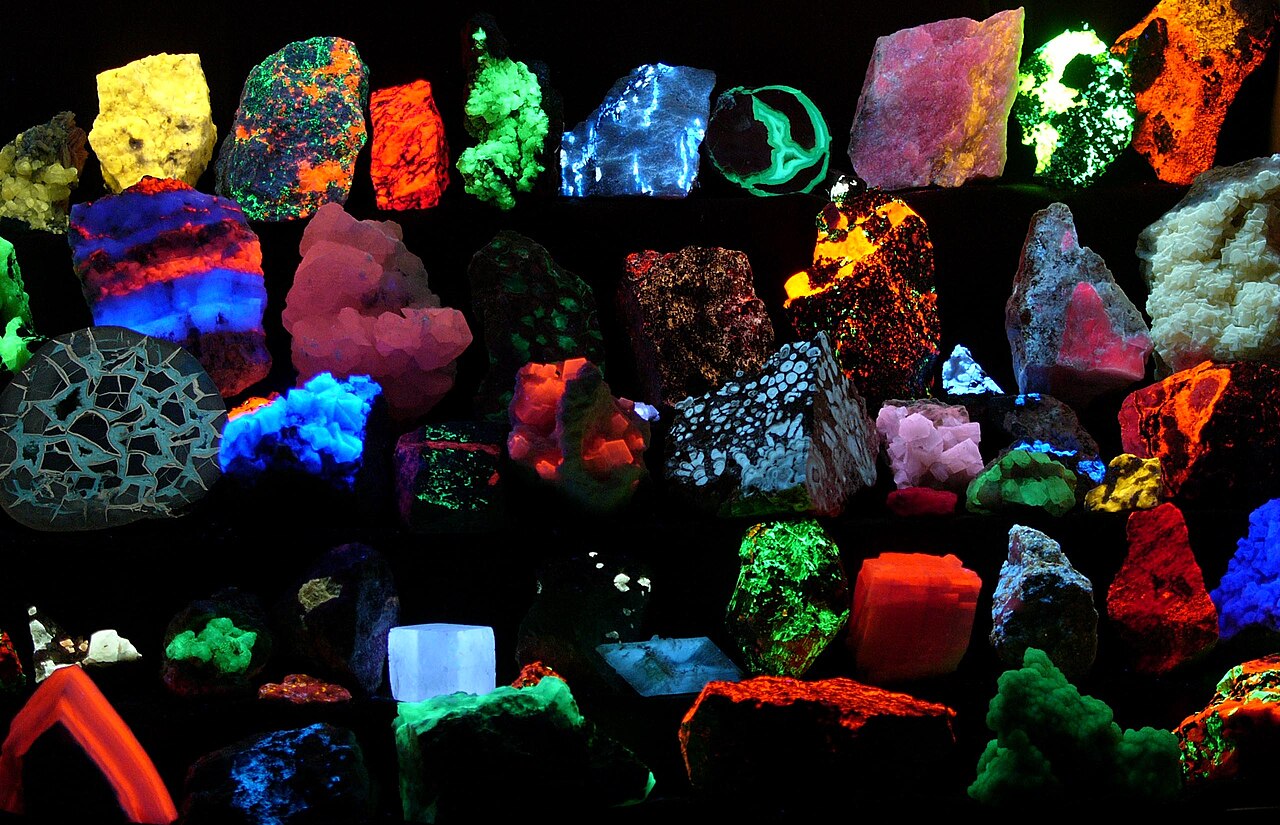
- Forensics and authentication: many substances fluoresce under UV, revealing latent traces or verifying documents.
- Industrial curing and photochemistry: UV initiates polymerization in inks, adhesives and coatings.
- Analytical techniques: UV/visible spectroscopy aids chemical identification and concentration measurements.
- Medical and cosmetic: controlled UVB exposure can treat certain skin conditions and help generate vitamin D; tanning and phototherapy procedures use tailored UV bands.
Risks and protection
Because UV can damage DNA and other cellular components, overexposure increases the risk of sunburn, premature skin aging, and skin cancer. Eyes are also vulnerable—excessive UV can cause painful short-term injury (photokeratitis) and contribute to long-term damage such as cataracts. Protective measures include sunscreen, clothing, sunglasses with UV protection, limiting midday exposure, and engineering controls (shielding, interlocks) for artificial UV sources.
Notable distinctions and practical notes
Not all UV is the same: the biological effect and penetration depth change across the spectrum, which is why instruments and safety guidelines specify wavelength bands. In environmental and technical contexts, one must consider both intensity and spectral composition. Detection and measurement use calibrated UV meters, photodiodes, and spectrometers rather than human vision. Ongoing monitoring of atmospheric ozone and solar conditions informs public-health UV advisories.
For introductory reading on related physics and biological responses, follow resources on the electromagnetic spectrum and basic wave properties. For more about how specific animals perceive UV light consult sources about insects and birds, or summaries on reptilian and amphibian vision.
Questions and answers
Q: What is ultraviolet?
A: Ultraviolet is the part of the electromagnetic spectrum that humans cannot see because it has a short wavelength and high frequency. It is beyond the visible violet light in terms of frequency, wavelength, and energy, with wavelengths ranging from 10 nanometers to 400 nanometers.
Q: What does UV stand for?
A: UV stands for ultraviolet, mainly used in technical contexts.
Q: Are there any animals that can see ultraviolet light?
A: Yes, some insects, reptiles, crocodiles, salamanders, and small birds can see things that reflect this light.
Q: How are frequency and wavelength related?
A: Frequency and wavelength are closely related; the equation ν = c/λ shows this relationship. Saying something has a short wavelength is the same as saying it has a high frequency.
Q: What range do ultraviolet wavelengths fall into?
A: Ultraviolet wavelengths range from 10 nanometers to 400 nanometers.
Q: Is ultraviolet visible to humans?
A: No, humans cannot see light of such short wavelength or high frequency so ultraviolet is not visible to us.
Related articles
Author
AlegsaOnline.com Ultraviolet (UV) radiation Leandro Alegsa
URL: https://en.alegsaonline.com/art/102707