
Ozone layer: structure, chemistry, history, and global importance
The ozone layer is a region of the stratosphere rich in ozone (O3) that absorbs most harmful ultraviolet radiation, has been altered by human-made chemicals, and is monitored and recovering under international agreements.
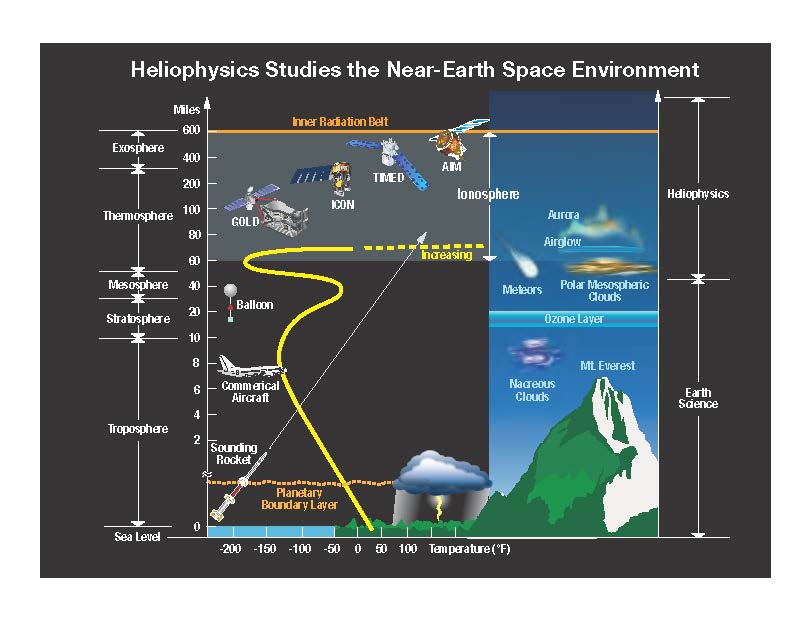
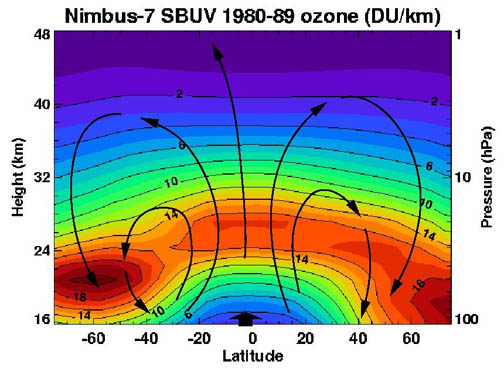
The ozone layer is a region of Earth's atmosphere, centered in the stratosphere, roughly between 10 km and 50 km above the surface, where the concentration of ozone (O3) is higher than elsewhere. Although ozone molecules are a tiny fraction of atmospheric gases, they play an outsized role by absorbing the Sun's ultraviolet (radiation) and protecting living organisms from DNA-damaging wavelengths. The amount of ozone varies with latitude and season and is commonly measured as a total column in Dobson units.
Image gallery
8 Images




Characteristics and chemical cycles
Ozone in the stratosphere forms when high-energy ultraviolet light from the Sun splits molecular oxygen (O2) into single oxygen atoms; these atoms then combine with O2 to produce O3. This basic set of reactions, first described in the Chapman mechanism, is balanced by natural destruction pathways. In addition to the Chapman reactions, several catalytic cycles driven by trace gases, notably chlorine and bromine compounds, accelerate ozone loss.
Human-produced halogenated compounds such as chlorofluorocarbons (CFCs) release reactive chlorine in the stratosphere, which participates in catalytic reactions that destroy ozone. Under certain conditions—particularly in polar regions during the cold months—polar stratospheric clouds provide surfaces that enhance these reactions and lead to dramatic seasonal thinning known as the ozone hole. This overall process is commonly termed ozone depletion.
History of discovery and measurement
The presence of a concentrated ozone region was identified in the early 20th century by Charles Fabry and Henri Buisson. Later, G. M. B. Dobson developed a simple spectrophotometer for ground-based monitoring and established a network of stations that produced long-term records. Those instruments introduced the Dobson unit as a convenient measure of total column ozone.
Importance, impacts, and distinctions
By absorbing the majority of the Sun's harmful ultraviolet-B and much of ultraviolet-C radiation, the ozone layer reduces skin cancer, cataracts, and genetic damage in plants and animals, and protects many marine organisms, particularly plankton near the ocean surface. The protective role of stratospheric ozone should not be confused with tropospheric ozone, which at ground level acts as an air pollutant and greenhouse gas.
- Protective stratospheric ozone: absorbs UV, shields life.
- Tropospheric ozone: formed by pollution, harmful to health and vegetation.
- Monitoring: ground instruments and satellites track trends in Dobson units and spatial patterns.
Human influence and recovery efforts
During the 20th century, widespread use of CFCs in refrigerants, solvents, and aerosols led to accumulated halogens in the stratosphere and measurable ozone loss. Recognition of the problem prompted the Montreal Protocol and subsequent amendments, an international agreement that phased out many ozone-depleting substances. As emissions have declined, evidence shows gradual recovery of global ozone, though full restoration will take decades because some substances persist in the atmosphere.
Contemporary scientific attention focuses on continued monitoring, understanding interactions with climate change, and distinguishing natural variability from human-caused trends. Long-term records—built from Dobson-era stations to modern satellite systems—remain essential for assessing the health of this vital atmospheric layer and for guiding policy and public health responses.
For more technical summaries and data resources see overview pages on ozone, the Earth atmosphere, seasonal variations (seasons), and historical accounts linked through global environmental organizations and monitoring networks.
Key references and monitoring portals: radiation information, ecosystem impacts, and international policy documents on ozone depletion and substitutes for CFCs. Broader summaries and educational materials are available from scientific agencies that maintain long-term records and outreach resources (UV science, solar influences, and measurement networks using stratospheric observations).
Related articles
Author
AlegsaOnline.com Ozone layer: structure, chemistry, history, and global importance Leandro Alegsa
URL: https://en.alegsaonline.com/art/73862
Sources
- commons.wikimedia.org : Ozone layer
- ozonelayer.noaa.gov : "Science: Ozone Basics"
- nas.nasa.gov : "Ozone layer"
- nasa.gov : "Proof of Ozone Recovery"