
Animal (Metazoa): overview, characteristics, evolution and ecological roles
Concise encyclopedia entry on animals (Metazoa): defining traits, body plans, evolution, ecology, classification, and differences from plants and fungi.
Animals, collectively known as Metazoa, are multicellular eukaryotic organisms that obtain energy and nutrients primarily by consuming other organisms or organic material. Their bodies are formed from many cells with membrane-bound nuclei; for a general introduction to multicellularity and cell structure see multicellularity and cells. Animals are heterotrophic rather than autotrophic, though some maintain close associations with photosynthetic partners such as algae or protists (photosynthetic partners) in symbiotic relationships (symbiosis).
Image gallery
10 Images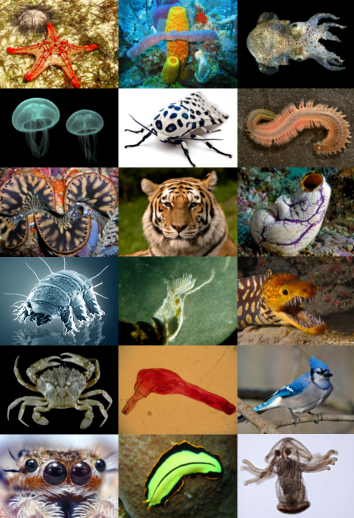


Defining characteristics
Although animals are extremely diverse, they share a set of basic features. Most animals are multicellular and their cells are organized into tissues and organs. They typically ingest food and convert it into usable energy through processes of cellular respiration; introductory resources are available on cellular respiration and broader metabolism. Many animals respire using oxygen and release carbon dioxide as a by-product of metabolism (oxygen uptake, carbon dioxide release). Nervous and muscular systems, present in most major groups, enable coordination and movement (motility in animals).
Body plans and tissues
Animal bodies are organized according to recurring plans, including symmetry (bilateral or radial), segmentation, and the arrangement of body cavities. The fundamental tissue types are epithelial, connective, muscular and nervous tissue. Cell membranes and cellular structures in animals differ in composition and arrangement from those of plants and fungi; see comparative material on cell membranes and structure. Development from fertilized egg to adult involves characteristic embryonic stages studied in developmental biology.
Nutrition, feeding and lifestyles
Animals occupy many nutritional roles: most are consumers that feed on other organisms, some are detritivores that break down dead organic matter, and others live as parasites that derive resources from a host (parasites and consumers). Feeding mechanisms range from filter-feeding to predation, herbivory and complex hunting behaviors. Some animals host photosynthetic microorganisms that supplement their diet, a strategy common among certain marine invertebrates and corals.
Evolutionary origins and classification
Animals originated from single-celled ancestors and diversified into numerous lineages early in Earth’s history. The study of animals and their relationships is the domain of zoology (zoology), while the fossil record and the study of past life belong to palaeontology. Major animal groups include sponges, cnidarians, molluscs, annelids, arthropods, echinoderms and chordates; each group is defined by distinctive anatomical and developmental traits. Molecular and fossil evidence together help reconstruct these broad relationships, and protist evolution provides context for early animal ancestors (protist evolution).
Ecological roles and human interactions
Animals play essential ecological roles as consumers, pollinators, seed dispersers, ecosystem engineers and participants in complex food webs. They influence nutrient cycles, community structure and habitat formation. Humans rely on animals for food, clothing, labor, scientific research and companionship, while also managing their impacts on agriculture, health and conservation. Some species are pests or disease vectors, others are conservation priorities due to habitat loss or exploitation.
Comparisons with plants and fungi
Plants are multicellular eukaryotes that manufacture organic matter by photosynthesis using light, water and inorganic nutrients; for basic plant biology and structure see plant biology and plant tissues. Fungi are distinct in nutrition and cell structure. Animals differ from plants and fungi in typical modes of nutrition, mobility and certain cellular features, although exceptions and intermediate strategies occur.
Research, conservation and public understanding
Scientific study of animals ranges from anatomy and physiology to ecology, behavior, genetics and conservation science. Practical skills include field observation, taxonomy and laboratory techniques. Conservation efforts aim to protect biodiversity and maintain ecosystem services provided by animals. Public education, museum collections and academic resources provide accessible overviews and identification guides for those who wish to learn more about animal diversity and roles in nature.
- For introductory reading and educational resources see general portals in zoology and museum pages: zoology resources.
- For information on animal movement and behavior consult materials on motility and physiology references on metabolism.
- For contexts linking animals with microbes and protists, follow references on protist evolution, photosynthetic partners and symbiosis.
- Comparative cellular structure is summarized at cell membranes and structure and respiration basics at cellular respiration.
- General overviews on parasites, consumers and ecological roles are provided via parasites and consumers and resources on gas exchange at oxygen uptake and carbon dioxide release.
- For plant contrasts and foundational biology see plant biology and plant tissues.
- Basic cell and multicellularity primers are available at multicellularity and cells.
This entry summarizes broadly accepted features of animals and points to areas for further study; readers seeking detailed taxonomic or region-specific information should consult specialized references and current scientific literature.
Questions and answers
Q: What are animals?
A: Animals are living creatures with many cells that obtain energy from other living things and are eukaryotes.
Q: What do animals eat?
A: Animals usually eat other living things or are parasites.
Q: What are symbionts?
A: Symbionts are organisms that live in a close relationship with another organism.
Q: What is zoology?
A: Zoology is the study of animals.
Q: What is palaeontology?
A: Palaeontology is the study of ancient life.
Q: How do animals differ from plants?
A: Animals are mobile, take in oxygen, give out carbon dioxide, and have different cell membranes to other eukaryotes like plants and fungi.
Q: How do plants obtain nutrients?
A: Plants obtain nutrients by using light, water, and basic elements to make their tissues.
Related articles
Author
AlegsaOnline.com Animal (Metazoa): overview, characteristics, evolution and ecological roles Leandro Alegsa
URL: https://en.alegsaonline.com/art/4279
Sources
- nature.com : "Possible animal-body fossils in pre-Marinoan limestones from South Australia"
- ui.adsabs.harvard.edu : 2010NatGe...3..653M
- doi.org : 10.1038/ngeo934
- princeton.edu : Pdf