
Molecule: definition, structure, properties and uses
An overview of molecules: what they are, how atoms bond to form them, their behavior in different states of matter, notation, history, and practical roles in chemistry and everyday life.
Overview
A molecule is a discrete group of atoms joined together by chemical bonds to form the smallest identifiable unit of a substance that retains its chemical identity. In common use the term distinguishes a bonded assembly from a single atom or from a mixture of different species. The idea of a molecule helps explain why materials have specific properties and reactions: breaking a molecule into different pieces generally produces different substances rather than smaller portions of the same one. For general background on the concept see chemical substance and related entries such as composition.
Image gallery
10 Images






Structure and bonding
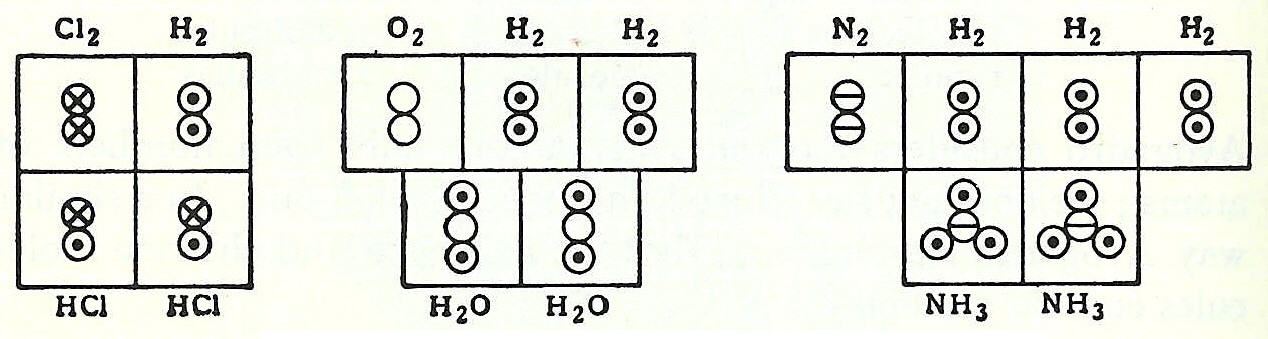
Molecules are composed of atoms held together by attractive forces. The strongest and most common are covalent bonds, where atoms share electrons, but ionic interactions, coordinate bonds, hydrogen bonds and weaker van der Waals forces also influence molecular assemblies. The number and arrangement of bonds are constrained by atomic properties (often taught as valency) and by electronic structure: for example, many carbon atoms form up to four covalent bonds while oxygen commonly forms two. These patterns are discussed in sources such as atomic theory and specific element guides like oxygen, carbon and nitrogen.
Shapes, formulas and notation
Molecules adopt particular three-dimensional shapes that affect physical and chemical behavior; simple rules and models (for instance VSEPR theory) predict many common geometries. Chemists describe composition with molecular formulas that list the number of each atom type—glucose, for example, is written C6H12O6. Structural formulas, skeletal formulas and three-dimensional models communicate connectivity and shape. A molecule may be neutral or carry charge; charged collections are often called polyatomic ions. For introductory material see molecular formula and related explanatory pages such as structural formula and molecular geometry.
Behavior in states of matter and small-particle terminology
The same molecular species can behave very differently depending on its physical state. In gases, molecules move freely and collide; in liquids they remain close but can translate and rotate; in solids they are held in fixed positions, often vibrating about equilibrium points. Some contexts use the word "particle" or even "molecule" loosely to describe any small constituent of a gas, which is why monoatomic noble gases are sometimes treated as the gas-phase analogue of molecules in kinetic theory. See entries on gases, liquids, solids and plasma for state-dependent behavior and on noble gases for monoatomic examples.
History and development
The molecular concept emerged from early chemical and physical investigations into composition and gas behavior. Historical figures developed atomic and molecular hypotheses to explain fixed composition ratios, gas laws and reaction stoichiometry; later experimental and theoretical advances established the modern understanding of bonds and molecular structure. For accessible historical summaries consult materials about atomic theory and the development of molecular chemistry in the nineteenth and twentieth centuries, including biographies and primary sources that describe how these ideas gained experimental support.
Importance, applications and distinctions
Molecules are central to chemistry, biology, materials science and many technologies. Organic molecules form the basis of living systems; inorganic molecules and coordination complexes underpin catalysts, pigments and ceramics; polymers are long chains of repeating molecular units; gases and vapors determine atmospheric phenomena and industrial processes. Practical categories and useful distinctions include:
- Compounds vs. elements: a compound is a substance made of molecules containing more than one element, whereas an element consists of identical atoms.
- Small molecules vs. macromolecules: size and complexity affect properties such as solubility and reactivity; polymers and proteins are macromolecular.
- Molecules vs. ions: neutral assemblies differ from charged species in behavior and interactions.
For examples and further reading on applications, reaction behavior and classification, see introductory and advanced resources under topics such as organic chemistry, physical chemistry, biochemistry and materials science.
Questions and answers
Q: What is a molecule?
A: A molecule is the smallest amount of a chemical substance that can exist. It is made up of atoms that are stuck together in a particular shape or form.
Q: How many bonds do oxygen, carbon and nitrogen atoms have?
A: Oxygen atoms always have two bonds with other atoms, carbon atoms always have four bonds with other atoms, and nitrogen atoms always have three bonds with other atoms.
Q: What does the kinetic theory of gases state about molecules?
A: According to the kinetic theory of gases, the term molecule is often used for any gaseous particle regardless of its composition. This means that noble gas atoms are considered molecules as they are in fact monoatomic molecules.
Q: How do molecules behave in different states?
A: In gases like air, the molecules are just flying around. In liquids like water, the molecules are stuck together but they can still move. In solids like sugar, the molecules can only vibrate. In plasma (the fourth state of matter), the atoms are ionized and cannot form molecules.
Q: What is a molecular formula?
A: A molecular formula is used to write down the numbers of all atoms in a molecule. For example, C6H12O6 indicates one molecule of glucose which is made up of six carbon atoms, twelve hydrogen atoms and six oxygen atoms.
Related articles
Author
AlegsaOnline.com Molecule: definition, structure, properties and uses Leandro Alegsa
URL: https://en.alegsaonline.com/art/65864