
Luigi Carlo Farini: physician, politician and participant in Italian unification
Italian physician, historian and statesman (1812–1866) who moved from republican activism to a leading role in the Risorgimento and later suffered mental collapse and exile from political life.
Overview
Luigi Carlo Farini (1812–1866) was an Italian physician, statesman and historian whose career spanned medicine, political journalism and government during the Risorgimento. Born in Russi, near Ravenna, he trained in medicine and graduated with a degree from the University of Bologna. Early in life he combined clinical practice with scientific research into conditions such as intermittent fevers and rabies, while also writing for periodicals and engaging in political debate.
Image gallery
2 Images
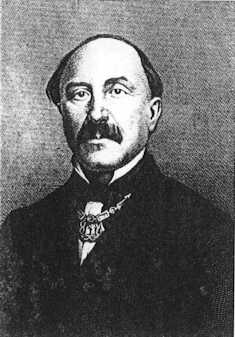
Political evolution and public roles
Farini began his public life aligned with the republican movement and sympathies for Giuseppe Mazzini, but over time he came to support constitutional monarchy and joined the Conservative, or "Historic Right," current that guided Piedmont and early unified Italy. He briefly served as Minister of Education in a government led by Massimo d'Azeglio, reflecting his shift toward moderate, state-centered solutions.
Role in 1859–1862 and the Risorgimento
During the upheavals of 1859 he was appointed dictator pro tempore for parts of northern Italy, administering provisional civil government in areas of Emilia and later Romagna as the old regimes collapsed. His political prominence culminated in his appointment as President of the Council of Ministers of the Kingdom of Italy in December 1862, a period marked by the delicate consolidation of institutions after unification.
Illness, controversy and confinement
From the early 1860s Farini's behavior became erratic. Contemporary accounts describe a progressive nervous disease or mental disorder. In the winter–spring after the January 1863 Polish uprising, tensions over foreign policy reached a crisis: reports indicate he threatened King Victor Emmanuel II with the aim of pushing him to declare war on the Russian Empire in support of the Polish insurrection. The incident ended Farini's active political career when he was placed in an asylum near Turin, removed from public life and treated away from the capital.
Writings, legacy and death
Besides his medical work and administrative duties, Farini wrote political and historical pieces reflecting on the process of Italian unification and the practical challenges of building a modern state. Scholars view him as a transitional figure whose trajectory—from youthful republicanism to pragmatic monarchism—mirrored the wider realignments of the Risorgimento. After confinement he never returned to power and died in Genoa in 1866. His life illustrates both the passion of mid‑19th century Italian politics and the personal costs endured by some of its actors.
Notable facts
- Trained as a physician and combined medical research with political writing (early career).
- Moved from Mazzinian circles to the Historic Right, demonstrating the fluidity of political identities in the Risorgimento (ideological shift).
- Held provisional executive power in northern provinces during 1859–1860 (temporary dictatorship).
- Briefly served at the head of government for the newly formed Kingdom of Italy (prime ministerial role).
- Experienced severe mental illness, culminating in confinement after a dramatic incident involving the monarch and foreign policy tensions (health, Poland).
For further study, consult contemporary collections of Farini's essays and modern histories of the Risorgimento that place his career in the context of Italian state formation. Additional archival or secondary sources provide more detail on his writings and administrative initiatives.
Related articles
Author
AlegsaOnline.com Luigi Carlo Farini: physician, politician and participant in Italian unification Leandro Alegsa
URL: https://en.alegsaonline.com/art/59825