
Victor Emmanuel II of Italy
Victor Emmanuel II (1820–1878), king of Sardinia and, from 1861, the first king of a united Italy. Prominent in the Italian Risorgimento, he worked with statesmen and revolutionaries and left a contested but enduring legacy.
Victor Emmanuel II (Vittorio Emanuele Maria Alberto Eugenio Ferdinando Tommaso; 14 March 1820 – 9 January 1878) was a central figure in the movement that produced a unified Italian state in the 19th century. He reigned as King of Sardinia from 1849 and assumed the title King of Italy on 17 March 1861, becoming the first monarch to rule a united Italy in many centuries. Italians later honored him with the informal title Padre della Patria, often translated as "Father of the Homeland"; the phrase is conventionally cited in Italian sources and memorials (Padre della Patria).
Image gallery
10 Images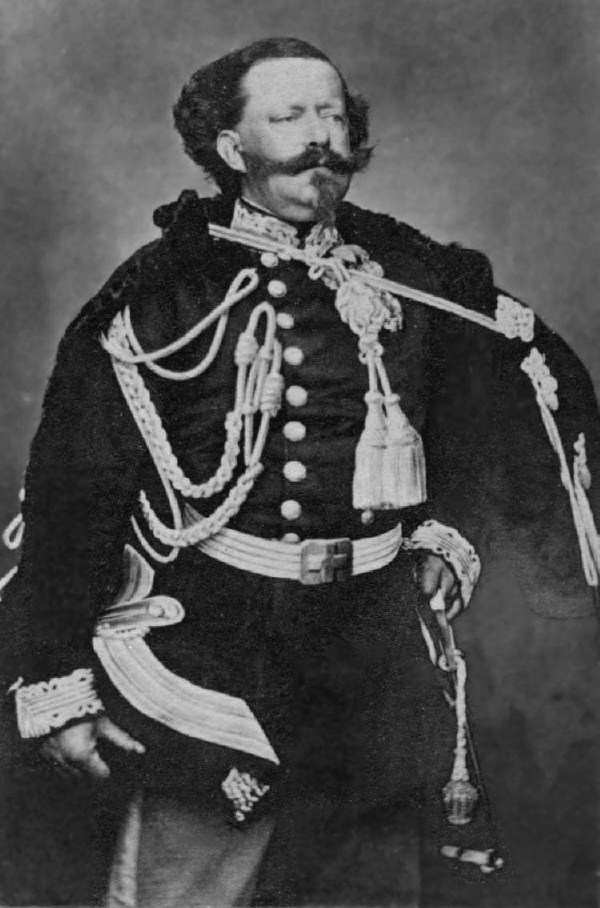



Early life and accession
Born at the Palazzo Carignano in Turin, Victor Emmanuel was a member of the House of Savoy and held the courtesy title Prince of Carignano in his youth (Prince of Carignano). He became heir apparent as the dynastic line prepared for succession and succeeded to the throne of the Kingdom of Sardinia after his father abdicated in 1849, following military and political crises of the period. As king he inherited a state that combined traditional monarchy with modernizing institutions and an ambition to lead Italian unification.
Role in Italian unification
Victor Emmanuel's reign overlapped with the Risorgimento, the political and military campaign to unite the Italian peninsula. He collaborated with leading figures of the period, notably the statesman Count Camillo di Cavour, who pursued diplomatic and parliamentary strategies, and with popular leaders such as Giuseppe Garibaldi, who led volunteer forces in southern Italy. The kingdom of Sardinia acted as the nucleus around which disparate Italian territories were gradually incorporated, through a mix of wars, plebiscites, and political agreements.
Major events and policies
- Consolidation: As Victor Emmanuel accepted the title King of Italy in 1861, the new kingdom initially lacked Rome and, at times, Venice, both of which were added later through wider European conflicts and shifting alliances.
- Relations with revolutionaries: He navigated a complex relationship with Garibaldi, sometimes uneasy but ultimately cooperative when Garibaldi ceded control of southern regions to the Savoy monarchy.
- Modernization: Under his reign, the state pursued administrative reforms, military reorganization, and policies aimed at integrating diverse regional systems into a single national framework.
Victor Emmanuel's decisions were shaped by the constraints of great-power politics, including the presence of Austria in northern Italy and French protection of the Papal States. The eventual incorporation of Rome and Venice into the kingdom occurred after his proclamation as king, in events that followed shifting European wars and diplomatic openings.
Legacy and memory
Victor Emmanuel II died in 1878 and was succeeded by his son, Umberto I. His memory is contested: supporters credit him with providing the institutional continuity that allowed unification to succeed, while critics point to compromises with foreign powers and domestic issues that accompanied the new nation's creation. Major monuments and commemorations followed in the decades after his death, reflecting his prominent place in Italian national identity and historiography. He is often associated with landmarks and public memorials in cities that became central to the modern Italian state.
For readers interested in primary sites and historical context, references and further reading often point to materials on the Kingdom of Sardinia, biographical treatments of Victor Emmanuel, the cultural phrase Padre della Patria, the Palazzo Carignano in Turin, and the dynastic title Prince of Carignano. These topics together illuminate the personal background, political role, and historical significance of a monarch widely associated with Italy's path to nationhood.
Questions and answers
Q: Who was Victor Emmanuel II?
A: Victor Emmanuel II was the king of Sardinia from 1849 until 1861 and the first king of a united Italy since the 6th century.
Q: What was his role in the unification of Italy?
A: Victor Emmanuel II played a key role in the unification of Italy as he became the first king of a united Italy since the 6th century.
Q: What title did Victor Emmanuel II take on March 17, 1861?
A: On March 17, 1861, Victor Emmanuel II took the title King of Italy.
Q: How long did Victor Emmanuel II hold the title of King of Italy?
A: Victor Emmanuel II held the title of King of Italy until his death in 1878.
Q: What did the Italians call Victor Emmanuel II?
A: The Italians called Victor Emmanuel II "Father of the Homeland" (Italian: Padre della Patria).
Q: Where was Victor Emmanuel II born?
A: Victor Emmanuel II was born at the Palazzo Carignano in Turin.
Q: How did Victor Emmanuel II become ruler of the Kingdom of Sardinia?
A: Victor Emmanuel II became ruler of the Kingdom of Sardinia when his father abdicated.
Author
AlegsaOnline.com Victor Emmanuel II of Italy Leandro Alegsa
URL: https://en.alegsaonline.com/art/132556