
Historian: Role, Methods, Development, and Significance
A historian studies and interprets the human past using written, oral, and material sources. This article outlines what historians do, their methods, skills, major subfields, and the profession's development and uses.
A historian is a specialist who investigates the human past to explain events, structures, and experiences across time. Working with documentary records, testimonies, objects and images, historians aim to reconstruct and interpret what happened and why. The subject they study is broadly described as history, which can span local, national, or global scales and cover political, social, economic, cultural, or environmental dimensions.
Image gallery
10 Images





Methods and sources
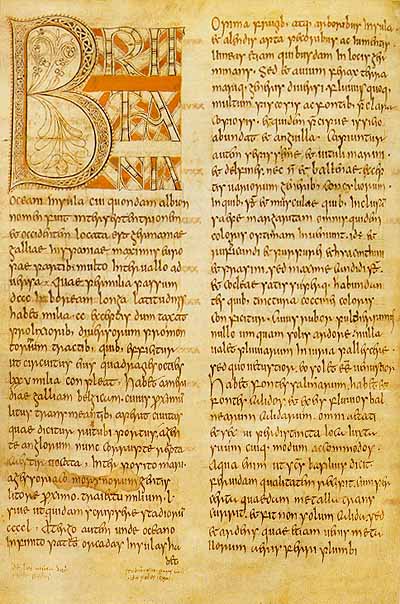
Historians apply critical techniques to evaluate evidence: assessing authenticity, provenance, bias and context; cross-checking independent sources; and situating materials within broader chronological and cultural frameworks. Sources include official documents, letters, newspapers, oral interviews, artifacts, photographs and increasingly digital records. Professional practice emphasizes transparent argumentation, careful citation and an awareness of the limits of surviving evidence. Many historians also use quantitative analysis, mapping (GIS), and interdisciplinary methods drawn from archaeology, sociology and literary studies.
Core skills combine language competence, archival research, critical reading, and the ability to synthesize disparate evidence into coherent narratives or explanations. Ethical considerations — such as respect for informants, recognition of marginalized voices, and avoidance of presentism (projecting present values onto the past) — shape daily work. Training commonly includes graduate study and apprenticeships in archives and museums.
Origins and professionalization
People have recorded and interpreted the past since antiquity, but the modern profession emerged as universities and national archives developed in the 18th and 19th centuries. Scholars established methods for rigorous source criticism and institutional practices for teaching and publishing historical scholarship. Over time, history diversified into specialized subfields and public-facing roles.
Uses and public importance
Historical knowledge informs education, public policy, heritage preservation and collective memory. Historians advise museums, courts, governments, media and community groups; they help societies understand continuity and change, learn from past choices, and contest or recover forgotten perspectives. Public history, oral history and digital history are examples of work that connects scholarly research to wider audiences.
Subfields and distinctions
- Political, diplomatic and military history
- Social, cultural and intellectual history
- Economic and environmental history
- Microhistory, comparative history and oral history
For practical guidance on approaches, many turn to introductions to historical method and research methods that outline source criticism, chronology and interpretation. Overall, historians combine evidence and critical reasoning to make the past intelligible and relevant for present concerns.
Related articles
Author
AlegsaOnline.com Historian: Role, Methods, Development, and Significance Leandro Alegsa
URL: https://en.alegsaonline.com/art/44436
Sources
- commons.wikimedia.org : Historians
- wordnet.princeton.edu : historian
- books.google.com : Studies in historical method
- books.google.com : History of the transmission of ancient books to modern times, together with the process of historical proof
- books.google.com : History of Herodotus
- books.google.com : Historical analysis of Christian civilisation
- books.google.com : The process of historical proof