
Arctic Ocean — geography, ecology, and human activity
The Arctic Ocean is Earth's smallest, coldest ocean around the North Pole. This article explains its geography, physical features, ecosystems, human uses, exploration history, and the impacts of climate change.
Overview
The Arctic Ocean occupies the area around the Earth's northern pole and is the most northerly of the five major oceans. It lies between the northern coasts of Eurasia and North America and forms the marine core of the broader Arctic region. Much of the ocean remains ice-covered for most of the year; the environment is shaped by seasonally alternating light, cold temperatures, and persistent ice. The ocean's position around the North Pole and its proximity to the northern edges of Eurasia and North America give it a distinct polar climate and unique geopolitical importance.
Image gallery
10 Images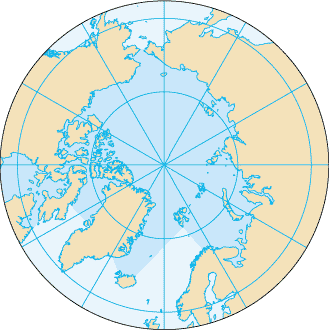


Physical characteristics
The Arctic Ocean is the smallest of the world's oceans, with a surface area of about 14.056 million square kilometres. Its coastlines are intricate and include numerous islands, bays and fjords; the total coastline length is often given as roughly 45,389 kilometres (about 28,203 miles). Sea ice and snow are dominant features: thick pack ice and fields of snow cover most of the surface in winter and persist over much of it in summer. The perennial central pack may reach several metres in thickness — commonly around 3 metres (9.8 feet) where it is oldest. The basin is shallow relative to other oceans, with an average depth near 1,038 metres and the deepest point reaching about 5,450 metres in the Eurasian Basin.
Circulation, water properties and basins
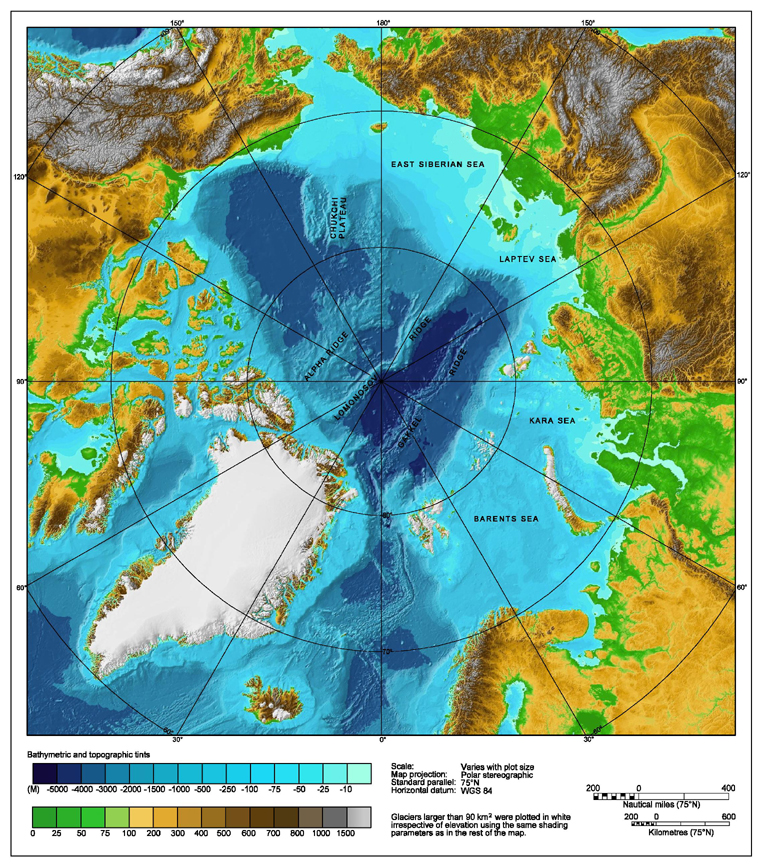
Circulation in the Arctic is constrained by surrounding landmasses and narrow connections to other oceans. Relatively fresh water from rivers and melting ice reduces surface salinity, while denser, saltier water inflows from the Pacific and Atlantic influence deeper layers and drive complex vertical structure. The ocean contains major basins and ridges that affect currents and sea-ice distribution; this bathymetry is an important control on climate interactions and marine habitats.
Life and ecosystems
Biological communities in the Arctic Ocean have adapted to extreme seasonality and extensive ice cover. Primary productivity is concentrated in coastal areas and in seasonal open-water zones where sunlight and nutrients coincide. The region supports specialized fauna including ice-associated algae, fishes, seabirds, and marine mammals. Scientists note that the biology of the area includes species that depend on sea ice for feeding, breeding or resting; some of these are classed among endangered species or are otherwise vulnerable, such as walruses, certain populations of whales, and polar bears. Indigenous peoples have long relied on marine resources and maintain culturally important knowledge of Arctic ecosystems.
Human activity and navigation
Human presence in and around the Arctic Ocean ranges from traditional subsistence use to modern scientific research, shipping, and resource exploration. Seasonal sea-ice retreat has altered navigation opportunities: historically formidable routes such as the Northwest Passage between the Atlantic and Pacific have occasionally become passable to powerful vessels. Specialized ships such as icebreakers and sometimes nuclear-powered submarines have traversed Arctic waters. Economic interest includes fisheries, hydrocarbon and mineral prospects, and potential shorter commercial shipping lanes linking the Pacific and Atlantic basins, although these carry environmental and legal complexities.
Climate change and modern significance
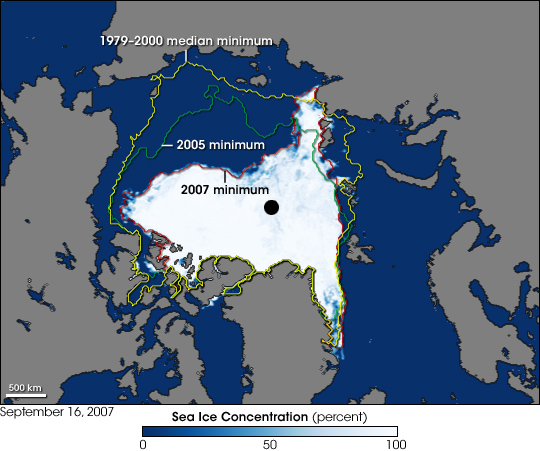
The Arctic Ocean is a frontline for global climate change. Rising temperatures linked to global warming are reducing the extent and thickness of sea ice, with cascading effects on albedo, regional weather patterns, and habitats. Shrinking ice cover alters traditional ecosystems, threatens ice-dependent species, and influences coastal erosion where permafrost and sea ice once protected shorelines. At the same time, diminishing ice influences human activity by changing access and resource pressures, raising questions of conservation, indigenous rights, and international cooperation.
Key facts
- Approximate surface area: 14.056 million km².
- Coastline length: 45,389 kilometres (28,203 miles).
- Average depth: about 1,038 metres; deepest point near 5,450 metres in the Eurasian Basin.
- Typical thick multiyear ice in central areas: around 3 metres (9.8 feet), though seasonal and regional variation is large.
For further reading on regional geography, species, navigation routes and climate impacts, consult specialist sources and recent research summaries. The Arctic Ocean remains a globally significant, dynamic environment where physical, biological and human systems interact closely.
Circumpolar ocean context | North American Arctic | Eurasian Arctic | Pack ice dynamics | Snow cover | Icebreaking vessels | Submarine operations | Historic routes | Pacific connections | Atlantic connections | Arctic biology | Conservation status | Walrus | Whales | Polar bears | Climate change
Related articles
Author
AlegsaOnline.com Arctic Ocean — geography, ecology, and human activity Leandro Alegsa
URL: https://en.alegsaonline.com/art/5349
Sources
- marianatrench.com : "The Mariana Trench - Oceanography"
- wwf.panda.org : "Arctic Ocean Fast Facts" · web.archive.org