
Walrus (Odobenus rosmarus)
Large, social Arctic pinniped noted for long tusks, thick blubber, and vibrissae; lives on sea ice and coasts of the northern oceans and plays a role in Indigenous cultures and Arctic ecosystems.
Overview
The walrus is a large, gregarious marine mammal and the only living member of the family Odobenidae. It belongs to the pinniped group, which also includes true seals and eared seals. Walruses are adapted to cold Arctic environments and are recognized by their prominent upper canine tusks, dense whiskers (vibrissae) and substantial blubber layer.
Image gallery
10 Images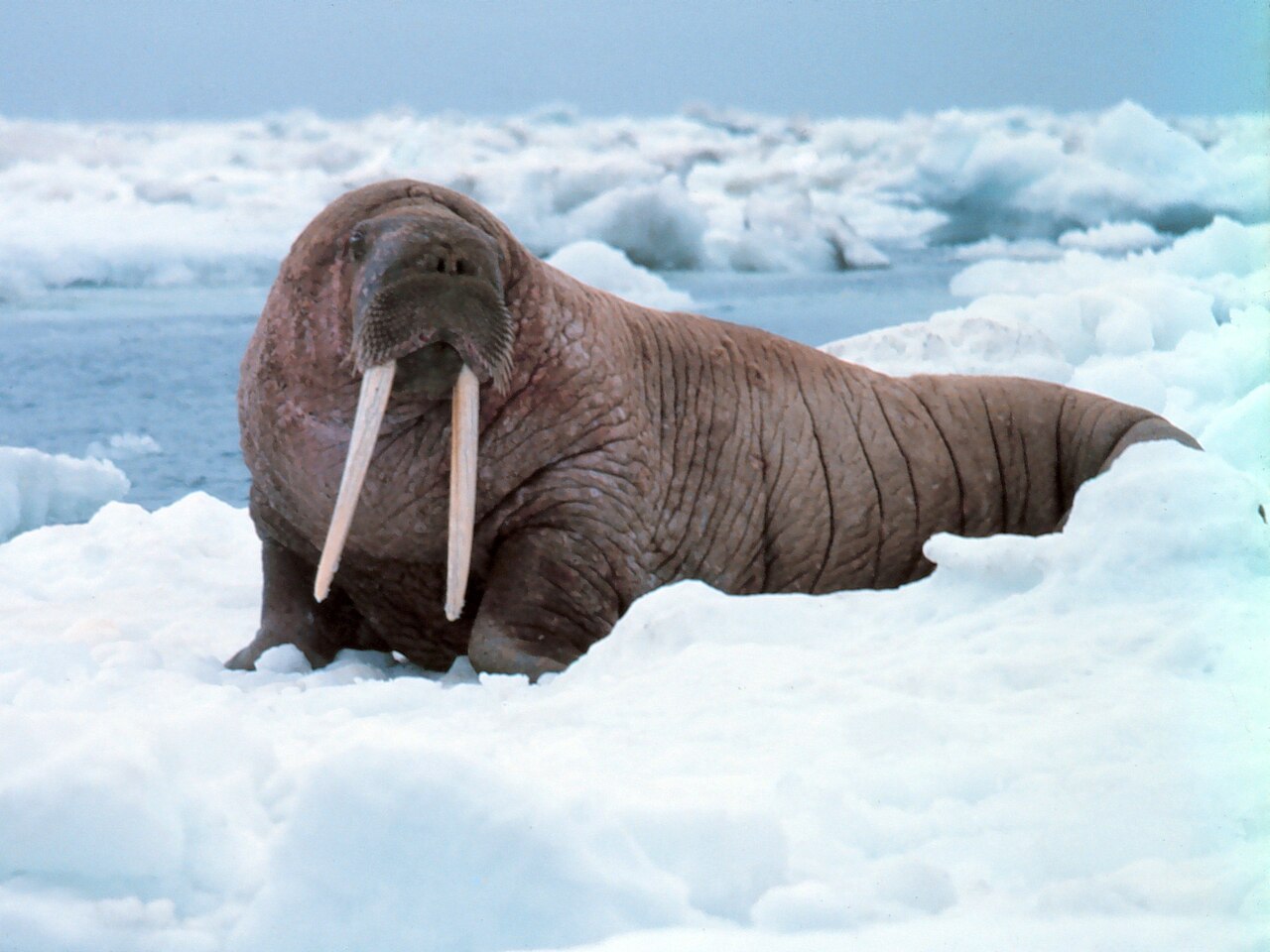


Physical characteristics
Adults are heavy-bodied with short fore and hind flippers, and large heads. Key features include:
- Tusks: Elongated canine teeth present in both sexes, used for social displays, hauling onto ice and defense.
- Vibrissae: Sensitive whiskers that help locate prey on the seabed.
- Insulation: Thick blubber for warmth and energy reserves.
Diet, behavior and life cycle
Walruses are mainly benthic feeders that consume mollusks (especially clams), worms and other invertebrates, often suctioning soft-bodied prey from sediment. They are social animals that haul out in large groups on sea ice or shorelines. Females bear a single calf after a long reproductive cycle; mothers provide extended care. Social hierarchies and vocalizations are important during the breeding season.
Range and habitat
Walruses inhabit cold northern seas of the Arctic Ocean and adjoining waters around North America and Europe. They depend on sea ice for resting and access to feeding grounds, and can be found on continental shelves and shallow coastal zones. As a marine mammal and member of the pinniped group, they bridge marine and terrestrial environments typical of Arctic ecosystems (cold northern seas).
Human interactions and conservation
Walruses have long cultural and subsistence importance for Arctic Indigenous peoples; tusks and hides have been used for tools and art. Populations face threats from climate change, particularly loss of sea ice, as well as disturbance from shipping and resource development. Conservation efforts focus on monitoring populations, protecting critical habitat and supporting sustainable local use.
Notable distinctions
Walruses differ from sea lions and true seals in anatomy, tusk presence and behavior. Their combination of size, social haul-outs, and specialised feeding sets them apart among Arctic pinnipeds.
Related marine mammal resources • Pinniped families overview • Cold northern seas context • Arctic Ocean information • North America Arctic regions • European Arctic areas
Related articles
Author
AlegsaOnline.com Walrus (Odobenus rosmarus) Leandro Alegsa
URL: https://en.alegsaonline.com/art/106327
Sources
- iucnredlist.org : Odobenus rosmarus
- bucknell.edu : Mammal species of the world
- doi.org : 10.2307/3503810
- jstor.org : 3503810
- science.smith.edu : science.smith.edu/departments/Biology/VHAYSSEN/msi/default.html
- commons.wikimedia.org : Odobenus rosmarus
- species.wikimedia.org : Odobenus rosmarus