
Northwest Passage: Arctic sea route and its history, challenges, and modern significance
Sea route along the northern coast of North America linking Atlantic and Pacific waters; historically sought by explorers, now affected by seasonal ice changes and geopolitical, environmental, and commercial issues.
Overview
The Northwest Passage is a series of waterways that follow the northern coast of North America and connect parts of the Atlantic and Pacific via the Arctic Ocean. It lies along the north coast of North America and traverses the central Arctic regions of the Arctic Ocean. For most of recorded history the route was effectively blocked by sea ice for the majority of the year, making regular commercial navigation impractical.
Image gallery
10 Images




Navigation and characteristics
The Passage is not a single continuous channel but a chain of straits, sounds and channels separated by islands and shoals. Conditions vary widely from year to year: sea ice, floes, shallow areas, poor charts and extreme weather all complicate travel. Modern navigation often requires ice-strengthened hulls, icebreaker escorts, satellite imaging and careful timing during the summer melt window. Indigenous communities have long possessed detailed local knowledge of these waters.
History
Interest in a northwest sea route dates to the Age of Discovery, when European powers sought faster ways to reach Asia. The Spanish Empire and other states hoped for a western passage to Asia because Portugal controlled eastern routes around the Cape of Good Hope; competition over access and control spurred many expeditions and rivalry among European navigators. Several 19th-century voyages failed, most famously the Franklin expedition which disappeared and became the subject of prolonged searches. The Norwegian explorer Roald Amundsen completed the first recorded continuous transit of the Passage between 1903 and 1906, demonstrating that a full transit was possible though difficult.
Modern significance
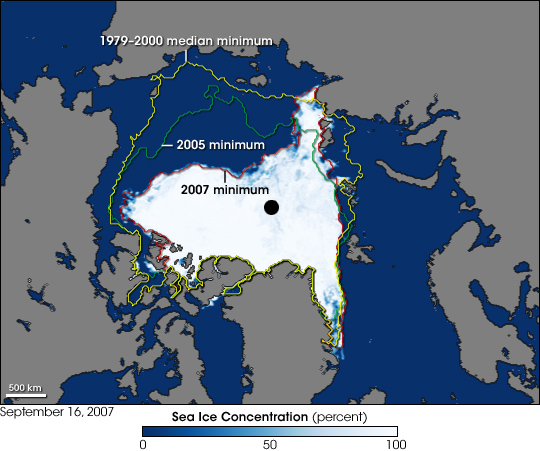
Climate-driven reductions in summer sea ice have increased seasonal accessibility to the Passage. Scientists and mariners note that global warming is altering ice cover and thus the length of navigable periods. This change has drawn interest for shorter shipping routes, natural resource exploration and Arctic tourism, while also raising concerns about safety, search-and-rescue capacity and environmental risk.
Challenges, governance and notable issues
- Operational hazards: unpredictable ice, limited infrastructure and remote search-and-rescue capabilities.
- Environmental risks: potential for spills, impacts on wildlife and implications for indigenous subsistence.
- Political and legal questions over sovereignty and whether parts of the Passage are internal waters or an international strait; these remain matters of diplomatic negotiation and national policy.
Early ambitions for a western route were shaped by rivalry over eastern passages—Portugal's role around the eastern sea lanes and the route around the Cape of Good Hope influenced exploration strategies. European rivalries and the search for alternative routes such as the western route to Asia were central motives. The complex legacy of exploration continues to influence Arctic stewardship and the balance between access, safety and conservation.
For further context on navigation, sovereignty and historical expeditions see resources linked by explorers, national archives and polar research organizations: region overview, Arctic Ocean studies, and historical collections related to the Spanish era and later European expeditions.
Understanding the Northwest Passage requires combining maritime science, indigenous knowledge, and international law as the Arctic continues to change.
Related articles
Author
AlegsaOnline.com Northwest Passage: Arctic sea route and its history, challenges, and modern significance Leandro Alegsa
URL: https://en.alegsaonline.com/art/71086