
Whale: biology, classification, and human interactions
Overview of whales: their biology, major groups, relationship to other mammals, history with humans, conservation issues and distinctions between whales, dolphins and porpoises.
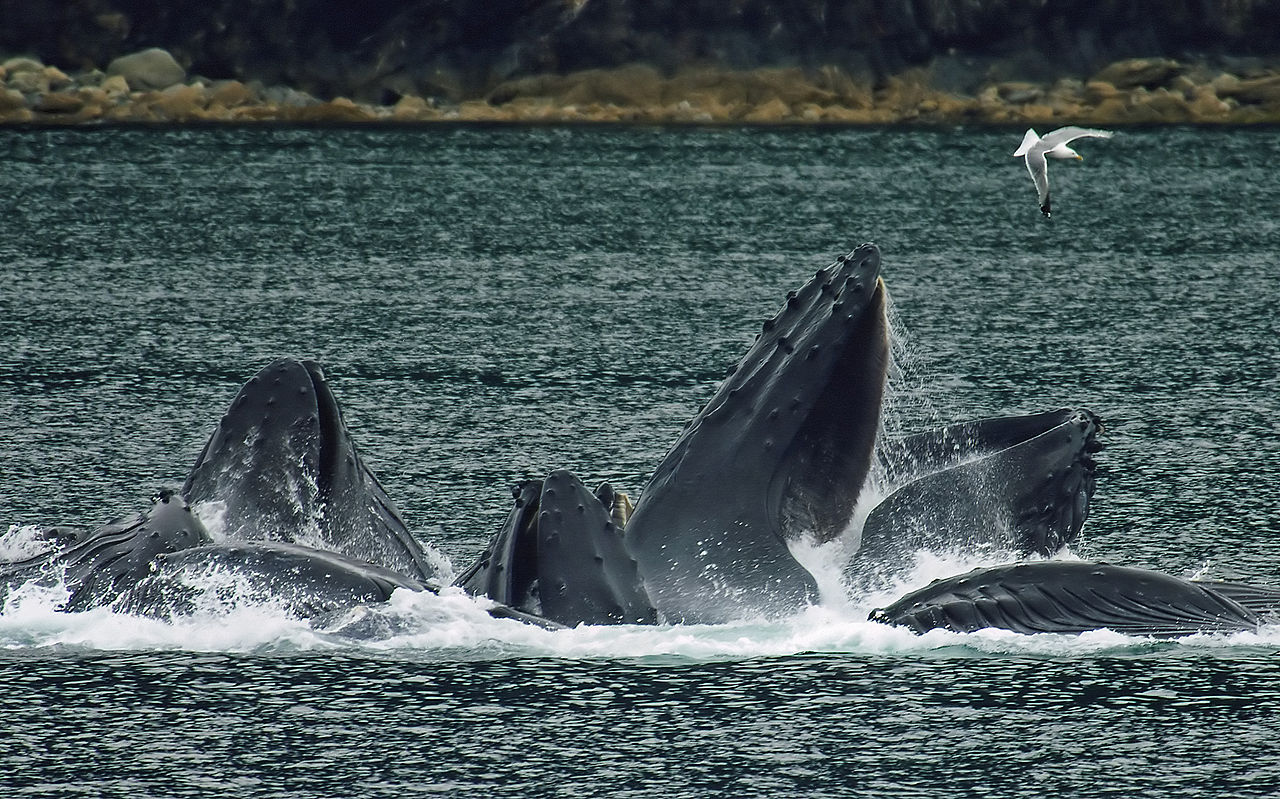
Whales are large marine mammals belonging to the order of cetaceans. They are warm-blooded, breathe air at the surface and obtain oxygen from the air through lungs rather than gills. As mammals they share features such as a layer of blubber, the presence of some hair at certain life stages, and live birth. Modern whales are closely related to other even‑toed ungulates, and molecular evidence places them within the artiodactyl lineage that includes animals such as hippos. Worldwide there are roughly around a hundred recognized species and a wide range of sizes and ecologies.
Image gallery
10 Images



Characteristics and major groups
Whales are commonly divided into two main groups. Baleen whales (Mysticeti) filter small prey such as krill and small fish using baleen plates, while toothed whales (Odontoceti) capture individual prey and many use echolocation for navigation and hunting. Toothed whales include large predators and also animals people commonly call dolphins and porpoises, which are taxonomically nested within Odontoceti. There is no sharp boundary between what laypeople call a "whale" and what they call a dolphin; size and tradition are often the deciding factors.
- Respiration: breathe air and must surface periodically.
- Thermoregulation: thick blubber for insulation in cold water.
- Reproduction: give birth to live young and nurse with milk.
- Sensory adaptations: baleen feeding vs. echolocation in toothed species.
Evolution and classification notes
Whales evolved from terrestrial ancestors during the Eocene, adapting over millions of years to an aquatic life. This transition is well documented by fossil groups that show gradual shifts in limb structure and skull shape. Modern taxonomy places all whales within the broader group of cetaceans; debates over common names remain because dolphins and porpoises are nested within the same evolutionary tree.
Human interactions and history
People have hunted whales for thousands of years for meat, oil and other products. Organized commercial whaling intensified in the 19th and 20th centuries and greatly reduced many populations. Historically, whalers pursued large species for oil and baleen; in more recent decades international regulation and changing markets have reduced some hunting. Commercial restrictions and moratoria exist in many jurisdictions, and national laws govern hunting in others. For example, some nations such as Iceland and Japan have continued limited whaling programs, while other countries enforce legal protections. Additionally, a number of indigenous communities are permitted regulated subsistence hunts for species such as the blue whale-range taxa in special cases and the beluga whale in Arctic regions. Historical roles and modern laws vary by country and treaty.
Threats, conservation and importance
Beyond direct hunting, whales face threats from ship strikes, entanglement in fishing gear, pollution, underwater noise, and climate-driven changes to ocean ecosystems. Conservation efforts include protected areas, ship-speed regulations, fishing gear modifications and international agreements. Whales play important ecological roles as predators and nutrient recyclers, and they have cultural, scientific and economic importance—supporting ecotourism and inspiring research into marine ecosystems.
Notable distinctions
- Terminology: "whale" is a common name that overlaps with dolphins and porpoises; scientific classification uses taxonomic groups.
- Feeding strategies: baleen versus toothed adaptations lead to very different ecological roles.
- Conservation status varies by species, from endangered giants to more numerous coastal dolphins.
For further background on cetacean biology, taxonomy and conservation, see resources on cetaceans and related topics listed by authoritative organizations and research institutions. Readers may also consult general introductions to mammals for comparative context and historical accounts of whalers and regulatory laws.
Questions and answers
Q: What are whales?
A: Whales are a widely distributed and varied group of cetacean ungulates that live in the ocean.
Q: How many species of whales are there?
A: There are about 100 species of whales.
Q: Are dolphins and porpoises considered whales?
A: Some people consider dolphins and porpoises to be whales because they belong to the same family, Cetaceans. Others separate out dolphins and porpoises from whales, as common English-speaking people have never called them or thought of them as whales unless they are very large.
Q: Do all countries have laws against killing whales?
A: No, not all countries have laws against killing whales. Countries such as Iceland and Japan do not have these laws while in other countries such as the USA only Eskimos and some American Indians may legally kill certain types of whale such as the blue whale and beluga whale.
Q: What do people use whale for?
A: People use whale for meat and oil by whaling.
Q: Are whales warm blooded animals?
A: Yes, like other mammals, they breathe oxygen from the air, have a small amount of hair, and are warm blooded.
Related articles
Author
AlegsaOnline.com Whale: biology, classification, and human interactions Leandro Alegsa
URL: https://en.alegsaonline.com/art/107647
Sources
- physorg.com : "Scientists find missing link between the whale and its closest relative, the hippo"
- sciencedaily.com : "Whales descended from tiny deer-like ancestors"
- news.bbc.co.uk : "How whales learned to swim"
- animals.howstuffworks.com : "Do whales and dolphins sleep?"
- sararegistry.gc.ca : Blue Whale assessment and status report
- nytimes.com : "Watching whales watching us"
- elsevier.com : Encyclopedia of Marine Mammals
- books.google.com : Sperm whales: social evolution in the ocean
- doi.org : 10.1016/S0003-3472(05)80318-5