
Jutland: the peninsula of mainland Denmark and northern Germany
Jutland is the large peninsula forming mainland Denmark and part of northern Germany, known for its flat landscapes, coastal waterways, mixed Danish–German history, and important sea and road links.
Overview
Jutland is the extensive northwestern European peninsula that constitutes the mainland portion of the Kingdom of Denmark and the northern reaches of Germany. In Danish it is called Jylland and in German Jütland. The landform separates the North Sea to the west from the Baltic Sea area to the east and has played a central role in trade, migration and military history of northern Europe (northern Europe).
Image gallery
10 Images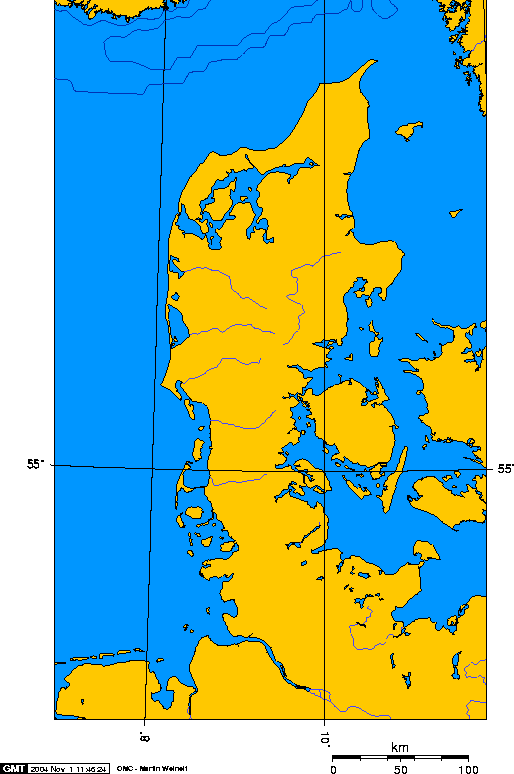





Geography and landscape
Jutland’s terrain is generally low and rolling rather than mountainous. Much of the interior consists of sandy soils, heathlands, and peat bogs, with scattered low hills and agricultural plains. Coastal features include mudflats, dunes and barrier islands along the German Bight and Danish west coast. The region is indented by important waterways such as the Limfjord and is bounded to the south by the River Elbe which helps mark a natural transition toward northern Germany.
Political divisions and historical outline
The northern two thirds of the peninsula belong to Denmark and are usually referred to simply as Jutland in Danish usage. The southern third forms the German state of Schleswig-Holstein, historically composed of the duchies of Schleswig (Sønderjylland) and Holstein. Control over these duchies has changed several times over centuries; in the early 20th century a plebiscite restored parts of the region to Denmark, an episode often cited when discussing national borders and identity (plebiscite, 1920). A notable local change in the 19th century was a storm flood that altered the coastline and created the island sometimes called the North Jutlandic Island (Nørrejyske Ø), separated by the 1825 flood which opened the Limfjord.
Transport, settlements and economy
The peninsula hosts a mix of urban centres, smaller towns and agricultural districts. Denmark’s major connections between Jutland and the island of Funen are provided by two crossings known as the Little Belt bridges: the historic Little Belt Bridge and its modern companion, the New Little Belt Bridge. These links tie into the wider European road network and support commerce and tourism. Coastal shipping and fishing remain important along the western shore, while inland agriculture, light industry and services dominate much of the regional economy. The Wadden Sea and North Frisian islands along the southwest coast form a distinct coastal ecology and cultural area (Germany / Denmark).
Characteristics, examples and notable facts
- Administrative units: the Danish portion is divided into regions and municipalities; the southern portion is part of the German Bundesland of Schleswig-Holstein.
- Islands and straits: the Limfjord cuts across the north, creating the island of Vendsyssel-Thy which is still commonly considered part of Jutland.
- Cultural border: place names and local identity reflect a long history of alternation between Danish and German influence; examples include North Schleswig (Nordslesvig in Danish) and Southern Schleswig, which today remains German.
- Maritime position: Jutland’s shores influence navigation and climate between the North Sea and the Baltic, and its coasts host important tidal flats and islands such as the North Frisian and Danish Wadden Sea isles.
- Border towns and cities: toward the south the River Elbe and nearby Hamburg illustrate the gradual change from peninsula to continental Germany; the Elbe is a longstanding geographic reference (Hamburg).
Jutland remains a geographically coherent region despite administrative divisions, notable for its strategic location, flat coastal plains and a cultural landscape shaped by centuries of interaction between Danish and German societies. For further maps, place names and regional details, consult regional overviews and transport resources (peat, bog, island formation, mainland, North Jutlandic Island, European context).
Related articles
Author
AlegsaOnline.com Jutland: the peninsula of mainland Denmark and northern Germany Leandro Alegsa
URL: https://en.alegsaonline.com/art/51786