
Denmark — the Kingdom in Northern Europe
Denmark (Danmark) is a Nordic constitutional monarchy in Northern Europe, known for its welfare state, maritime history, renewable energy, and the autonomous territories of the Faroe Islands and Greenland.
Overview
Denmark, called Danmark in Danish, is a Nordic country located in the Nordic region of Northern Europe. As the southernmost of the Scandinavian countries it lies south of Norway and southwest of Sweden, with a fixed link across the Øresund to Malmö, and a land border with Germany. Denmark faces the North Sea to the west and the Baltic Sea to the east. Its largest urban area and historic seat of government is Copenhagen, the capital city located on the island of Zealand.
Image gallery
10 Images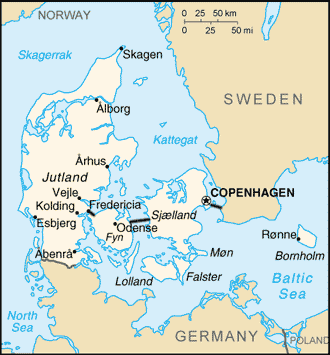


Geography and political structure
The modern state is the Kingdom of Denmark, which politically comprises Denmark proper and two autonomous constituent countries: the Faroe Islands in the Atlantic Ocean, and Greenland in the region of North America. These three parts have distinct legal arrangements, languages and cultures while sharing the Danish crown. The people of Denmark are commonly known as Danes.
Government, society and public services
Denmark is a constitutional monarchy with a largely ceremonial monarch. The current sovereign is Queen Margrethe II. Political authority rests with an elected parliament (Folketing) and a government led by a prime minister; the national political system is a parliamentary democracy. Since 2019 the government has been led by Mette Frederiksen as prime minister. Denmark is widely regarded as a developed country with an extensive welfare state delivering public health, education and social services; international studies have frequently ranked Denmark highly for quality of life, health and education.
History and identity
The name Denmark has roots in Old Norse, recorded as Danmǫrk, meaning the marches or borderlands of the Danes. The territory has a long history that includes the Viking Age, medieval unions with neighbouring kingdoms and the gradual development of modern institutions. Denmark's relationship with nearby Scandinavia has shifted over centuries: at times united, at times independent, and today connected by transport links and shared cultural heritage with Scandinavia and its neighbours.
Economy, culture and notable features
Denmark's economy combines advanced services, manufacturing and a maritime tradition; shipping and trade have long been important. The country is known for sustainable energy initiatives, particularly wind power, and for contemporary design, literature and cuisine. Danish society emphasizes egalitarian values and high levels of public trust. The national currency remains the Danish krone and Denmark maintains selective arrangements with international organisations while participating in defence and diplomatic alliances.
Key facts and distinctions
- Official name: the Kingdom of Denmark.
- Includes the autonomous territories of the Faroe Islands and Greenland.
- Capital and largest city: Copenhagen (the national capital city).
- Language: Danish as the primary language, with other languages present across the Kingdom.
- Political system: a parliamentary parliamentary democracy under a constitutional monarchy.
For further reading on specific topics such as Danish law, regional autonomy, or cultural life, consult dedicated sources or the institutions linked from this summary. Several of the terms and institutions mentioned here are signposted by national and international references for readers seeking more detailed information on governance, history and society.
Danish language | Nordic region | Northern Europe | Scandinavia | Germany | North Sea | Baltic Sea | Developed country | Welfare state | Health | Education | Old Norse | Capital city | Copenhagen | Constitutional monarchy | Monarch | Queen Margrethe II | Parliament | Democracy | Mette Frederiksen | Danes | Faroe Islands | Atlantic Ocean | Greenland | North America
Questions and answers
Q: What is the official name of Denmark?
A: The official name of Denmark is the Kingdom of Denmark.
Q: Where is Denmark located?
A: Denmark is located in Northern Europe, south of Norway and southwest of Sweden, with a border to Germany in the south and coasts on both the North Sea and Baltic Sea.
Q: What makes Denmark one of the happiest places in the world?
A: Surveys have ranked Denmark as "the happiest place in the world" based on standards such as health, welfare, and education.
Q: What is the origin of its name?
A: The origin of its name "Denmark" (Danish: Danmark) is uncertain but it may be derived from Old Norse where it was called Danmǫrk referring to Danish March (the marches of the Danes).
Q: What is its capital city?
A: Copenhagen is the capital city of Denmark, located on Zealand island.
Q: Is Denmark a monarchy or parliamentary state?
A: It's a constitutional monarchy with Queen Margrethe II as head-of-state but also has a democratic government headed by an elected Prime Minister.
Q: Does Denmark include other parts besides mainland Europe?
A: Yes, it includes Faroe Islands in Atlantic Ocean and Greenland in North America.
Related articles
Author
AlegsaOnline.com Denmark — the Kingdom in Northern Europe Leandro Alegsa
URL: https://en.alegsaonline.com/art/26603
Sources
- statistikbanken.dk : "Statistikbanken"
- noegletal.dk : "Økonomi- og Indenrigsministeriets Kommunale Nøgletal"
- stat.gl : "Greenland in Figures 2013,"
- cia.gov : "Faroe Islands"
- imf.org : "Denmark"
- appsso.eurostat.ec.europa.eu : "Gini coefficient of equivalised disposable income (source: SILC)"
- hdr.undp.org : "Human Development Report 2011"
- abcnews.go.com : "Great Danes: The Geography of Happiness"
- aktuelnat.au.dk : "Danmarks nye top" · web.archive.org
- denmark.dk : "Nature & Environment"
- dst.dk : "Immigrants and their descendants and foreign nationals"
- km.dk : Membership Lutheran state church
- visitdenmark.dk : "Cykelruter og regioner"