
Flood — inundation of land by water
Floods are temporary overflows of water that submerge land. This article explains causes, types, impacts, historic examples, response measures and cultural significance in a concise, neutral overview.
Overview
A flood is an event in which water overflows onto land that is normally dry. Flooding can be local and short-lived or widespread and long lasting. It occurs in many environments—from rivers and coastal plains to urban streets—and can range from harmless ponding to catastrophic inundation that destroys buildings, infrastructure and lives. Floods are part of natural hydrological cycles but their frequency and effects are strongly influenced by human activity and climate variability.
Image gallery
10 Images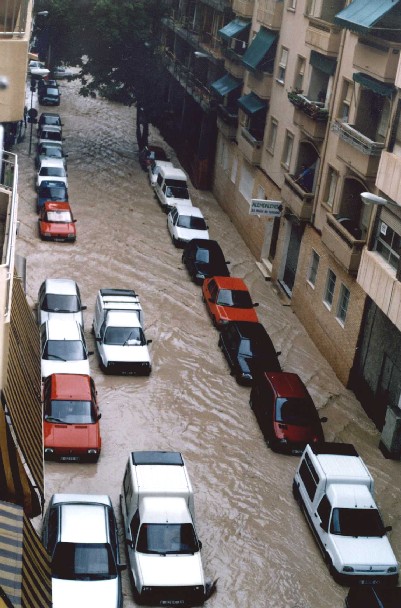


Common causes
Floods arise from a variety of natural and human-made sources. Typical causes include:
- River overflow: prolonged or intense precipitation raises river levels until water spills over banks, often after upstream accumulation; see examples of riverine flooding via river overflow.
- Dam or levee failure: structural breaches can release large volumes of impounded water suddenly; further reading about dam incidents via dam failures.
- Heavy rainfall and flash floods: intense storms can produce rapid runoff in steep or urbanized areas, sometimes after short warning periods; see material on rainfall-driven events at heavy rainfall.
- Coastal flooding: storm surge from cyclones, hurricanes or extra-tidal conditions pushes seawater inland; related topics include storm surge.
- Tsunamis: seismic sea waves generated by earthquakes or landslides can flood large coastal zones; more on tsunamis at tsunami.
- Snowmelt: rapid melting of accumulated snow can overwhelm rivers and soils.
Types and characteristics
Flood classifications help planners and responders. Common categories include riverine (fluvial) floods, flash floods (rapid onset, localized), coastal floods (tidal and surge-driven), pluvial floods (surface water from heavy rainfall where drains cannot cope) and groundwater floods from high water tables. Each type differs in onset speed, predictability and typical seasonality.
Impacts and examples
Floods affect communities, economies and ecosystems. Immediate impacts include loss of life, injury, damage to homes and transport networks, contamination of water supplies and interruption of services. Secondary effects can include disease outbreaks, long-term displacement and economic disruption. Some historic events stand out both for their human toll and for how they changed flood management practices—major river floods, catastrophic dam breaches and large coastal inundations have repeatedly driven reforms in planning, engineering and emergency response.
Preparedness, response and mitigation
Managing flood risk combines structural measures—such as levees, reservoirs, retention basins and improved drainage—with non-structural strategies like land-use planning, early warning systems and insurance. During fast-developing events, people practice evacuation: the rapid movement of residents and valuables to safer, higher ground; resources on evacuation planning can be found at flood evacuation. Community awareness, forecasting improvements and ecosystem-based approaches (for example restoring wetlands) are increasingly important to reduce harm.
History, records and notable facts
Floods have shaped landscapes and human history. Large, deadly floods have occurred throughout recorded time and often precipitated changes in settlement patterns and engineering practice. While exact figures for historical events vary in sources, some floods have produced exceptionally high fatalities and widespread devastation. Modern record-keeping and remote sensing now allow more accurate assessments of flood extent and impacts, informing improved risk reduction.
Cultural and symbolic roles
Floods occupy a prominent place in myth, religion and literature. Many cultures include flood narratives that convey moral, cosmological or historical meanings; the motif of a great flood recurs across diverse traditions and has been explored in folklore and comparative religion studies. For accounts of flood myths and their cultural significance see flood legends.
For introductory resources and practical guidance, consult local flood risk maps, meteorological agencies and emergency management organizations. Further technical and policy material is available through specialized publications and agencies that focus on hydrology, civil engineering and climate adaptation.
Questions and answers
Q: What is a flood?
A: A flood is an overflow of water, most often caused by overflowing rivers, dam breakage, snow melting, heavy rainfall, tsunamis, or storm surges.
Q: What are the causes of floods?
A: The causes of floods can be overflowing rivers, dam breakage, snow melting, heavy rainfall, tsunamis, or storm surges.
Q: What was the deadliest flood in history?
A: The deadliest flood in history was the one that occurred in China in 1931, which killed between 20,00,000 and 40,00,000 people.
Q: What is flood evacuation?
A: Flood evacuation is the process of leaving homes in search of safer ground during a flood.
Q: What are the impacts of floods?
A: The impacts of floods can be devastating, including destruction of homes, loss of life, and damage to infrastructure.
Q: What is the Kerala flood?
A: The Kerala flood was a flood in India that destroyed people's homes and took place in recent years.
Q: What is the story of the great flood?
A: The story of the great flood is a myth that talks about a flood that destroyed the world and is found in various cultures and religions.
Related articles
Author
AlegsaOnline.com Flood — inundation of land by water Leandro Alegsa
URL: https://en.alegsaonline.com/art/35158