
Danish language (Dansk): overview, history, and main features
A concise encyclopedia entry on the Danish language: its classification, where it is spoken, key phonological and orthographic features, historical development, dialects and common expressions.
Danish (dansk) is a North Germanic language spoken primarily in Denmark, with communities in the Faroe Islands, parts of Greenland and the German region of Southern Schleswig (Germany). Roughly five to six million people use Danish as a first language. It functions as the official language of Denmark and as a common administrative and educational language in territories historically connected to the Danish state.
Image gallery
10 Images




Classification and characteristics
Danish belongs to the North Germanic branch of the Indo-European family, alongside Swedish, Norwegian, Icelandic and Faroese. Its vocabulary and grammar share substantial overlap with Norwegian and Swedish, producing a significant degree of mutual intelligibility in both written and, to a lesser extent, spoken forms.
- Phonology: Danish is noted for a rich vowel inventory, a phenomenon called stød (a kind of glottal or laryngeal feature), and reduction of unstressed syllables. Consonant realizations, such as the so-called "soft d," distinguish Danish pronunciation.
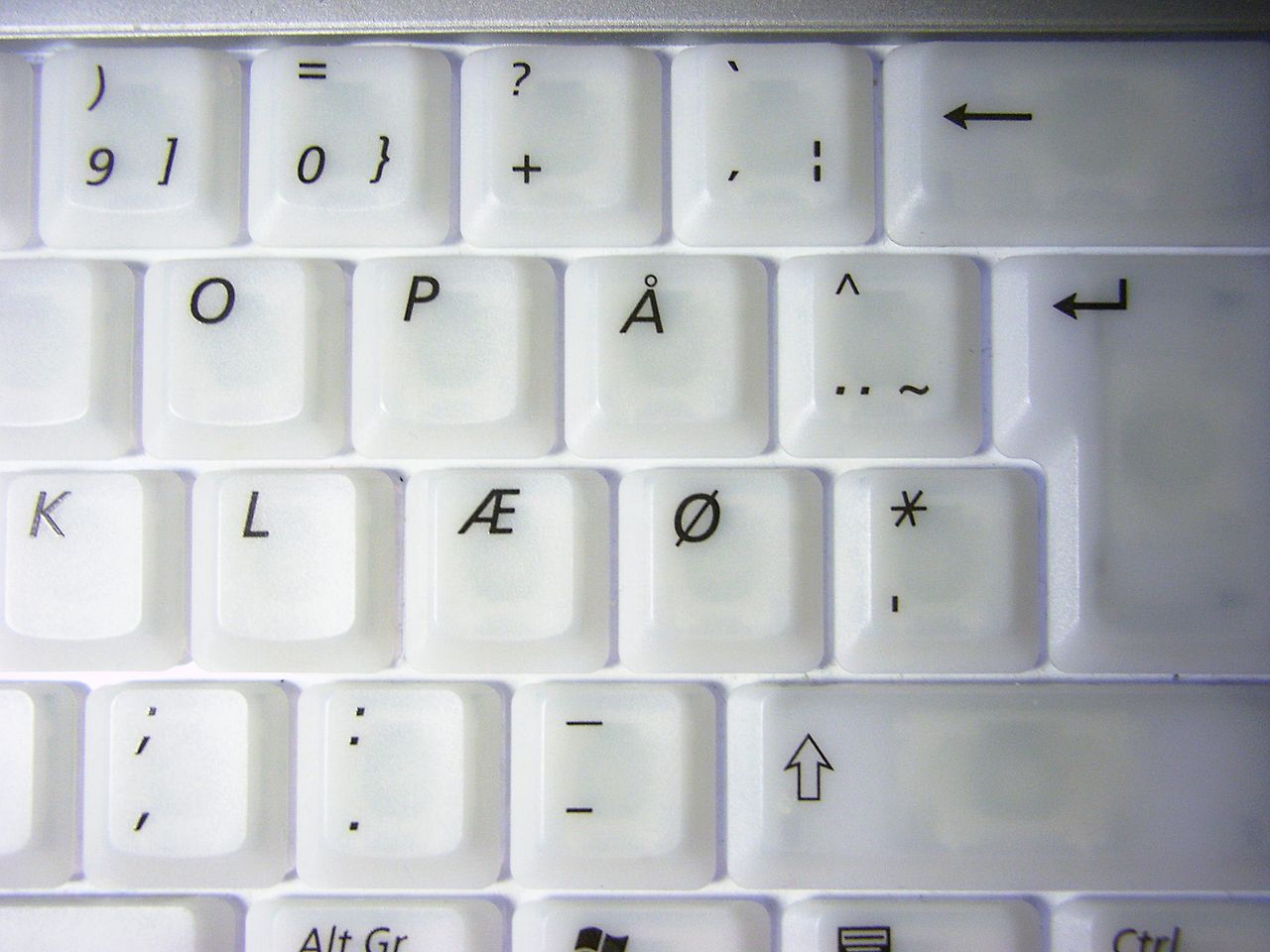
- Orthography: Danish uses the Latin alphabet plus three additional letters: æ, ø and å. Modern spelling was standardized over the 19th and 20th centuries; a notable change in 1948 popularized the letter å in place of the older digraph "aa" in many contexts.
History and development
The language developed from Old Norse, the common medieval language of Scandinavia. Over centuries it evolved through Old Danish and Middle Danish stages into the modern language. Influences from Low German were important during the late medieval period and the Hanseatic era, contributing loanwords and certain syntactic patterns. Standardization of written Danish accelerated with the spread of printing, education and nation-building in the 18th and 19th centuries; modern institutions now monitor usage and orthography.
Dialects and varieties
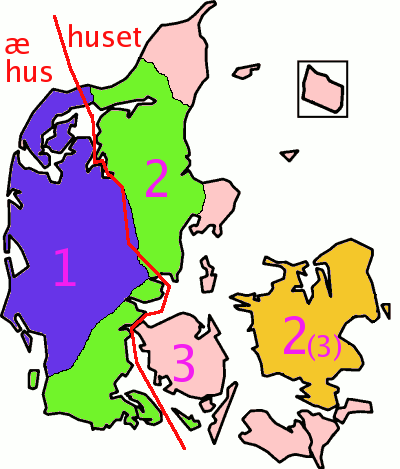
Danish encompasses a variety of regional dialects, often grouped broadly as Jutlandic (western and mainland dialects), Insular or Island dialects, and Bornholm dialects. Urban standards, commonly referred to as "Standard Danish" or rigsdansk, contrast with local speech: the written standard can be close to Swedish and Norwegian orthography while the spoken forms may diverge significantly in sounds and rhythm.
Usage, teaching and examples
Danish is used in government, media, education and literature in Denmark. It is taught as a second language in Greenland and the Faroe Islands where local languages also have official status. Learners often find Danish grammar relatively regular compared with English, but pronunciation and connected speech pose challenges. Common everyday words include: hej (hello), farvel (goodbye), tak (thanks), undskyld (sorry/excuse me), ja (yes) and nej (no). Many Danish cultural concepts, such as "hygge," have entered wider usage in other languages.
Notable distinctions and facts
Danish stands out among Scandinavian languages for its characteristic speech melody and reduction processes, making oral comprehension sometimes harder even when written forms are mutually intelligible. The language has a significant modern literary tradition and continues to adapt through loanwords and new usage patterns influenced by global media. For further institutional and grammatical resources, consult language authorities and grammars available through national or academic channels (Denmark, Faroe Islands, Greenland, Southern Schleswig).
Related articles
Author
AlegsaOnline.com Danish language (Dansk): overview, history, and main features Leandro Alegsa
URL: https://en.alegsaonline.com/art/25422