
Hans Lammers: Chief of the Reich Chancellery (1879–1962)
German jurist and senior Nazi official who ran the Reich Chancellery under Adolf Hitler, coordinated government business, and was later tried and convicted after World War II.
Overview
Hans Heinrich Lammers (1879–1962) was a German jurist and senior state official who served as Chief of the Reich Chancellery under Adolf Hitler. As head of the Chancellery he acted as the principal administrator and gatekeeper for the German government, transmitting the Führer’s orders to ministries and helping to shape the bureaucratic implementation of National Socialist policy. His career illustrates the role of high-level civil servants in enabling authoritarian rule.
Image gallery
4 Images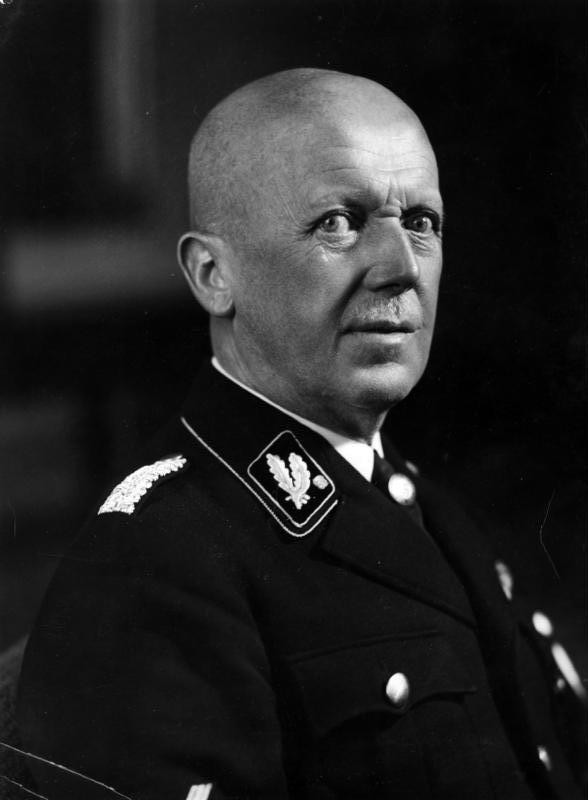


Role and responsibilities
Appointed to lead the Reich Chancellery after the Nazis came to power, Lammers managed the flow of decrees, laws and instructions between Hitler and the various government departments. The office served as the central coordinating body for cabinet matters, legal drafts and communications that required the Führer’s approval. Because many directives were issued as oral orders or informal Führer decrees, the Chancellery’s staff and chief became important intermediaries in translating Hitler's decisions into written form and in ensuring that ministries complied.
Career and wartime activity
Born in Silesia in 1879, Lammers trained as a lawyer and entered the Prussian civil service. He served in the First World War and later pursued a career in government administration. During the Nazi era he rose to a position of considerable influence through his control of administrative procedures, official documentation and access to the head of state. In 1940 he received a high rank in the SS, a ceremonial reflection of his standing within the regime. Historians distinguish between policy-makers who shaped ideology and bureaucrats such as Lammers who facilitated and institutionalized decisions, including those that enabled repression and war crimes.
Postwar trial and legacy
After Germany’s defeat, Lammers was detained by Allied authorities. He was one of the senior officials tried in the subsequent Nuremberg proceedings that addressed the criminality of the Nazi state bureaucracy. He was convicted and given a substantial prison sentence; that sentence was later reduced and he was released in the 1950s for health or clemency reasons. Lammers died in Düsseldorf in 1962. His postwar case is frequently cited in studies of legal responsibility, administrative complicity and the ethical obligations of civil servants under repressive regimes.
Notable distinctions and historical assessment
Lammers is often portrayed as a paradigmatic example of the professional bureaucrat whose administrative competence made extremist policies practicable. He did not typically set ideological direction, yet his office was indispensable for coordinating the machinery of state power. Scholars examine his papers and wartime correspondence to trace how decrees were drafted, how ministries negotiated prerogatives, and how the centralization of authority produced both efficiency and anonymity for decision-making in the Third Reich.
Further reading and resources
- Biographical overview and key dates
- Birthplace and early life details
- Prussian civil service context
- Territorial history of Silesia
- Place of death and later life
- North Rhine-Westphalia administrative history
- Postwar West German context
- Nazi Party membership and party structure
- German legal and political traditions
- Roles of political officeholders in the Third Reich
- The structure of Hitler's cabinet and inner administration
- SS ranks and organizational chart
- German Empire institutional background
- Allied powers and wartime alliances
- Eastern Front and wider wartime events
- Assassination of Archduke Franz Ferdinand (context)
- World War I veterans in Weimar and Nazi administrations
- Military awards and recognition in WWI
- Fate of the German monarchy after 1918
- Timeline linking the interwar years to WWII
- The 1934 purge (Night of the Long Knives) and administrative reactions
- State-sponsored antisemitic measures and Kristallnacht
- Reichsführer-SS and the SS hierarchy
- Heinrich Himmler and central police structures
- Gestapo and security apparatus
- Reinhard Heydrich and policy coordination
- Hitler's final days and removal of officials
- Waffen-SS and military-political interventions
- Endgame events: Berlin and 1945
- Age, health and clemency considerations in postwar sentences
Related articles
Author
AlegsaOnline.com Hans Lammers: Chief of the Reich Chancellery (1879–1962) Leandro Alegsa
URL: https://en.alegsaonline.com/art/42274