
Reinhard Heydrich: senior SS official and key organizer of Nazi security policy
Biography of Reinhard Heydrich, his rise in the SS and police, role in planning and implementing Nazi security and genocidal policies, tenure as Reich Protector, assassination and legacy.
Overview
Reinhard Tristan Eugen Heydrich (born 7 March 1904 in Halle — died 4 June 1942 in Prague) was a leading German SS official who played a central role in the Nazi regime's security apparatus. A former naval officer, Heydrich rose rapidly within the SS and police, becoming one of Heinrich Himmler's principal deputies and a chief architect of many repressive and genocidal policies carried out by Nazi institutions.
Image gallery
10 Images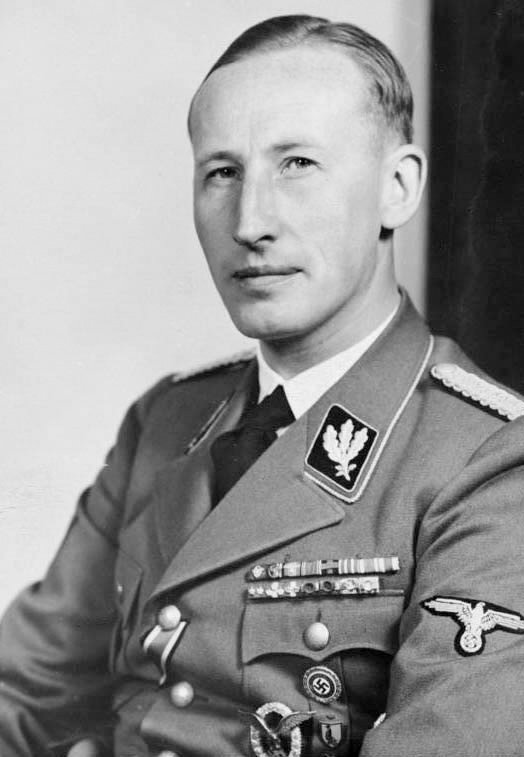




Early life and naval service
Heydrich came from a middle‑class background and served in the German navy in the 1920s and early 1930s. His early military and administrative experience shaped his approach to organization and security work. After leaving the navy he joined the SS and developed a reputation for administrative skill, ruthlessness and ideological commitment to National Socialism.
Rise in the SS and police
Within the SS Heydrich was entrusted with the leadership of the Sicherheitsdienst, the SS intelligence service, and he exerted influence across the Gestapo and other police organs. As chief of the Reich Main Security Office (RSHA) he coordinated intelligence, counter‑intelligence, and political policing and combined them into a centralized security complex. His authority extended into occupied territories, where he directed measures against resistance and groups targeted by Nazi policy.
Role in mass deportations and killing operations
Heydrich was centrally involved in the formulation and coordination of policies that led to mass deportations and killings. He convened and chaired meetings of senior officials to coordinate the implementation of what the regime called the "Final Solution." He relied on and supervised formations such as the mobile killing units, the Einsatzgruppen, and made use of SS combat units including elements of the Waffen‑SS for security and anti‑partisan operations. Operational tasks, including transport arrangements for deportations, were delegated to subordinates such as Adolf Eichmann, who organized trains that sent many victims to killing sites in Poland and to camps such as Auschwitz. Heydrich's actions were carried out through the Gestapo and other secret police structures (Gestapo, security services), and they contributed directly to the machinery of genocide known as the Holocaust.
Reich Protector in Bohemia and Moravia
Appointed acting Reich Protector of Bohemia and Moravia in 1941, Heydrich administered the occupied Czech lands with great severity. His tenure was marked by a policy of harsh repression intended to deter resistance: arrests, executions, and collective punishments were used to consolidate German control. Local populations gave him notorious nicknames reflecting his reputation, such as "The Butcher of Prague" and others.
Assassination and reprisals
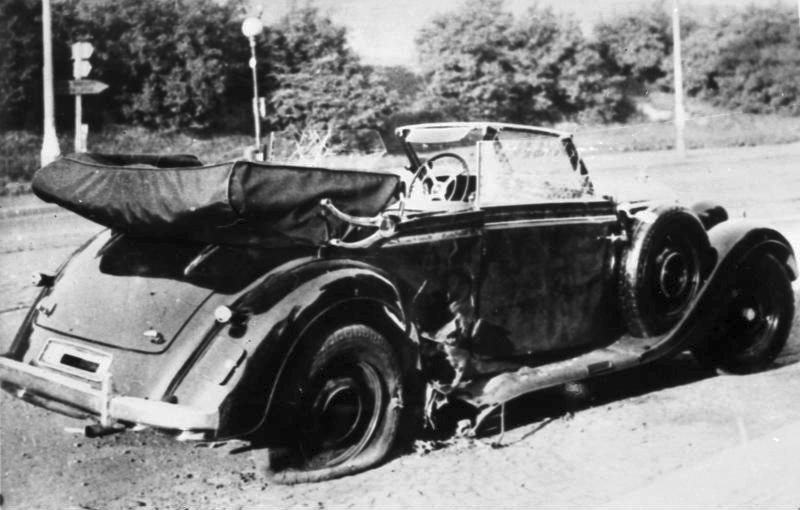
In May 1942 Czechoslovak resistance fighters, trained in Britain, carried out an attack known as Operation Anthropoid. Heydrich died of wounds days later. The assassination provoked brutal reprisals by the German occupation, including summary executions, mass arrests and the destruction of villages; these reprisals remain among the most widely remembered atrocities of the occupation and shaped postwar memory in the territory that is today the Czech Republic.
Uniforms, symbols and organization
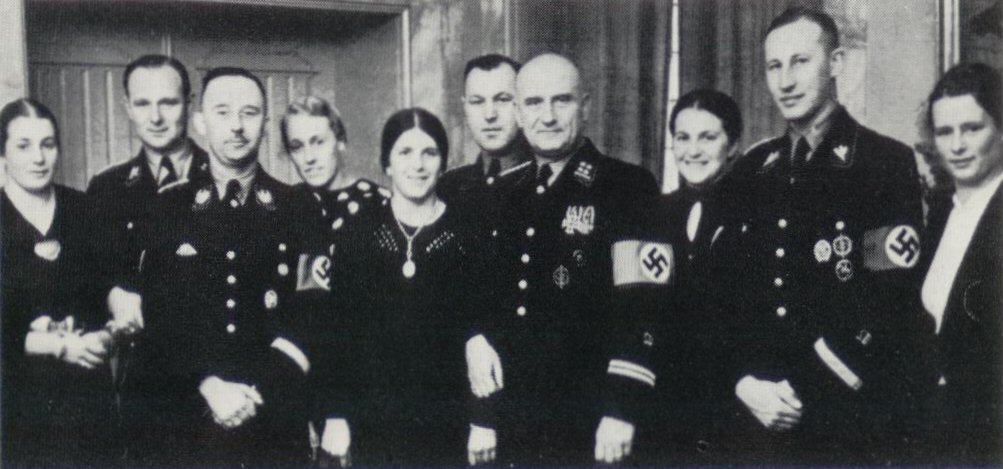
In contemporary descriptions and later accounts Heydrich is often associated with the distinct uniforms and symbols of the organizations he led: the black dress uniform of the SS and references to service colors and uniforms tied to varied roles, for example mentions of black, grey, green and earlier blue in the context of other services such as the Luftwaffe. These details have appeared in eyewitness accounts, photographs and uniforms preserved in archives.
Methods and institutional legacy
Historians emphasize Heydrich's combination of bureaucratic skill and ideological zeal: he sought to rationalize, coordinate and centralize security and extermination efforts across multiple agencies. The institutional structures he helped create — a tightly integrated network of intelligence, police and security services — outlasted him and shaped the conduct of occupation and repression in many parts of Europe, including Czechoslovakia and other occupied territories.
Memory and scholarship
Heydrich's role has been extensively studied in scholarship on the Nazi state, police institutions and the Holocaust. He is widely regarded as one of the principal organizers of Nazi security policy and of measures that led to mass murder. Public memory in affected countries and international historiography continue to examine his actions, the victims of the policies he directed, and the consequences of his assassination for both occupiers and occupied.
Further reading and sources
For detailed study consult archival records, specialist monographs on the SS and RSHA, and research on the occupation of Czechoslovakia. Primary source material includes Gestapo and SS files and postwar investigations; secondary literature provides context and analysis of Heydrich's central role in Nazi repression and the occupied territories.
Related articles
Author
AlegsaOnline.com Reinhard Heydrich: senior SS official and key organizer of Nazi security policy Leandro Alegsa
URL: https://en.alegsaonline.com/art/81977