
Silesia: historical region of Central Europe
Silesia is a historic Central European region now mostly in Poland with parts in the Czech Republic and Germany; known for its industrial heritage, mixed cultures, and complex history.
Overview
Silesia is a historical and geographic region in Central Europe, now chiefly within modern Poland but also extending into the Czech Republic and a small part of Germany. The area is known by several names in local languages: Polish: Śląsk, German: Schlesien and in regional speech as Silesian: Ślůnsk. Its position at the intersection of Slavic and Germanic lands has given Silesia a layered cultural and political identity throughout history. For context within nation-states, see general references about Poland.
Image gallery
8 Images


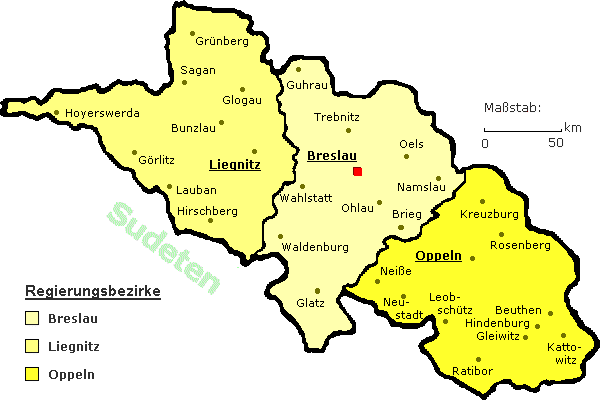

Geography and subdivisions
Traditionally Silesia is divided into several parts with distinct landscapes and histories. Common subdivisions include:
- Lower Silesia in the west, with large river valleys and the historical city of Wrocław (Breslau).
- Upper Silesia in the east, an industrial belt historically rich in coal and steel.
- Cieszyn Silesia (on the Czech–Polish border) and small border areas in the west that historically linked to Saxony.
History and political changes
Silesia's early medieval history involved Slavic duchies and incorporation into the Polish Piast realm. Over centuries it came under Bohemian, Habsburg and then Prussian rule. In the 18th century the Prussian conquest reshaped its status in Central Europe after wars in which the region passed from Habsburg to Prussian control (notably events often dated to 1742). Industrialization in the 19th century increased its economic importance. The 20th century brought further upheaval: after World War II, in and around 1945, Soviet forces including the Red Army occupied broad swathes of Central Europe and borders were redrawn. In the postwar years the region experienced population transfers and administrative changes under the new communist authorities in Poland and its neighbors; those policies and laws are documented in many accounts of the era (postwar communist period).
Economy, culture and identity
Silesia has long been an industrial heartland, especially Upper Silesia with its coal mines, steelworks and chemical plants. Urban centers such as Wrocław, Katowice and Opole grew as economic and cultural hubs. The population has included Polish, Czech, German and Jewish communities, and a local Silesian dialect or language persists among many inhabitants. Architectural heritage ranges from medieval castles and Gothic churches to 19th-century industrial towns and modern urban renewal projects.
Modern administration and legacy
Today most of Silesia lies within Polish administrative regions (voivodeships) such as Lower Silesian, Opole and Silesian Voivodeship, while Czech Silesia is part of the Czech Republic and a small portion remains in Germany. The region's complex past shapes contemporary discussions about identity, minority rights and cultural preservation. Silesia remains important for its historical monuments, museum collections, industrial archaeology and continuing role in the economies of Central Europe.
Questions and answers
Q: What is Silesia?
A: Silesia is a historical region of Poland.
Q: What languages are spoken in Silesia?
A: The languages spoken in Silesia include Polish, German, Latin, and Silesian.
Q: When was Silesia part of Germany?
A: Between 1742 – 1945, it was the eastern part of Germany and was a Prussian province.
Q: Who occupied all of Poland in 1945?
A: In 1945, all of Poland was occupied by the Soviet Red Army.
Q: What laws were enacted by the communist occupant after 1945?
A: The communist occupant enacted laws that in effect chased away the remaining owners.
Q: How did these laws affect landowners in Silesia?
A: These laws had a negative impact on landowners as they were forced to leave their land and property behind.
Q: Was there any resistance to this occupation?
A: It is unclear if there was any resistance to this occupation or not.
Related articles
Author
AlegsaOnline.com Silesia: historical region of Central Europe Leandro Alegsa
URL: https://en.alegsaonline.com/art/90392