
Gavrilo Princip (1894–1918): background, assassination and historical impact
Overview of Gavrilo Princip, his role in the 1914 Sarajevo assassination of Archduke Franz Ferdinand, his associations, trial and imprisonment, and the wider consequences for Europe.
Gavrilo Princip was a Bosnian Serb nationalist whose assassination of Archduke Franz Ferdinand and his wife on 28 June 1914 became a pivotal event in twentieth‑century history. Born in Obljaj in 1894, Princip is best known for the shooting in Sarajevo that triggered the July Crisis and the diplomatic breakdown that led to the outbreak of World War I. His life and act are frequently examined for how individual violence, secret societies and nationalist politics intersected in the final years of the Austro‑Hungarian Empire.
Image gallery
10 Images


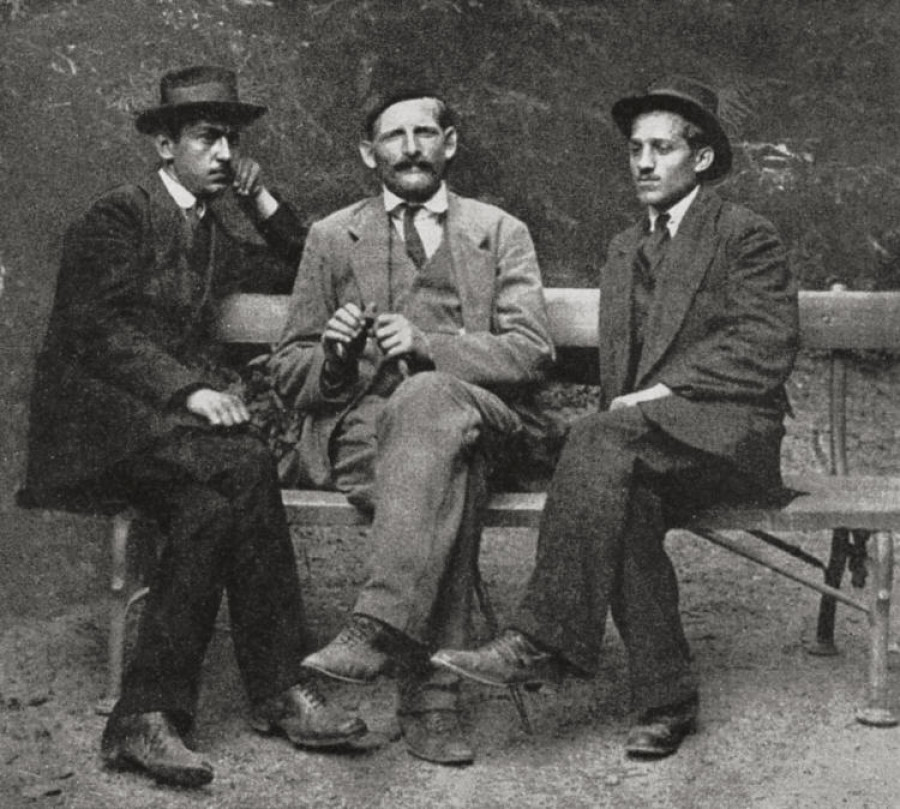
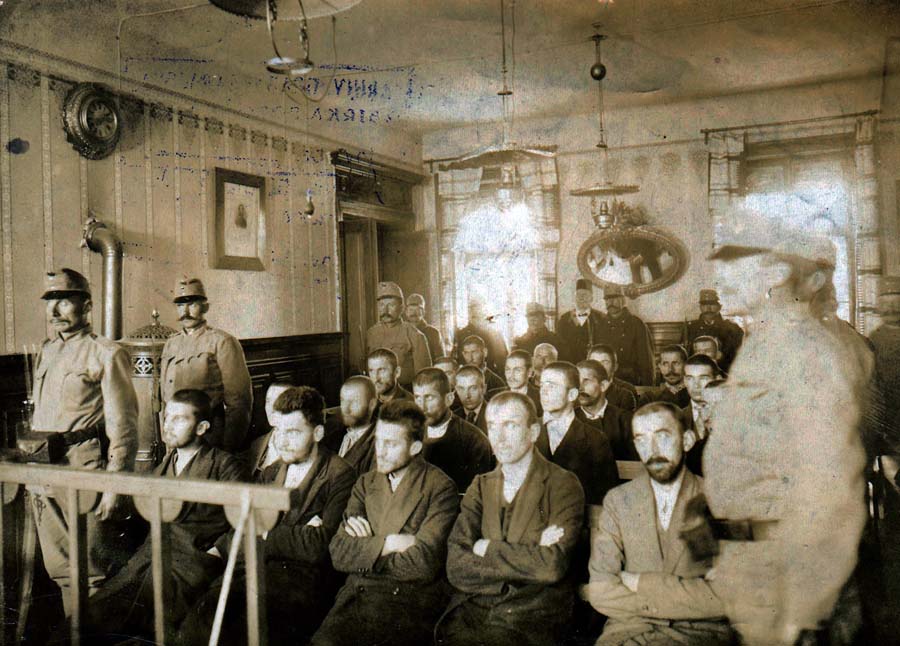
Early life and political formation
Princip grew up in a poor peasant family in what was then the Austro‑Hungarian province of Bosnia and Herzegovina. He left home for school and work, and during his late teens became involved in radical youth circles that favored South Slav unity. These circles, often described collectively as Young Bosnia, combined a mixture of socialist, nationalist and anti‑imperial ideas. Influenced by the wider currents of Balkan nationalism, Princip and several companions sought political change by direct action rather than through legal or parliamentary means.
Alliances and preparations
Young Bosnia acted in a turbulent environment where clandestine groups in neighboring Serbia also pursued irredentist aims. Elements within the Serbian military and intelligence establishment reportedly offered assistance to conspirators in Bosnia; a secret society known as the Black Hand is often cited in contemporaneous and later accounts as having provided training, weapons or logistical support. Princip and other young men acquired handguns and bombs and planned to attack representatives of the Austro‑Hungarian state who they viewed as symbols of domination over South Slavs.
The assassination in Sarajevo
On the morning of 28 June 1914, Archduke Franz Ferdinand, heir to the Austro‑Hungarian throne, visited Sarajevo accompanied by his wife, Sophie, Duchess of Hohenberg, and other officials. The itinerary passed through the city in motorcars and was publicized in advance. Several conspirators awaited them along the route; an initial attempt involving a thrown bomb failed to kill the archduke. Later the motorcade took a wrong turn and stalled near the Latin Bridge, where a young Princip emerged from a nearby café and fired the fatal shots. The archduke and his wife died at the scene.
Trial, sentence and imprisonment
Princip was arrested immediately and tried by Austro‑Hungarian authorities. During his trial he explained that his motivation was to advance the cause of South Slavic freedom and to strike a blow against the imperial order. Because he was under twenty years old at the time of the crime — he was 19 — Austro‑Hungarian law prevented a death sentence. Princip was instead given the maximum prison term permitted for a minor: twenty years. He was incarcerated in harsh conditions, where he suffered from tuberculosis and other illnesses; contemporary reports indicate he endured severe privation and that one of his arms required amputation. He died in captivity in 1918.
Aftermath and historical significance
The Sarajevo murders precipitated a diplomatic crisis between Austria‑Hungary and Serbia. The Austro‑Hungarian government issued a sharply worded demand to Belgrade, commonly known as the July Ultimatum, which Serbia could not accept in full. Austria‑Hungary, backed diplomatically and militarily by Germany, moved toward war. A web of alliances and mobilizations then involved Russia, France, Britain and others — events often summarized as the chain of decisions that led to the First World War. Historians continue to debate the relative weight of Princip's action versus broader structural causes, but the assassination is widely regarded as the immediate catalyst for the July Crisis.
Notable facts and timeline
- Birth: 25 July 1894 in Obljaj, in what was then Austro‑Hungary (Bosnia).
- Political affiliation: member of nationalist youth movements like Young Bosnia and linked to operatives associated with the Black Hand.
- Assassination: 28 June 1914 in Sarajevo, killing Archduke Franz Ferdinand and his wife Sophie.
- Trial: tried under Austro‑Hungarian law; age (19) precluded capital punishment; sentenced to 20 years.
- Imprisonment and death: detained in a fortress prison where he developed tuberculosis and poor health; died 28 April 1918.
- Geopolitical result: the killings accelerated the July Ultimatum and wider mobilizations that led to the outbreak of World War I; allied diplomacy and commitments — notably by Germany, other European powers and Russia — played decisive roles.
Princip remains a contested figure: to some he is a misguided nationalist who committed murder; to others he is a symbol of resistance against imperial rule. His act and the reaction it provoked are studied both as an instance of political violence and as a moment when already tense international relations tipped into global war. For further context on the milieu in which he acted, readers can consult contemporary diplomatic records and histories of Balkan nationalism and Austro‑Hungarian politics (assassination accounts, South Slav movements, Austria‑Hungary, Serbia).
Selected reference points for deeper reading: the Sarajevo chronology (city events), the role of clandestine societies (Black Hand studies), primary documents from the July Crisis (the Ultimatum) and biographies that explore Princip's life, motivations and the conditions of his imprisonment (legal proceedings, international responses, European alliances).
Questions and answers
Q: Who was Gavrilo Princip?
A: Gavrilo Princip was a Serb nationalist who shot Archduke Franz Ferdinand and the wife of the Archduchess Sophie Chotek on 25 July 1894.
Q: Where was he born?
A: He was born in Obljaj, a poor area of Bosnia.
Q: What group did he join as a young man?
A: As a young man, he joined a small group called "Young Bosnia" who wanted the Slavs in the south of Austria-Hungary to join with Serbia in a new country.
Q: How did this group get guns and bombs?
A: A group of powerful people in Serbia called the Black Hand gave 'Young Bosnia' guns and small bombs.
Q: What happened when they failed to kill Ferdinand?
A: After they all failed to kill Ferdinand, Princip went to buy a sandwich at a cafe and when he came out, he saw Ferdinand's car stalled and walked up and shot him.
Q: Why couldn't they kill Princip for his crime?
A: The Austrians thought it was a very bad crime but they could not kill him because he was only 19 years old according to law in Austria-Hungary which said only people older than 20 could be killed even when the crime is as bad as killing royalty like Ferdinand.
Related articles
Author
AlegsaOnline.com Gavrilo Princip (1894–1918): background, assassination and historical impact Leandro Alegsa
URL: https://en.alegsaonline.com/art/37774
Sources
- books.google.com : p. 39