
Hades — Greek god and ruler of the underworld
Hades is the ancient Greek deity who presided over the underworld and the dead; husband of Persephone, associated with wealth and chthonic rites, distinct from death itself and widely represented in myth and art.
Overview
Hades is the name traditionally given to the ancient Greek god who ruled the realm of the dead. In myth he is one of the children of the Titans Cronus and Rhea and a brother of Zeus and Poseidon. As a principal figure in Greek religion and storytelling, Hades governs the subterranean domain where the souls of the departed reside. His role is often described as custodial and kingly rather than as a bringer of death; the personification of death was a separate figure in Greek myth.
Image gallery
10 Images


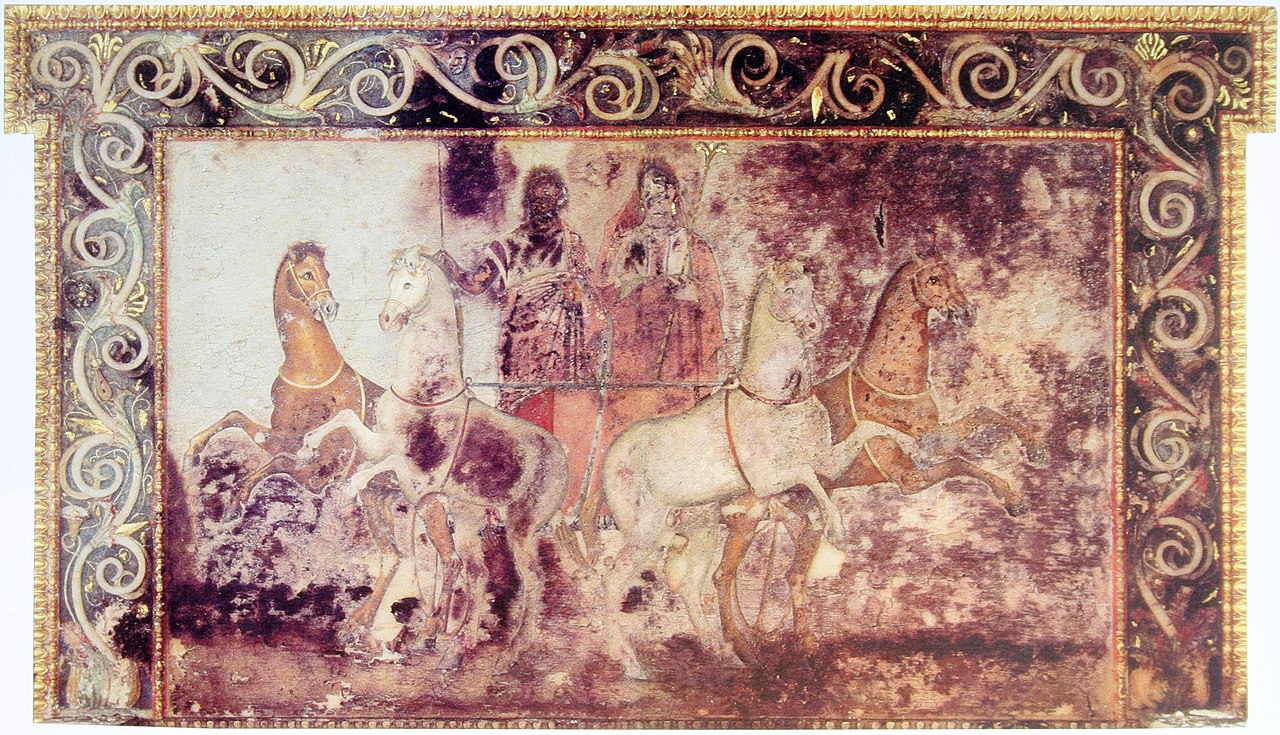


Attributes and iconography
Classical sources and artistic representations associate Hades with several symbols and attributes. He is commonly shown holding a scepter or staff, and associated with the Helm of Darkness that renders its wearer invisible. Plants such as the cypress, narcissus and poplar are linked to him, and the pomegranate is an important fruit in myths that explain seasonal change. Some stories connect Hades to abundance and subterranean wealth—mineral riches and fertile soil—which is reflected in the alternate title Plouton (Ploutos) used in some cult contexts.
Myths and narrative role
Hades appears in a number of well-known Greek tales. One central narrative describes the abduction of Persephone, daughter of Demeter, who becomes Hades’ consort and divides her time between the world above and the underworld according to various versions of the myth; this union is invoked to explain the cycle of growth and dormancy of vegetation. Heroes and poets in the tradition sometimes enter the underworld and interact with Hades or his court—examples include the journeys of Orpheus, Heracles and Odysseus—illustrating the god’s status as arbiter of the dead and custodian of the afterlife.
Religious practice and cultural attitudes
Unlike many Olympian gods, Hades was approached with caution and avoided direct invocation by name in many places. He had relatively few temples and formal shrines compared with gods like Zeus or Athena; euphemisms such as Plouton were often preferred. Funerary rites, offerings left for the dead, and gestures like placing a coin for Charon are part of the broader funerary customs connected to the underworld sphere, even when Hades himself was not the direct object of cult attention.
Distinctions and legacy
It is important to distinguish between Hades the deity and the word Hades used to describe the underworld as a place. Hades should also be differentiated from Thanatos, the personification of death, and from figures like Hermes who function as psychopomps guiding souls. The Roman world equated Hades with Pluto, a Latinized form emphasizing wealth and underworld rule. Over centuries Hades has remained a potent figure in art, literature and modern culture, where portrayals emphasize his authority, his somber court, or his role in the Persephone myth.
Further reading and resources
- Greek name and early forms (ᾍδης)
- Hades as god of the dead
- The underworld and its geography
- Hades in ancient Greek religion and myth
- Parentage: Titans and genealogy
- Cronus in mythic tradition
- Rhea and maternal figures
- Zeus and the Olympian order
- Poseidon and sibling deities
- Hestia and domestic cults
- Hera and divine relationships
- Demeter and agricultural myth
- Persephone and the seasonal myth
- Cornucopia and symbols of abundance
- Cypress as a funerary symbol
- Narcissus in classical poetry
- Poplar and other sacred trees
- Helm of Darkness (cap of invisibility)
- Sacred animals and omens
- Pomegranate and seed-motif myths
- Roman equivalent: Pluto
Related articles
Author
AlegsaOnline.com Hades — Greek god and ruler of the underworld Leandro Alegsa
URL: https://en.alegsaonline.com/art/41714