
Hanuman: Hindu god of strength, devotion, and the Ramayana
Hanuman is a central figure in Hindu tradition—an ardent devotee of Rama, a symbol of strength and service, prominent in the Ramayana and widely worshipped across South and Southeast Asia.
Overview
Hanuman is a prominent figure in Hindu religious literature and popular devotion. Portrayed as a vanara (a humanoid with simian features), he embodies strength, courage, humility, and unwavering devotion. Hanuman plays a key role in the epic Ramayana, where he becomes the foremost devotee and ally of Rama, an avatar of Vishnu represented in many devotional traditions (Rama). He is often invoked as a protector and an exemplar of selfless service by followers and communities.
Image gallery
10 Images

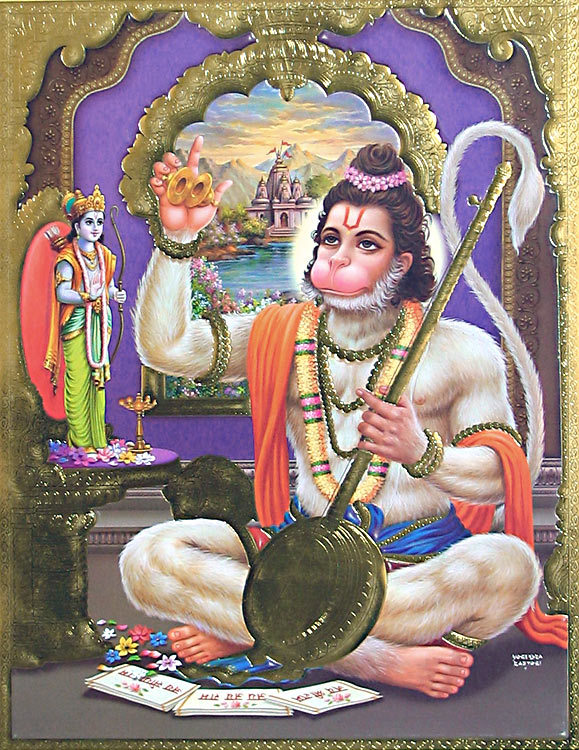


Names, origins and iconography
Hanuman is known by many names that recall his parentage, qualities and deeds: Anjaneya (son of Anjana), Kesarinandan (son of Kesari), Maruti (son of the wind god Vayu), and Bajrangbali in popular Hindu practice. Traditions differ about his birth: most relate that his mother Anjana and father Kesari were mortal beings and that the wind god, Vayu, played a role in his conception or upbringing. These stories are part of a larger mythic context rather than historical genealogy.
Artistic depictions typically show Hanuman as a powerful, monkey-faced figure with a long tail, muscular body, and a gada (mace). He may be shown kneeling in devotion to Rama and Sita, carrying a mountain, or flying across the sky. These images emphasize both his physical might and spiritual dedication.
Key episodes and attributes
- Childhood exploits: Many stories tell of Hanuman's playful and bold youth, including a well-known tale in which he attempts to seize the sun, mistaking it for a fruit.
- Leap to Lanka: Hanuman is famed for leaping across the ocean to the island of Lanka to find Sita and to deliver Rama's message.
- Bhima and the mountain: In the battle scenes of the Ramayana, Hanuman fetches the herb-bearing mountain (Sanjeevani) to revive Lakshmana when healing could not otherwise be obtained.
- Devotion and service: Above all, Hanuman represents bhakti—devotional surrender—placing duty to Rama before personal power.
Legends about immortality and powers
Several traditions describe Hanuman as a Chiranjivi, one of the immortals who remain in the world until the end of the age. Different regional accounts attribute boons and protections to him from various deities such as Vayu, Brahma or Shiva; these are part of devotional narratives that explain his extraordinary abilities. Hanuman's powers commonly include superhuman strength, the ability to alter his size, speed, flight, and a near-impervious constitution. His weapon is usually a gada, and his moral qualities—courage, chastity, restraint and intelligence—are as important as his physical feats.
Worship, literature and cultural impact
Worship of Hanuman is widespread across India and in parts of Southeast Asia. Temples dedicated to him vary from small roadside shrines to large complexes, and he figures prominently in folk theatre, dance, and popular media. The devotional hymn known as the Hanuman Chalisa, widely attributed to the poet-saint Tulsidas, is recited by many devotees for protection and strength. Festivals such as Hanuman Jayanti celebrate his birth and virtues. Hanuman's image and stories have also been adapted into modern literature, comics, film, and performing arts, underscoring his continued cultural resonance.
For further reading on his mythic role and devotional traditions see general resources on the Hindu pantheon, the iconography of simian figures, and regional retellings of the avatar narratives. Accounts of the rescue of Sita and the battle with Ravana are central to Diwali narratives and can be explored via epic summaries and regional retellings (Sita, Ravana, Diwali).
Hanuman remains a powerful symbol: a model of disciplined strength and selfless service whose stories continue to inspire religious, ethical and cultural life across many communities.
Related articles
Author
AlegsaOnline.com Hanuman: Hindu god of strength, devotion, and the Ramayana Leandro Alegsa
URL: https://en.alegsaonline.com/art/42318