
Death (personification): the Grim Reaper and cultural figures
An overview of Death as a personified figure: common imagery, historical origins, cultural variants such as the Grim Reaper and Angel of Death, roles, and notable distinctions.
Death, when described as a personified being, appears across cultures as an anthropomorphic figure who represents or accompanies the end of life. As a literary and artistic device, this personification helps societies talk about mortality, fate and the unknown. In this role Death may act as a psychopomp — a guide for souls — or as an active bringer of mortality. The concept of a single embodiment or messenger of death is a recurring motif in myth, religion and folklore and has been adapted into modern literature, visual art and popular culture. For readers exploring the idea of anthropomorphic death, see a general discussion of personification in cultural expression.
Image gallery
10 Images


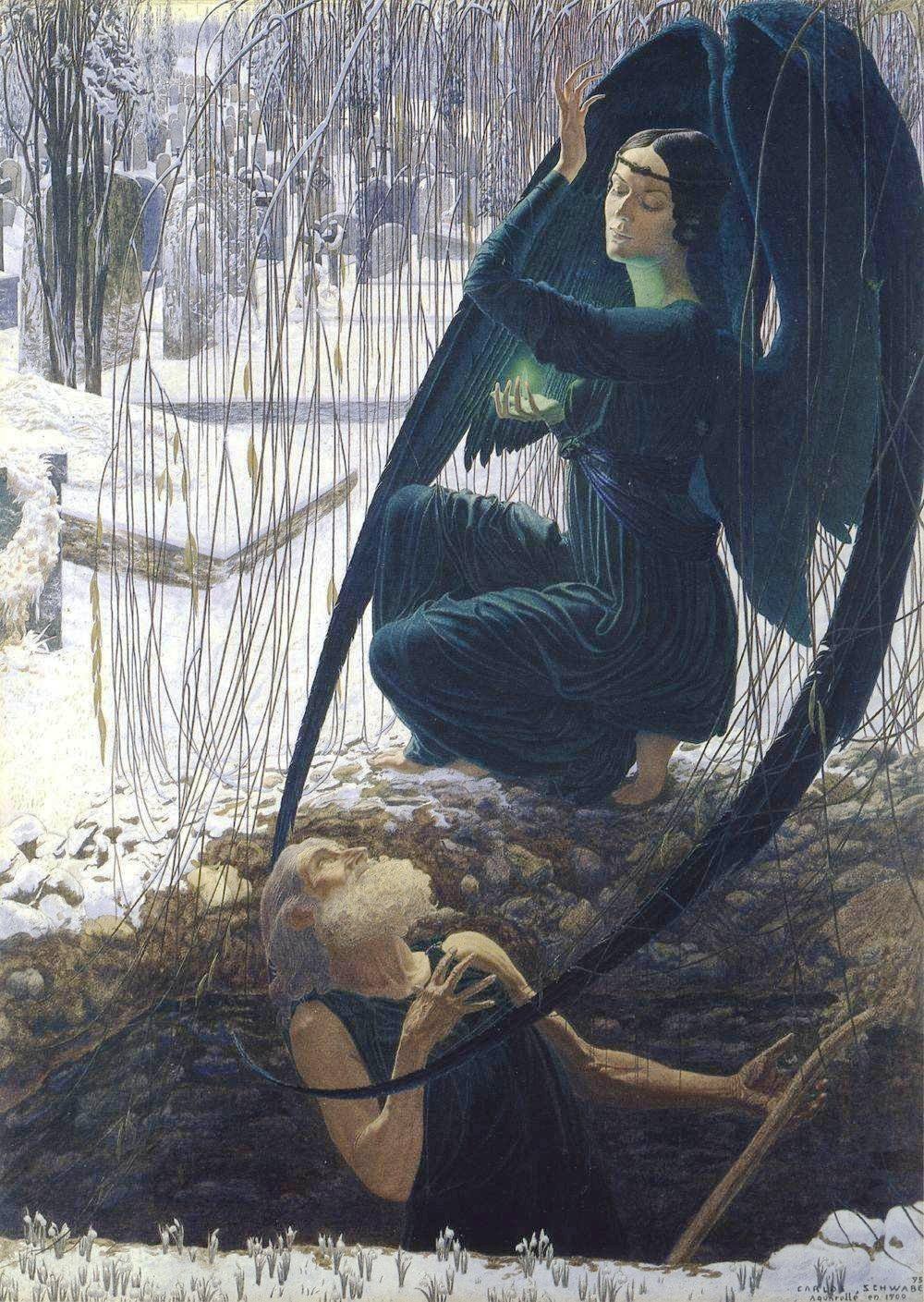


Common features and iconography
The most widely recognized Western image of personified Death is the Grim Reaper: a skeletal figure draped in a dark hooded cloak and often carrying a scythe. The skeleton element evokes the mortal body stripped of life and is a concise visual shorthand for mortality; many traditions use skeletal imagery to remind viewers of life's fragility — for example, the classic depiction of the skeleton in art and memento mori motifs. The scythe, an agricultural tool for cutting crops, symbolizes Death's 'harvesting' of human lives; it is commonly shown as an attribute of the figure (scythe). Other attributes sometimes appear alongside these, such as an hourglass to mark the passage of time, a black or funeral robe, a lantern or a pale, expressionless face.
Names, roles and scriptural references
Naming of the figure varies by language and religious context. In English the term Grim Reaper has been popular since the late medieval period as a convenient label for the skeletal harvester. In Abrahamic and related traditions the figure is sometimes called the Angel of Death; in Hebrew tradition that title is known as Mal'ach Ha'Mavett, and similar messenger figures appear in scriptural and post‑scriptural texts and commentaries (the Bible and related literature refer to angelic agents associated with death). When discussing the English label, readers may consult more on the cultural history of the Grim Reaper.
Cultural variants and functions
Cross-culturally, the personification of death takes many forms and performs different functions. Some well-known variants include:
- Ancient Greek Thanatos and Roman Mors, mythic or poetic personifications of death.
- In Islamic and Jewish traditions, angelic figures such as Azrael or named angels who remove souls.
- South and East Asian traditions that portray death or judges of the dead (for example, Yama in Hindu and Buddhist contexts).
- Folk figures like Mexico's Santa Muerte, Breton Ankou, or the feminine La Parca in Spanish tradition.
In some beliefs the personified figure causes death directly; in others the figure merely escorts or records the dead. Folktales often add narrative features — bargains, deception, or tests — in which humans negotiate with or trick Death. These stories explore moral questions about fate, justice and human agency.
History, literature and visual art
The image of Death developed gradually in medieval Europe, where rising concern with plague, war and mortality produced rich visual and literary treatment of death as a presence. Artists used the figure to remind viewers of vanitas themes and the transience of earthly life. Over time, authors and illustrators adapted the personification to different genres: a fearsome reaper in allegory, a compassionate psychopomp in religious contexts, or a witty, ironic character in modern fiction. Contemporary media continue to reinvent Death, sometimes humanizing the figure or making Death an interlocutor who reflects on existence, ethics and the human condition.
Distinctions and notable facts
Notable distinctions include the figure's gender (represented as male, female or neuter across cultures), its moral alignment (neutral, punitive, compassionate), and its function (causer of death versus guide). Personified Death often serves social and psychological functions: easing anxiety about mortality, enforcing moral lessons, or providing narrative closure. While imagery such as a hooded reaper or a scythe is culturally specific, the underlying human impulse to make sense of death through personification is widespread. For further thematic or comparative studies, consult resources on personification and death symbolism (personification, Grim Reaper, skeleton imagery, scythe symbolism, Angels of Death, scriptural references).
Questions and answers
Q: What is Death usually called in English?
A: In English, Death is usually given the name of Grim Reaper.
Q: How is the Grim Reaper typically depicted?
A: The Grim Reaper is typically shown as a human skeleton holding a scythe and clothed with a black cloak with a hood.
Q: What other name does Death have?
A: In some beliefs, Death is also referred to as the Angel of Death (Hebrew: מלאך המוות, Mal'ach Ha'Mavett). This name appears in the Bible.
Q: Are there any legends surrounding the Grim Reaper?
A: Yes, some legends suggest that he can be bribed, tricked or make deals to keep someone's life from ending.
Q: Does the dead person know when they are being guided by the Grim Reaper?
A: No, in some beliefs it is said that they do not know when they are being guided by him to their next destination.
Q: Where did this belief originate from? A: This belief originated from societies all over history and has been around since at least 15th century.
Related articles
Author
AlegsaOnline.com Death (personification): the Grim Reaper and cultural figures Leandro Alegsa
URL: https://en.alegsaonline.com/art/26041