
Persephone: Greek goddess of spring and queen of the underworld
Persephone, daughter of Zeus and Demeter, is a central figure in Greek myth who embodies both vegetation and the underworld. Her story explains the seasons and shaped ancient rites like the Eleusinian Mysteries.
Persephone (Greek: Περσεφόνη) occupies a dual role in ancient Greek belief as both a vegetation deity and the queen of the underworld. She is traditionally described as the daughter of Zeus and Demeter, and as the consort of Hades. As a figure connected to the growth of crops she was associated with the renewal of life in spring and the bounty of the harvest, while as ruler of the dead she governed the realm where souls passed after death.
Image gallery
10 Images


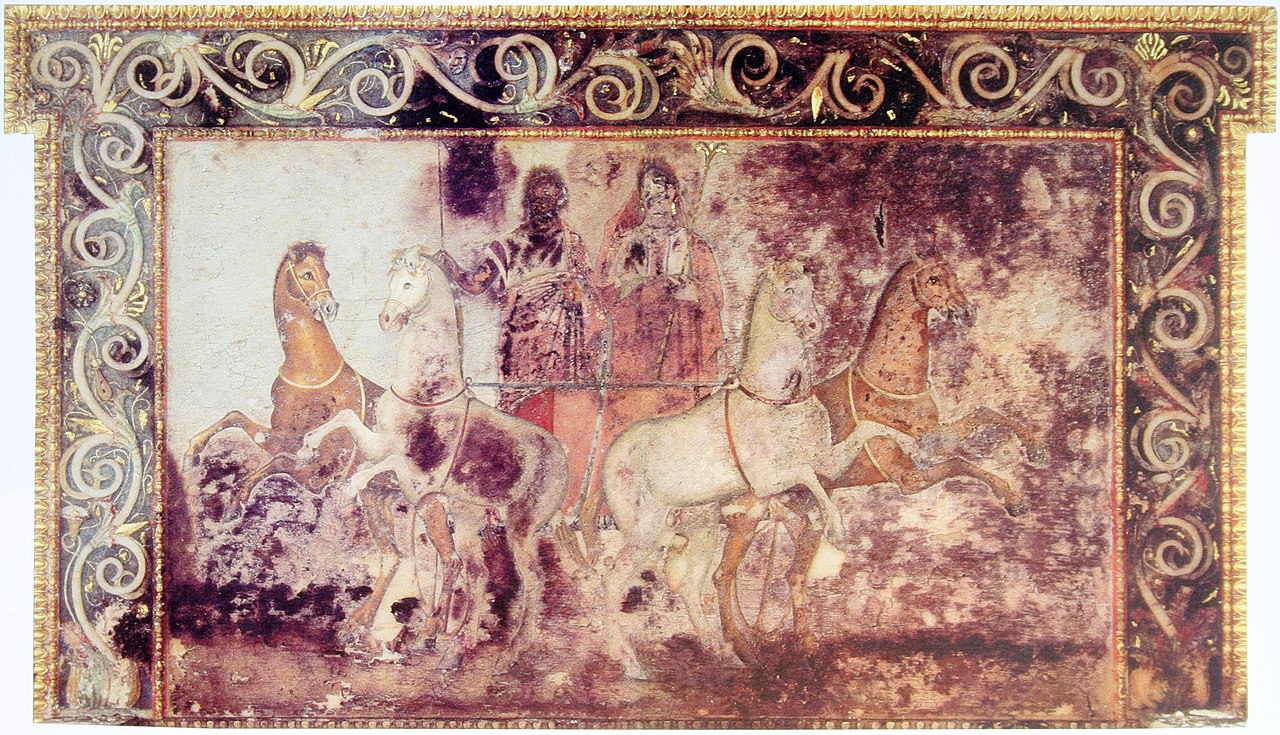


Myth and the cycle of seasons
The best-known narrative about Persephone centers on her abduction by Hades and the compromise that followed. According to later classical accounts, she ate seeds from a pomegranate, an act that bound her to the underworld for part of each year. Her periodic descent and return to the surface were used to symbolically explain vegetation's cycle: when Persephone is with her mother, the earth flowers; when she returns below, plants wither.
Cult, rites, and the Eleusinian Mysteries
Persephone and Demeter were central to the Eleusinian Mysteries, a set of secretive rites held at Eleusis that promised benefits to initiates in this life and the next. The mother–daughter relationship was the focus of dramatic ritual reenactment and prayer, and Persephone (also called Kore, "the maiden") was invoked in both agricultural and funerary contexts. Scholars emphasize that these rites reflect a blending of agricultural renewal with beliefs about the afterlife.
Symbols, depiction, and characteristics
Persephone's iconography combines springtime and chthonic motifs. Common attributes include the pomegranate, bouquets of flowers, ears of grain, and torches used by Persephone's mother in searches for her. Ancient artists portrayed her as a youthful maiden in scenes of abduction, in processions with Demeter, and later as a solemn queen seated beside Hades. Unlike some underworld figures, Persephone is not primarily a judge of the dead but a sovereign presence who receives the souls.
Legacy and interpretations
Over centuries Persephone inspired poets, vase painters, and Roman mythographers, who identified her with Proserpina. Modern scholarship reads her myth on several levels: as an agricultural allegory, as an initiation drama tied to mysteries like those at Eleusis (Eleusinian Mysteries), and as an expression of changing social ideas about marriage and the boundary between life and death. Her story appears across Greek literature and ritual practice, and she remains a potent symbol of renewal, loss, and transformation in later culture and the arts (ancient Greek religion and myth).
- Also known as Kore (the Maiden).
- Symbols: pomegranate, flowers, grain, torches.
- Associations: seasonal change, the afterlife, initiation rites.
- Marital partner: Hades; parentage: Zeus and Demeter.
Because her persona bridges the living world and the subterranean, Persephone remains a central study subject for those exploring how ancient peoples understood nature, death, and regeneration.
Questions and answers
Q: Who is Persephone?
A: Persephone is a goddess in ancient Greek religion and myth who is the daughter of Zeus and Demeter, and the queen of the underworld.
Q: What is Persephone's role as a goddess?
A: Persephone is the goddess of the dead and vegetation, and presided over the bounty of the harvest as it emerged during the season of spring.
Q: Who is Persephone married to?
A: Persephone is married to the god Hades, with whom she rules over the souls of the dead.
Q: What are the Eleusinian Mysteries?
A: The Eleusinian Mysteries were a religious ceremony in ancient Greece centered around Persephone and her mother Demeter, which promised initiates a reward in the afterlife.
Q: What is the story behind Persephone's abduction by Hades?
A: Persephone was tricked into eating seeds from a pomegranate, which was the food of the dead, while she was abducted by Hades. This story was used to explain the cause of the seasons.
Q: What were Persephone's symbols?
A: Persephone's symbols included the pomegranate, flowers, and seeds of grain.
Q: Who is Persephone's Roman counterpart?
A: Persephone's Roman counterpart is the goddess Proserpina.
Related articles
Author
AlegsaOnline.com Persephone: Greek goddess of spring and queen of the underworld Leandro Alegsa
URL: https://en.alegsaonline.com/art/75933