
Hera — Greek goddess of marriage, family, and the heavens
Hera, sister and wife of Zeus, is the Greek goddess of marriage, family, queenship, and the heavens. This article summarizes her origins, symbols, principal myths, cult practices, and cultural legacy.
Overview
In ancient Greek mythology, Hera is primarily known as the goddess of women, family and marriage. She is the wife and sister of Zeus and counted among the Twelve Olympians. Classical sources describe Hera as a powerful figure who presides over lawful unions, the status of wives and mothers, and the legitimacy of offspring. The ancient Greeks admired her dignity and authority, even when poems and tales emphasized her jealous or vengeful responses to Zeus's infidelities.
Image gallery
10 Images


Characteristics and symbols
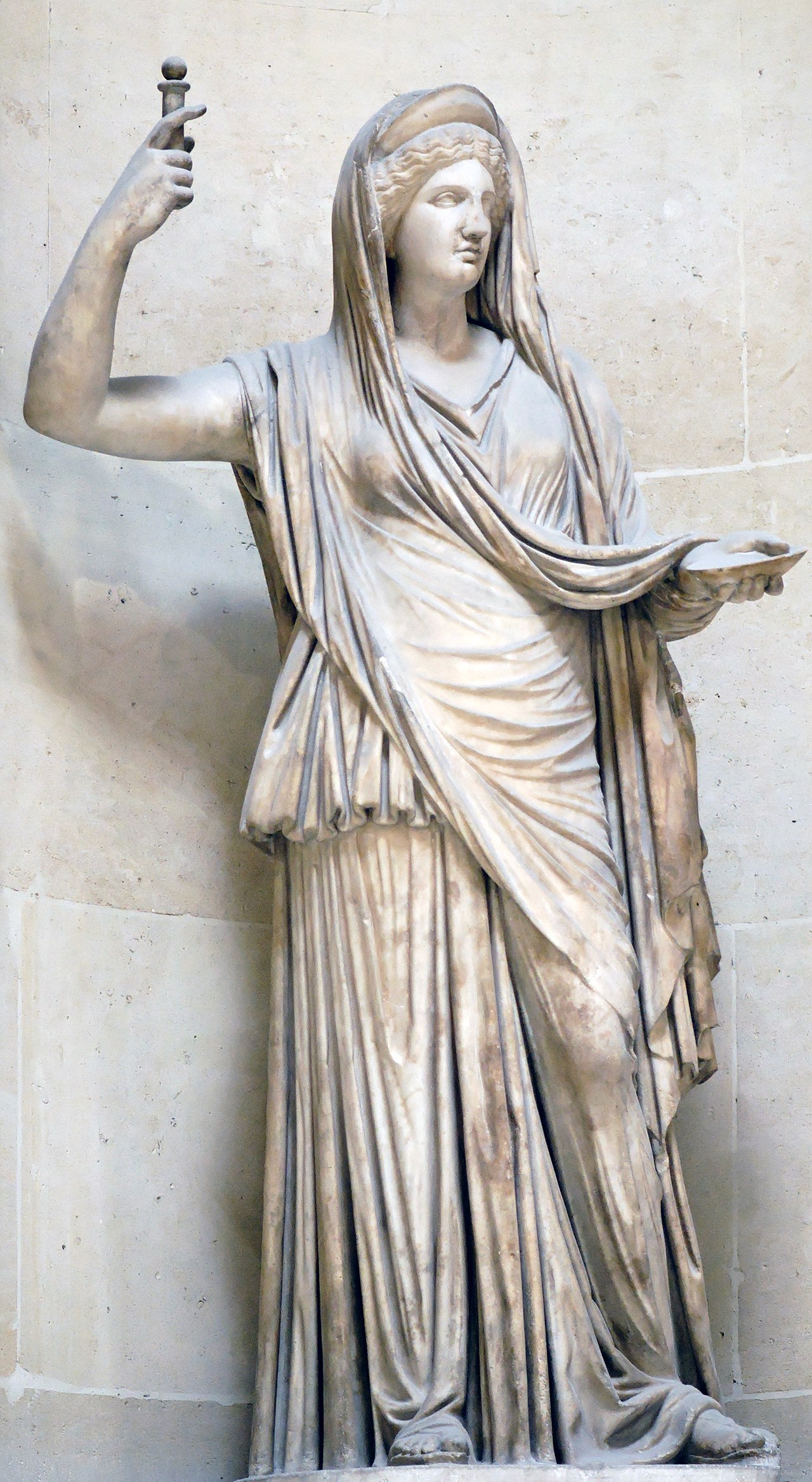
Hera is often depicted wearing a crown or diadem and holding a sceptre, symbols of regal authority. Traditional emblems associated with her include the pomegranate, the crown and veil, the cow, and the peacock; artists and writers used these motifs to identify her and to underline aspects of fertility, royalty and watchfulness. In poetry she is sometimes compared with Aphrodite for beauty, though her chief role is institutional rather than erotic.
Family and mythology
Hera was born to the Titans Kronos and Rhea. Her siblings include Zeus (whom she later married), Hestia, Demeter, Hades, and Poseidon. With Zeus she was mother to Hebe, Eileithyia, Ares, and Hephaestus. Several important gods and heroes are treated as her step-children in mythic genealogies, among them Athena, Dionysus, Persephone, and the twins Apollo and Artemis.
Principal myths and character
Stories about Hera emphasize two recurring themes: her role as guardian of marriage and family, and her jealous protection of Zeus's household. Many myths narrate her antagonism toward Zeus's lovers and their children, which explains the frequent conflicts between Hera and various mortals or demigods. At the same time, other tales portray her as a stern but legitimate queen of the gods, upholding social order on Olympus and among humans.
Worship, cult, and social role
Hera was venerated across the Greek world: important sanctuaries and festivals honored her, often emphasizing marriage rites, female coming-of-age ceremonies, and the authority of queens and wives. Cities and sanctuaries associated with her reflected both rural and civic aspects of her character. In some Roman contexts she was identified with Juno, a goddess of state, marriage and empire, which reinforced Hera's association with queens and regal power. Classical writers sometimes credited her with influence over the heavens, the Earth, and the seasons, though such cosmic roles vary by author and region.
Representation and legacy
Hera's image in art and literature has been complex: she is ceremonial and majestic in temple sculpture, sharp and dramatic in tragedy and epic, and sometimes humanly fallible in myths that address jealousy and revenge. Her symbols—the peacock, the pomegranate, the crown and veil—remain potent cultural shorthand for marriage and female sovereignty. Modern scholarship treats Hera both as an independent deity with specific social functions and as part of broader Indo-European patterns of goddess worship.
Notable distinctions and facts
- Title and role: often called the queen of the gods and seated among Olympus's principal deities.
- Attributes: associated with royal regalia and fertility emblems like the pomegranate and the cow.
- Family ties: daughter of Kronos and Rhea, spouse of Zeus, and mother of Hebe, Eileithyia, Ares, and Hephaestus.
- Cultural echoes: identified with Roman Juno and central to rites concerning marriage, monarchy and civic identity.
For further reading on specific myths, cult sites and iconography see specialized sources and museum collections that examine Hera's long and varied presence in classical art and literature.
Questions and answers
Q: Who is Hera married to?
A: Hera is married to Zeus.
Q: What are some of the symbols associated with Hera?
A: The symbols associated with Hera are the peacock, the pomegranate, the cow, the crown and veil.
Q: Who are Hera's parents?
A: Hera's parents are Kronos and Rhea.
Q: Who are some of her siblings?
A: Some of her siblings include Zeus (whom she also married), Hestia, Demeter, Hades and Poseidon.
Q: What does 'Hera' mean in Greek mythology?
A: In Greek mythology, 'Hera' means 'beautiful lady'.
Q: What is one of her roles as a goddess?
A: As a goddess, one of Hera's roles is ruling over Mount Olympus where all of the gods and goddesses live.
Q: What animal is associated with her? A: The animal associated with Hera is the crow.
Related articles
Author
AlegsaOnline.com Hera — Greek goddess of marriage, family, and the heavens Leandro Alegsa
URL: https://en.alegsaonline.com/art/43669