
Kronos: Titan of Greek Myth, King of the Golden Age
Kronos, a principal Titan in Greek myth, best known for overthrowing his father Ouranos, swallowing his children and being displaced by Zeus; later linked with the Roman Saturn and with time in later traditions.
Overview
Kronos is a central figure in ancient Greek storytelling, described as the youngest leader of the Titans. He appears throughout classical sources as a forceful, often ambivalent figure whose actions reshape the divine order in Greek mythology. Later classical and post-classical writers sometimes associated him with the abstract concept of time, a conflation that produced interpretive layers beyond the older mythic cycle.
Image gallery
8 Images



Genealogy and key myths
Kronos was born to Gaia (also called Mother Earth) and Ouranos (the Father Sky). According to the most familiar account, acting on Gaia's counsel he used a sickle to castrate and depose Ouranos, ending the authority of the primal sky and inaugurating his own rule. That era is often described as the Golden Age, a time of abundance and relative peace under his kingship.
Family, prophecy and the Titanomachy
Kronos married his sister Rhea and fathered the first generation of the chief Olympian deities. Fearful of a prophecy that he would be overthrown by his children, he swallowed each newborn. The list of those children commonly includes:
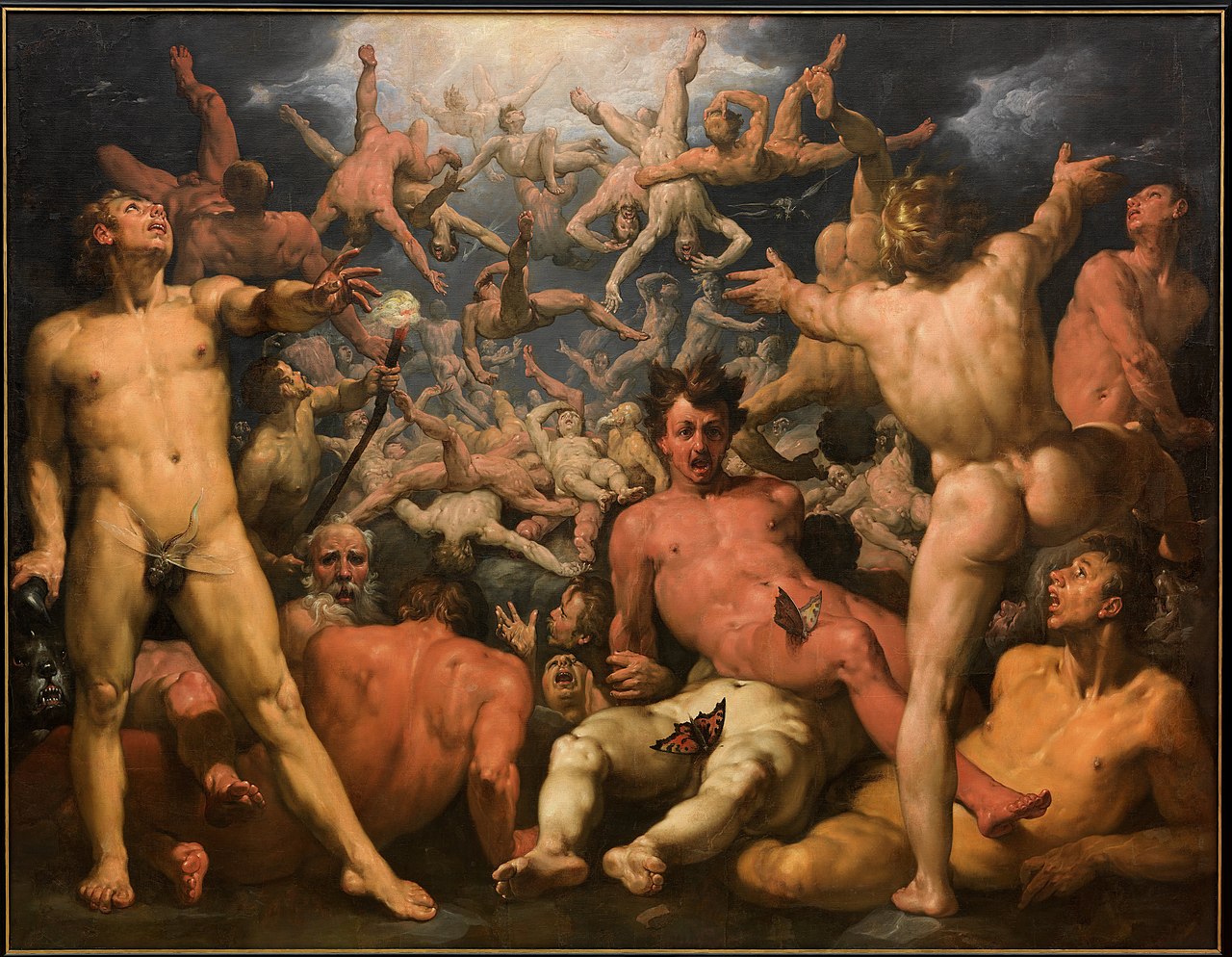
After Zeus escaped and forced Kronos to disgorge his siblings, the resulting conflict between the younger Olympians and the older Titans—known as the Titanomachy—ended with the Olympian victory and Kronos' imprisonment in Tartarus in many accounts. Some authors later describe alternate fates, including a peaceful role in the Isles of the Blessed or identification with the Roman Saturn.
Iconography and interpretations
In art and literature Kronos is frequently shown with a sickle or harpe, the instrument of his overthrow of Ouranos, or as an aged, bearded figure. Over centuries he became identified or confused in some traditions with the personification of time (Chronos), a development rooted in linguistic similarity and philosophical interpretation rather than in early mythic sources. The Roman equivalent, Saturn, inherited many of Kronos' attributes and festivals.
Cultural legacy and notable distinctions
Beyond narrative episodes, Kronos functions as a symbol for cyclical change, the transfer of power between generations, and the ambivalence of rulership that protects and threatens in equal measure. He appears in later poetry, drama and visual arts, and his myth inspired philosophical, religious and political readings. Important distinctions to bear in mind: the original mythic Kronos is a Titan with a specific genealogy and story, whereas the conflation with Chronos (time) and the Roman Saturn represent later interpretive layers.
Further reading and related topics
Readers interested in primary accounts and variants can follow tradition-focused studies of the Titans, genealogical summaries linked to Gaia and Ouranos, or works on the rise of the Olympian gods. For examinations of symbolism and later reception see materials on the Golden Age, the Roman equivalent and commentary contrasting Zeus's role with that of Rhea and their offspring.
Questions and answers
Q: Who is Kronos in Greek mythology?
A: Kronos is the leader of the Titans and the Titan of time in Greek mythology.
Q: Who are Kronos' parents?
A: Kronos' parents are Gaia, also known as Mother Earth, and Ouranos, also known as Father Sky.
Q: What did Kronos do to his father?
A: At the urging of Gaia, Kronos castrated his father, Ouranos, with a sickle and overthrew him.
Q: Who did Kronos marry and who were their children?
A: Kronos married his sister Rhea and sired the first generation of the Olympian gods: Hestia, Demeter, Hera, Hades, Poseidon, and Zeus.
Q: Why did Kronos swallow his children?
A: Kronos swallowed his children because of a prophecy that told of him being overthrown by his own children.
Q: Who was the only child to escape Kronos' fate and what did he do?
A: The only child to escape Kronos' fate was Zeus. After freeing his siblings, he waged war against Kronos and the other Titans during the Titanomachy.
Q: What happened to Kronos after the Titanomachy?
A: During the Titanomachy, the Olympians emerged victorious, and Kronos himself was cast into Tartarus. In some versions, Kronos was later freed by Zeus and became ruler of the Elysian Islands.
Related articles
Author
AlegsaOnline.com Kronos: Titan of Greek Myth, King of the Golden Age Leandro Alegsa
URL: https://en.alegsaonline.com/art/54494