
Poseidon — Greek god of the sea, earthquakes and horses
Poseidon, one of the Twelve Olympians, was revered in ancient Greece as lord of the sea, earthquakes and horses; worshipped by sailors and honored in city cults such as Corinth and temples like Sounion.
Poseidon is a major deity of ancient Greece, traditionally remembered as the god who rules the sea, controls storms and can shake the earth. In Greek sources his name appears as Ποσειδῶν, and classical authors place him among the chief divinities of ancient Greek religion and myth. He is usually counted as one of the Twelve Olympians, a son of Kronos and Rhea and a brother of Zeus and Hades. Poseidon occupies a vital role in Greek imagination: at once protector and a potentially violent force, he embodies the sea’s bounty and danger.
Image gallery
10 Images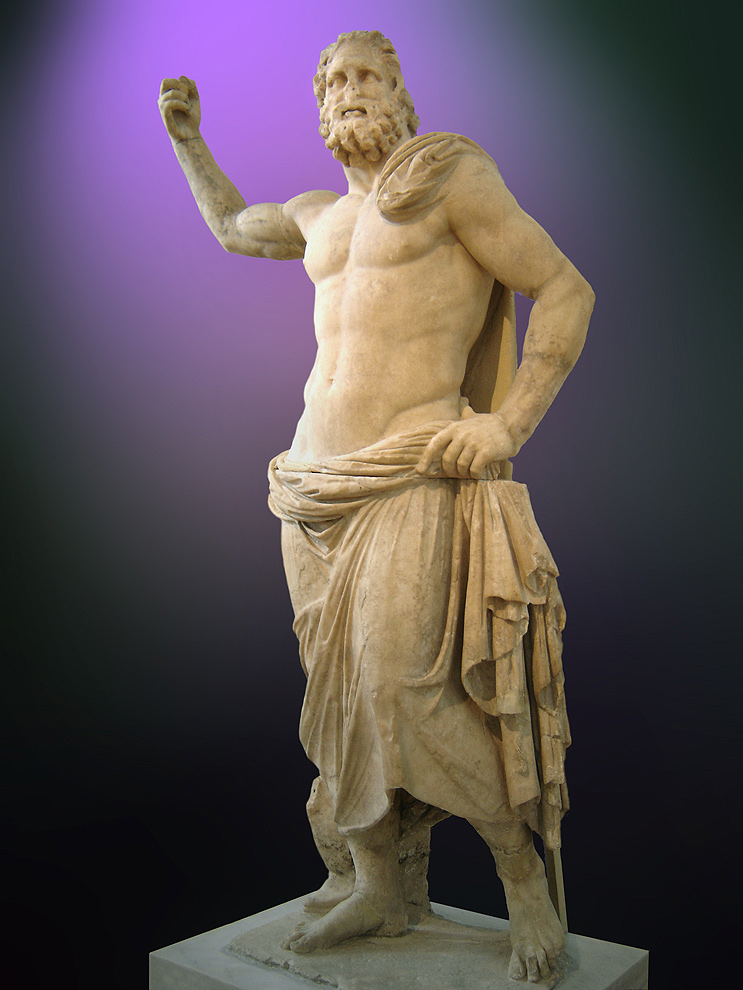


Attributes and iconography
Artists and poets depict Poseidon as a mature, bearded man carrying a trident, a three-pronged spear that became his defining attribute. He is called the “Earth‑Shaker” in many traditions because earthquakes were explained as the god’s wrath manifest on land. Marine creatures and animals are closely associated with him: the horse and bull are sacred to Poseidon, and the dolphin and the mythical hippocampus (a sea‑horse that draws his chariot) are recurring motifs. Visual and literary sources often show him driving a chariot across the waves or rising from the water to hurl storms at ships.
Myths, family and offspring
Poseidon’s consort was the sea‑goddess Amphitrite, one of the Nereids. Like several Olympian gods, he appears in many local and pan‑Hellenic myths, sometimes as a protector, sometimes as an adversary. Classical stories credit him in various traditions with paternity or patronage of heroic figures; some accounts link him to heroes such as Theseus and Bellerophon. Many of his tales underline the dual nature of divine favor: he can aid sailors and cities, but his anger can bring floods, storms or earthquakes when offended.
Cult, festivals and urban patronage
Poseidon was an important civic deity in coastal cities and island communities. Mariners and fishermen invoked him for safe passage; coastal sanctuaries and temple sites mark places where his cult was prominent. The city of Corinth counted Poseidon among its chief patrons and hosted games and rituals in his honor. Major sanctuaries, including the temple at Sounion near Athens, served as focal points for offerings and seasonal festivals. Public rites could emphasize his role as a stabilizing force for harbors, fleets and horse races, reflecting his broad portfolio across sea, land and animals.
Symbols, legacy and Roman counterpart
Common symbols associated with the god include the trident, the bull, the dolphin and horses. Over centuries his image influenced art, literature and later cultural references; painters, sculptors and writers revived and adapted Poseidon’s iconography in Roman, Byzantine and modern periods. In Roman religion he was identified with Neptune, a god who inherited many seaborne attributes though the two figures were not exact equivalents in every local cult. Poseidon’s complex character—sustainer of commerce and a source of natural upheaval—helped secure his place as one of the most enduring figures of the Greek pantheon.
- Primary realms: sea, storms, earthquakes, horses.
- Typical attributes: trident, chariot, marine creatures and horses.
- Worship contexts: coastal sanctuaries, sailors’ prayers, civic festivals.
For further reading on linguistic forms, cult practices and literary sources see entries and studies linked here: Greek name, myth and religion, Olympian group, family accounts at Kronos and Rhea, and narratives involving Zeus, Amphitrite, the Nereids and heroes such as Theseus and Bellerophon. Civic cults and games are exemplified by sites like Corinth; animal symbols include the bull and the dolphin, and comparative religion considers Neptune as the Roman counterpart.
Related articles
Author
AlegsaOnline.com Poseidon — Greek god of the sea, earthquakes and horses Leandro Alegsa
URL: https://en.alegsaonline.com/art/78337