
English Electric Canberra
British twin‑jet bomber developed after WWII; adapted for reconnaissance and electronic warfare. Served with many air forces worldwide and inspired the US-built Martin B‑57.
Overview
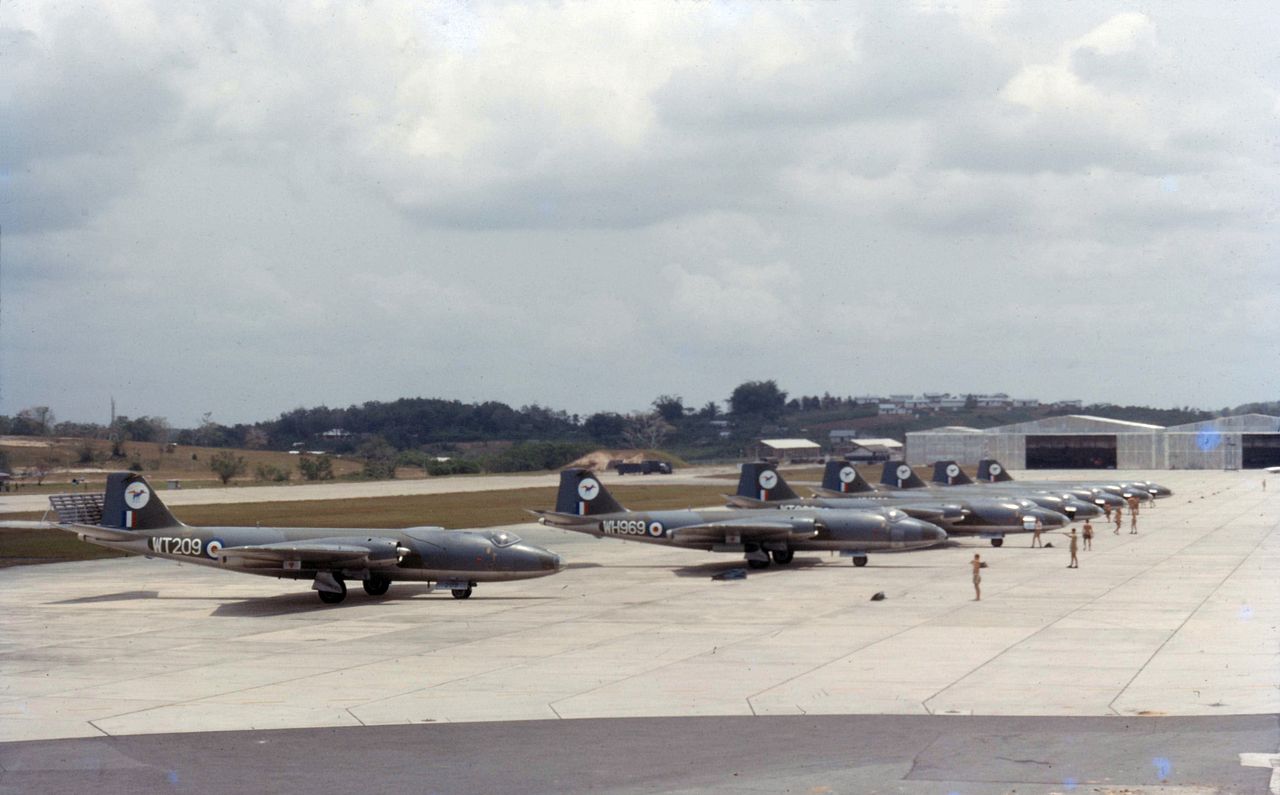
The English Electric Canberra is a British jet-powered aircraft originally conceived as a fast, high-altitude bomber. It employed a twin‑turbojet layout and a clean, mid‑wing design that emphasized speed, altitude and a large internal payload for its class. First flown in 1949, the type entered service in the early 1950s and was soon adapted to a range of roles beyond bombing, including photographic reconnaissance and electronic warfare.
Image gallery
10 Images


Design and characteristics
The Canberra combined a pressurised fuselage and high-aspect wing to achieve good performance at height. Many marks were fitted with turbojet engines such as the Rolls‑Royce Avon on production versions, giving a balance of thrust and endurance suitable for daylight and night operations. The airframe allowed for multiple modifications: camera bays and sensor suites replaced bomb bays for reconnaissance variants, while other conversions carried jammers and electronic countermeasure equipment.
Development and production
Conceived by English Electric, the Canberra represented a transition from piston bombers to jet designs for the postwar era. It was produced in the United Kingdom and also built under licence or supplied to allied countries. The type was used as a test and research platform by institutions and services that explored high-speed flight and avionics development.
Operational history
The Canberra served widely with the British Royal Air Force and with naval aviation units such as the Fleet Air Arm, as well as with experimental establishments like the Royal Aircraft Establishment. Beyond the UK, the Canberra was exported or licensed to many nations. The United States evaluated the type and purchased a small number for trials, and the design later formed the basis of the American Martin-built B‑57 light bomber.
Operators and service
The Canberra was taken into service by a broad range of states and air arms. Notable operators included Argentina, Australia, Chile, Ecuador, Ethiopia, France, India, New Zealand, Peru, Rhodesia, South Africa, Sweden, Venezuela, West Germany and Zimbabwe. These operators used the type in roles ranging from tactical bombing and interdiction to high-resolution reconnaissance and electronic surveillance.
Variants, legacy and notable facts
The Canberra spawned numerous variants tailored to specific missions: bomber, photo‑reconnaissance, electronic warfare and trainer conversions. Its straightforward, robust design led to a long operational life; while many air arms retired the type by the late 20th century, several continued limited operations or civilian uses into later years. The Canberra's adaptability, widespread export, and its influence on the US Martin B‑57 make it a notable example of early jet-era military aviation. For more on the general class and contemporary developments, see references to the broader military and aviation contexts represented by this type. Technical and historical studies continue to regard the Canberra as an important transitional design in the evolution of jet-powered aircraft.
Related articles
Author
AlegsaOnline.com English Electric Canberra Leandro Alegsa
URL: https://en.alegsaonline.com/art/31473