
Fleet Air Arm (Royal Navy's Naval Aviation Branch)
The Fleet Air Arm is the Royal Navy branch responsible for operating naval aircraft — fixed-wing and rotary — from carriers, ships and shore bases, performing reconnaissance, strike, anti-submarine and support roles.
The Fleet Air Arm is the branch of the Royal Navy charged with operating aircraft at sea and from shore. It is the United Kingdom's naval aviation force, combining fixed-wing and rotorcraft to support maritime operations. For general context see naval aviation and its place within the Royal Navy.
Image gallery
10 Images




Organization and characteristics
The Fleet Air Arm is organized into squadrons that deploy aboard aircraft carriers, large amphibious ships and surface escorts, or operate from shore air stations. Its units include both carrier-capable jets and a variety of helicopters. Modern squadrons are structured to deliver air defence, strike, reconnaissance and anti-submarine warfare, while maintaining flexibility for transport, logistics and search and rescue.
Equipment and roles
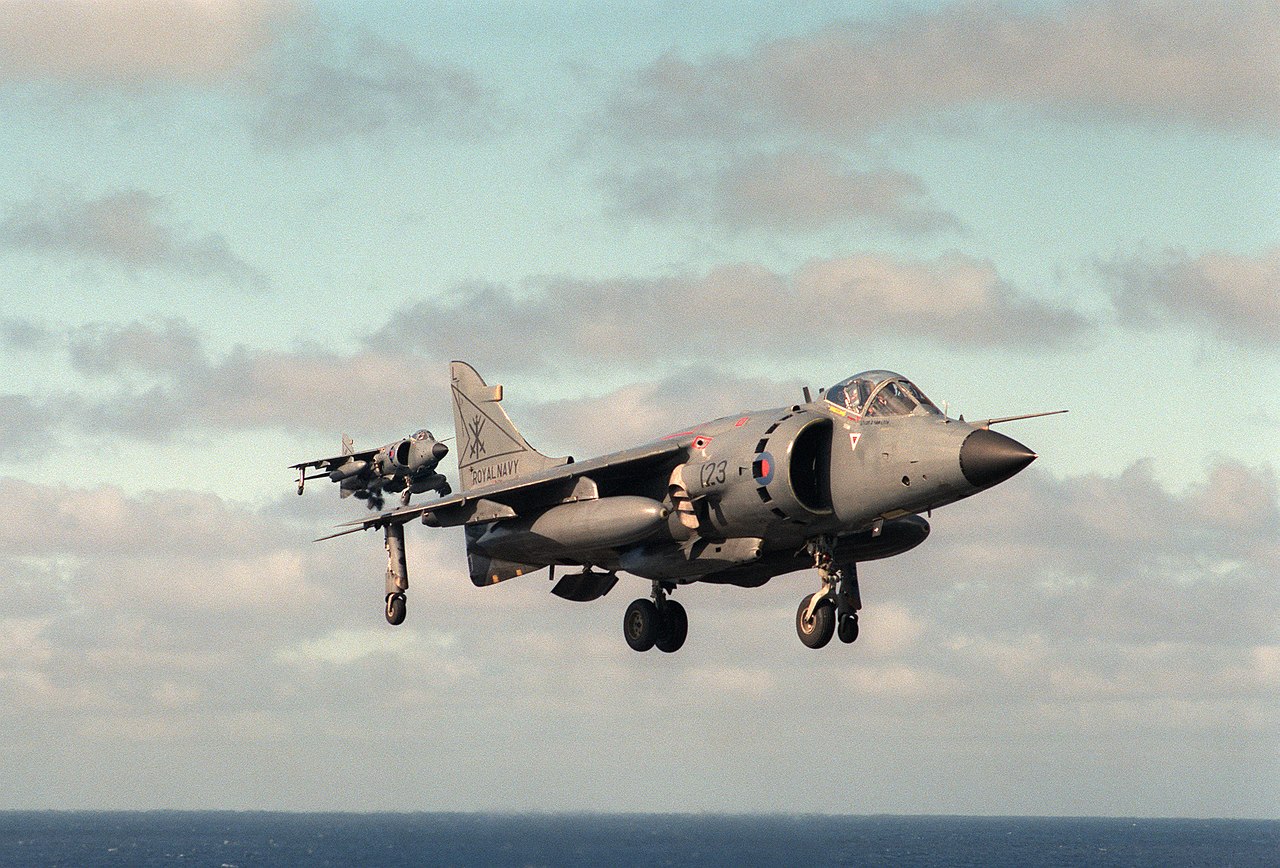
Aircraft types cover fixed-wing and rotary platforms. Fixed-wing types provide high-speed strike and surveillance from carriers; rotary-wing types are used for anti-submarine work, troop lift, utility tasks and shipborne operations. Examples of the two categories are summarized below:
- Airplanes: carrier-capable combat and surveillance jets used for maritime strike, air cover and reconnaissance.
- Helicopters: versatile rotorcraft for anti-submarine warfare, airborne early warning, transport and search and rescue.
These aircraft operate from the decks of carriers and smaller vessels, from helicopter-capable frigates and destroyers, and from permanent shore bases. Integration with naval ships and fleet command is a defining feature, enabling coordinated sea control and power projection.
History and development
Naval air capability evolved from early seaplanes and shipborne aircraft to dedicated carrier aviation. Over the twentieth century the Fleet Air Arm grew from experiments in ship-based flight to an organized naval air service, adopting jet technology and specialized anti-submarine and electronic warfare roles. Its development mirrors advances in carrier design, radar, sensors and weapons that extended the reach of naval forces.
Today the Fleet Air Arm remains essential to maritime security and expeditionary operations, providing reconnaissance, strike, fleet protection and logistical support. Its combination of fixed and rotary-wing aircraft, trained for operations at sea, distinguishes it from purely land-based air forces and keeps it central to modern naval strategy.
Related articles
Author
AlegsaOnline.com Fleet Air Arm (Royal Navy's Naval Aviation Branch) Leandro Alegsa
URL: https://en.alegsaonline.com/art/35067