
Ethiopia: Land, History, Society, and Modern State
Overview of Ethiopia — its geography, ancient and modern history, society and languages, economy, and notable distinctions as a populous, historically independent country in the Horn of Africa.

Overview
Ethiopia is a sovereign nation in the Horn of Africa known for its long continuous history, cultural diversity, and distinctive landscapes. The country is traditionally identified by several local names and languages; for example, Amharic, Afar, Somali and Tigrinya are among the major tongues spoken across different regions. Ethiopia occupies a strategic position in the Horn of Africa and has played a central role in regional trade, religion and politics for millennia. It is also the most populous landlocked country in the world and ranks among Africa's most populous states.
Image gallery
10 Images




Geography and environment
Ethiopia's terrain ranges from rugged central highlands, with plateaus and mountain peaks, to lowland deserts and portions of the East African Rift. Major geographic features include the Ethiopian Highlands, the Great Rift Valley and the headwaters of the Blue Nile, which has sustained agriculture and urban civilizations for centuries. The country hosts varied climates and ecosystems, from alpine zones to semi-arid plains, supporting diverse flora and fauna. The low-lying Danakil Depression and the high peak of Ras Dashen illustrate the sharp contrasts in elevation found within relatively short distances.
Historical development
Ethiopia's history stretches back to ancient states and kingdoms, most famously the Aksumite Kingdom of late antiquity, which minted coins, maintained Red Sea trade links and adopted Christianity in the 4th century. Later medieval dynasties, such as the Zagwe and the Solomonic houses, shaped identity and institutions; the Solomonic tradition connects royal lineage to biblical narratives as a cultural claim. In the modern era, leaders such as Menelik II consolidated territory and preserved sovereignty during a period of European colonization, famously defeating invading forces at the Battle of Adwa in 1896. Ethiopia resisted formal colonization during the Scramble for Africa, though it was occupied by Italian forces under Benito Mussolini and Italy between 1935 and 1941. The 20th century brought imperial rule, revolutionary change, and eventually a federal republic system established under a 1995 constitution.
Society, culture, and languages
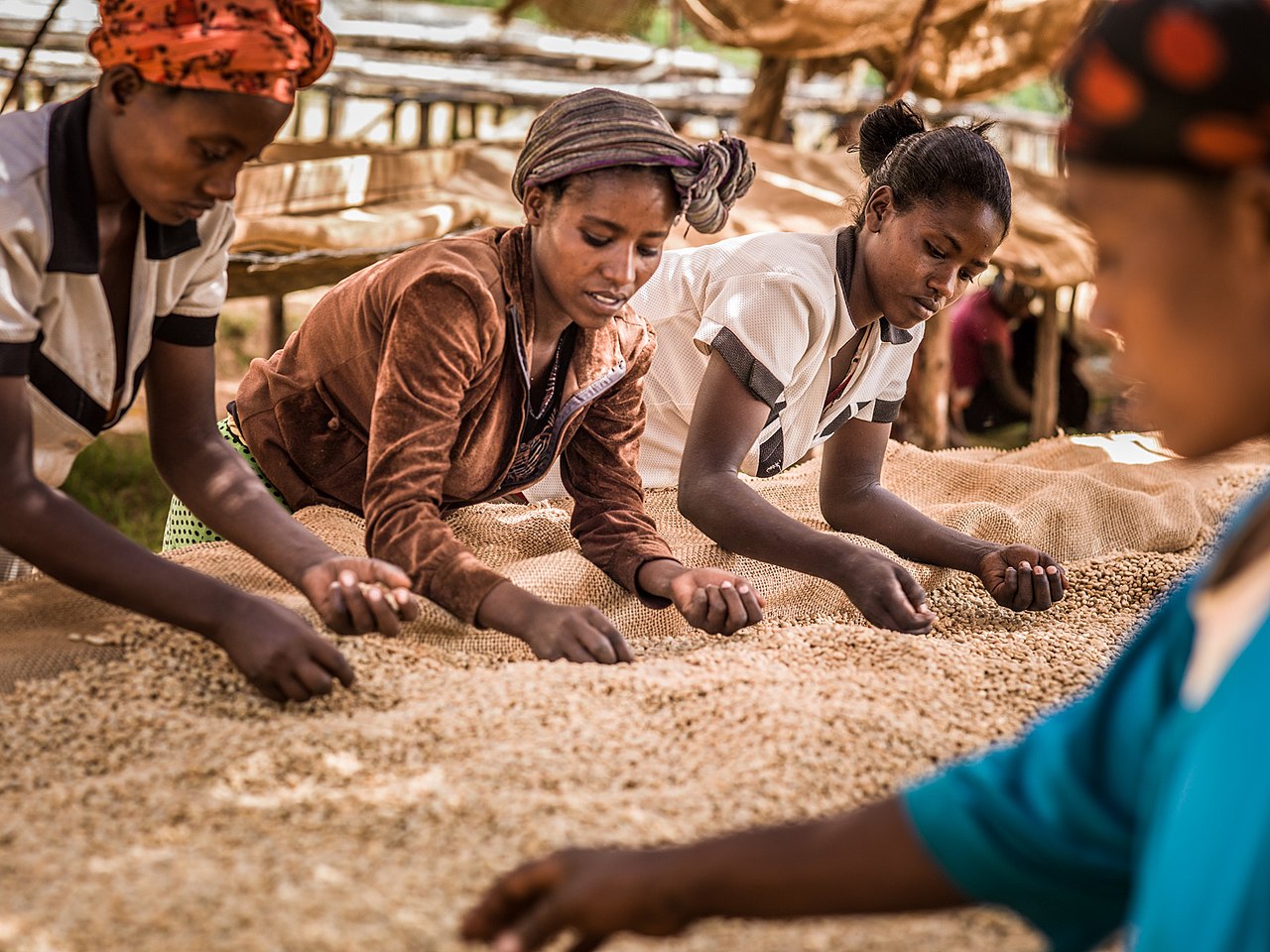
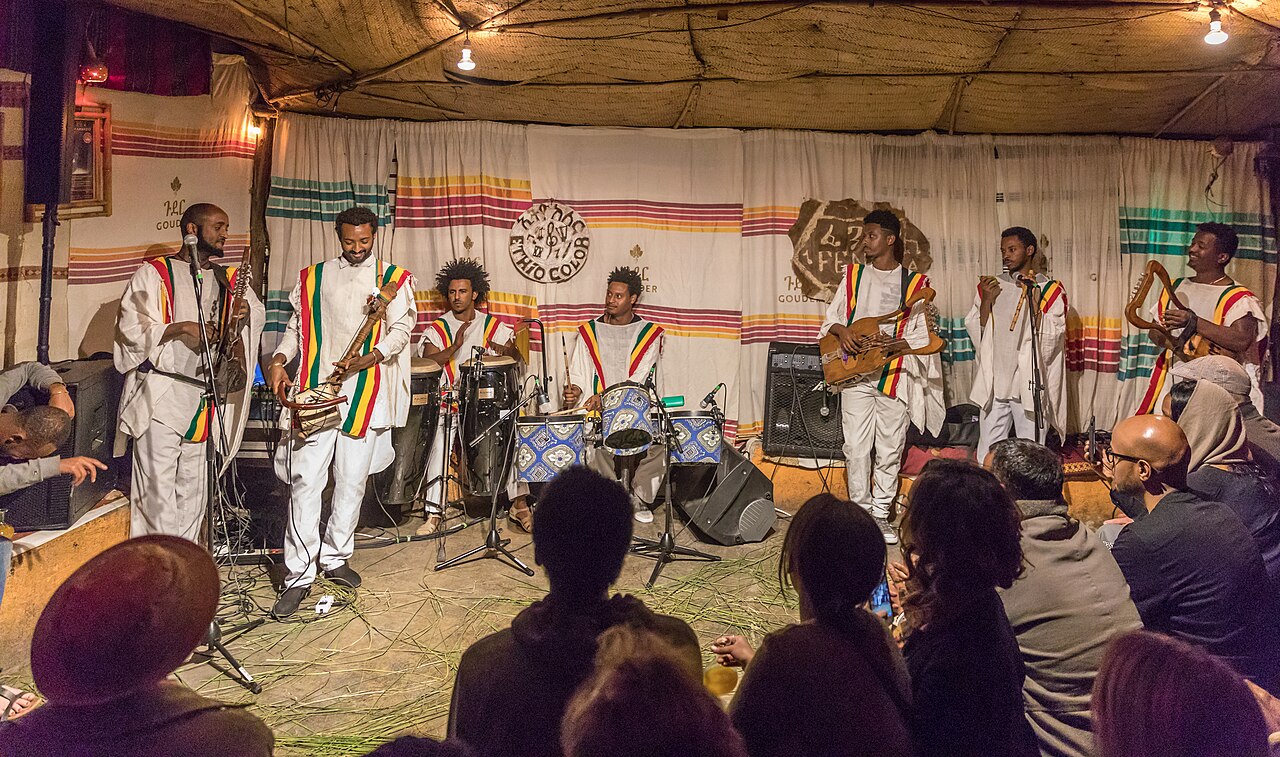
Ethiopia is home to many ethnolinguistic groups and a rich religious landscape. The Ethiopian Orthodox Tewahedo Church has deep historical roots and artistic traditions; Islam and various Protestant denominations also have large followings. Coffee, native to Ethiopian highlands, is both a cultural symbol and an economic staple; traditional coffee ceremonies remain central to social life. Urban centres such as Addis Ababa serve as cultural and diplomatic hubs—the city hosts prominent continental institutions—while rural communities maintain longstanding agricultural and artisanal practices.
Government, economy and regional relations
Today Ethiopia is organized as a federal republic with regions reflecting ethnic and linguistic identities. Agriculture remains a major part of the economy, with crops, livestock and coffee exports important for livelihoods and trade. The nation has invested in infrastructure, hydropower and industrialization efforts, though development is uneven across regions. Ethiopia's borders and relations have been shaped by the loss of direct Red Sea access after Eritrea became independent in 1993 and by its role in regional diplomacy and peacekeeping. Its historical avoidance of long-term colonization—often noted in discussions of the Scramble for Africa—has influenced national identity and foreign policy.
Notable facts and distinctions
- Ethiopia claims a continuous state tradition among the oldest in Africa, with archaeological and textual records spanning millennia; see links for historical overviews and languages (history).
- It is the most populous landlocked country globally and one of Africa's most populous nations, contributing significantly to continental demographics and culture.
- World heritage sites such as the rock-hewn churches of Lalibela and ancient Aksum remain important cultural and archaeological attractions.
Because of its long history, geographic variety and cultural complexity, Ethiopia is frequently studied in fields ranging from archaeology and religious studies to development and political science. For additional introductions to its languages, regions and modern institutions, follow the language and regional links above.
Amharic • Afar • Somali • Tigrinya • Horn of Africa • History • Scramble for Africa • Italy • Mussolini • Eritrea
Questions and answers
Q: What is the name of Ethiopia in Amharic?
A: In Amharic, Ethiopia is called ኢትዮጵያ.
Q: What was Ethiopia formerly known as?
A: Ethiopia was formerly known as Abyssinia.
Q: How did Ethiopia avoid colonization during the Scramble for Africa?
A: Ethiopia avoided being colonized during the Scramble for Africa by remaining independent until 1935, when it was invaded by the Italians under Benito Mussolini.
Q: Where does the word "Ethiopia" come from?
A: The word "Ethiopia" comes from the Greek word Αἰθιοπία (IPA:/ˌaitʰioˈpia/), meaning sun light burned face.
Q: Is Ethiopia a landlocked country?
A: Yes, Ethiopia is a landlocked country and it is also the most populous landlocked country in the world.
Q: When did Eritrea gain independence?
A: Eritrea gained independence in 1993.
Q: What happened to Ethiopia after Eritrea gained independence?
A: After Eritrea gained independence, Ethiopia lost its Red Sea ports.
Related articles
Author
AlegsaOnline.com Ethiopia: Land, History, Society, and Modern State Leandro Alegsa
URL: https://en.alegsaonline.com/art/32382
Sources
- commons.wikimedia.org : Ethiopia
- apapeth.org : "Ethiopian Constitution"
- cia.gov : CIA – Ethiopia – Ethnic groups
- csa.gov.et : Central Statistical Agency of Ethiopia
- imf.org : "Ethiopia"
- researchgate.net : "Gudit, a Jewish Queen of Aksum? Some Considerations on the Sources and Modern Scholarship, and the Use of Legends"
- researchgate.net : "The Legend of Queen Sheba, the Solomonic Dynasty and Ethiopian History: An Analysis"