
Martin B-57 Canberra
An American license-built adaptation of the British English Electric Canberra bomber, the B-57 served as a tactical bomber, reconnaissance and electronic warfare platform, notably in the Vietnam War.
Overview
The Martin B-57 Canberra is the United States license-built version of the British English Electric Canberra. Produced by the Glenn L. Martin Company in the mid-20th century, the B-57 family adapted a versatile jet-powered design for a range of tactical roles. It combined the basic Canberra airframe with American systems and modified equipment to meet United States Air Force requirements.
Image gallery
10 Images
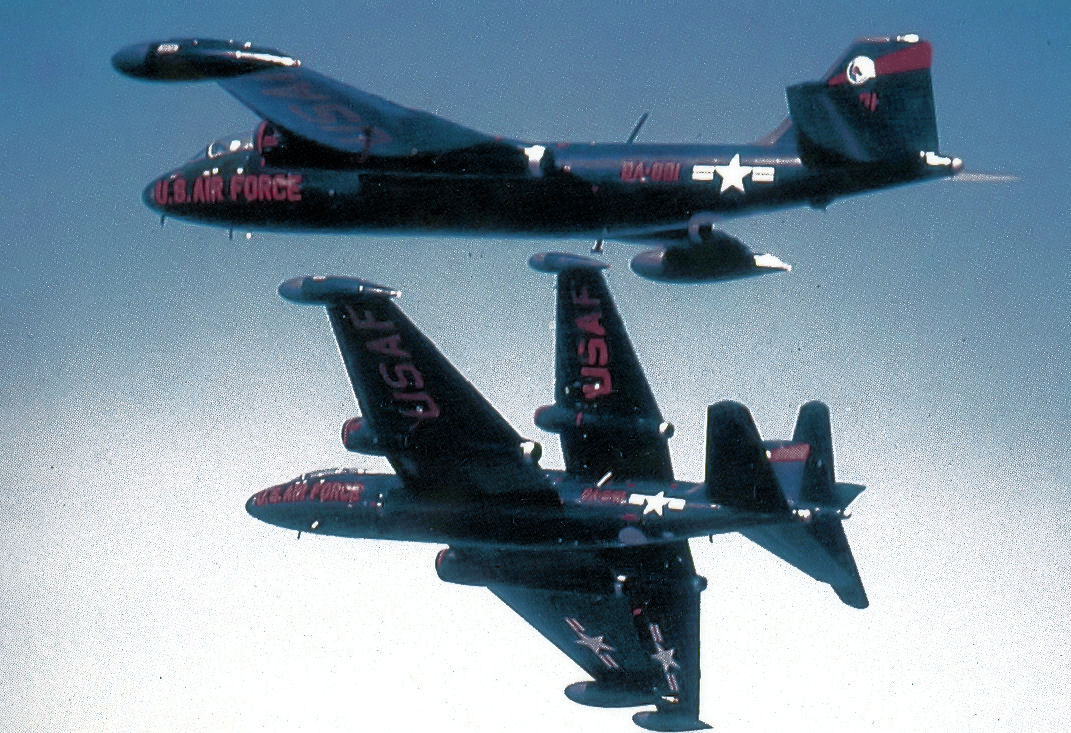


Design and main variants
The B-57 retained the Canberra's straight-wing, twin-engine layout and relatively simple, rugged construction. Over time designers fitted the type with different avionics, cameras, defensive and offensive equipment to perform specialized missions. Major categories of B-57 versions included:
- Bomber variants — optimized for low- to medium-altitude tactical bombing and night interdiction.
- Reconnaissance versions (designated RB-57) — equipped with photographic and sensor packages for tactical and high-altitude observation.
- Electronic warfare and countermeasures (EB-57) — modified to carry jamming gear and electronic sensors for suppression of enemy air defenses.
- High-altitude and research conversions — later airframes were adapted for atmospheric sampling and scientific missions.
Operational history
The B-57 entered service during the Cold War era and saw combat and support operations in several theaters. It is most widely known for its use by the U.S. Air Force in the Southeast Asian conflict commonly called the Vietnam War, where it flew bombing, night intruder and reconnaissance sorties. Beyond the United States, one of the notable foreign operators of the type was Pakistan, which employed Canberras in regional conflicts and for long-range reconnaissance missions.
Roles, importance and legacy
The B-57 demonstrated how a foreign design could be adapted and prolonged in service through incremental modification. Its ability to carry specialized sensors and electronic gear made it valuable for missions that demanded flexibility rather than outright speed or heavy payloads. In later years, surviving airframes found new life in scientific and research roles, illustrating the Canberra family's enduring adaptability.
Notable distinctions
Unlike many contemporary jet aircraft that emphasized supersonic performance, the Canberra and its B-57 derivatives prioritized payload, endurance and low-level handling. That emphasis allowed the type to serve effectively in tactical bombing, photo-reconnaissance and electronic warfare roles across several decades, and contributed to its recognition as a distinctive Cold War-era platform.
For more on the original British design see the model history for the English Electric Canberra, and for detailed mission descriptions consult sources on the Vietnam War and specialized publications about reconnaissance aircraft and electronic countermeasures. Further technical and operational records are available from air force archives and aviation research collections.
Related articles
Author
AlegsaOnline.com Martin B-57 Canberra Leandro Alegsa
URL: https://en.alegsaonline.com/art/62343