
Cedrus deodara (Deodar) — Himalayan cedar: description, habitat, uses
Cedrus deodara, the deodar or Himalayan cedar, is a tall evergreen conifer native to the western Himalayas. This article describes its appearance, range, cultural importance and common uses.
Overview
Cedrus deodara, commonly called deodar or Himalayan cedar, is a large evergreen conifer in the pine family. It belongs to the genus Cedrus and is valued for its size, scented timber and cultural associations. The botanical name reflects long-standing recognition of the tree in South Asian languages and texts: see references for Sanskrit, regional Hindi names and the Chinese name given in older sources (Chinese).
Image gallery
10 Images



Appearance and identifying characteristics
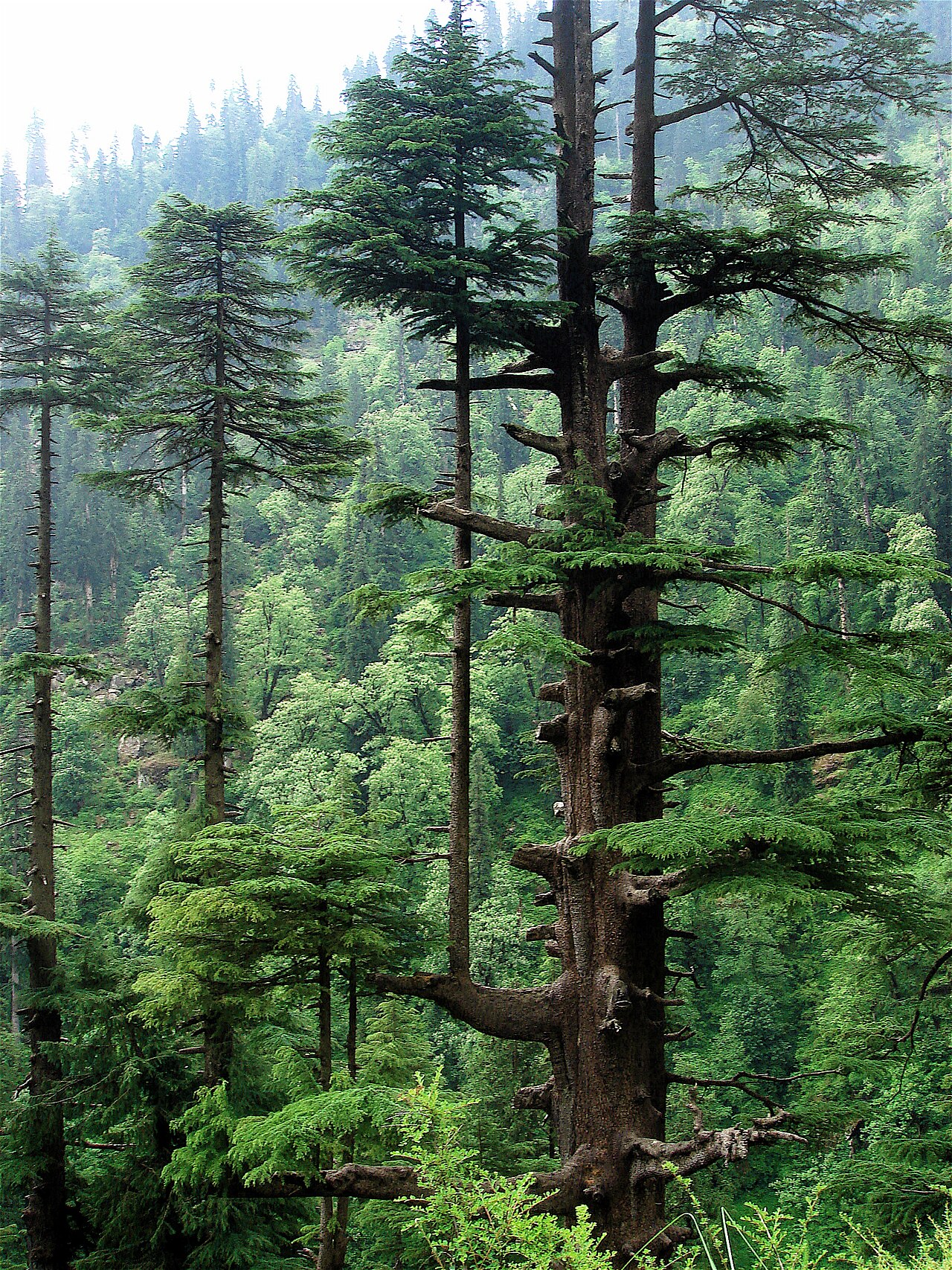
Cedrus deodara is a tall, slow-growing conifer that typically reaches 40–50 m in height and can rarely attain about 60 m, with trunks up to about 3 m in diameter. The crown is usually broadly conical when young, becoming more open and flat-topped with age; a distinctive feature is the often pendulous or drooping nature of the leader and branchlets. Needles are borne in dense clusters on short shoots and range in colour from glossy green to bluish-green.
- Form: conical to broadly rounded crown; drooping branchlets
- Leaves: needle-like, in clusters on short shoots
- Cones: barrel-shaped, disintegrate at maturity
- Wood: fragrant, durable and resistant to decay compared with many other softwoods
Range and habitat
Native to the western Himalaya and adjacent mountain areas, C. deodara grows on mountain slopes and valleys at moderate to high elevations (roughly 1,500–3,200 m). Its natural distribution includes the western Himalayas extending into eastern Afghanistan, northern Pakistan, parts of north-central India (including Himachal Pradesh and Uttarakhand), areas of Kashmir, the southwestern fringes of Tibet and western Nepal. It is adapted to cool montane climates with well-drained soils and seasonal snow.
History, cultural importance and names
This cedar has deep cultural associations in South Asia. The Sanskrit name often recorded in classical literature is linked to religious and traditional uses—hence the name sometimes translated as “wood of the gods.” It has featured in temple precincts, local ceremonies and traditional landscaping. Regional names and references are preserved in several languages; consult language-specific resources for details (Hindi, Sanskrit, Chinese).
Uses and importance
Deodar wood has been used historically for building, joinery, and exterior work where durability and resistance to moisture are valued. The timber is aromatic and was often preferred for temples and heavy construction in mountain regions. Today the species is also cultivated widely as an ornamental in temperate climates for parks and large gardens because of its graceful habit. Extracts and essential oils from cedar wood are used in perfumery, traditional remedies and insect-repellent preparations, though detailed applications vary by culture and locality.
Conservation, management and distinctions
While not restricted to a single small area, local populations of C. deodara face pressures from logging, land conversion and grazing in some parts of its range, so sustainable management is important. The tree is distinguishable from other well-known cedars such as the Lebanon cedar and the Atlas cedar by its more pendulous leader and branchlets and by subtle differences in needle colour and crown shape. It is sometimes planted outside its native range for ornamental use in parks and large estates because of its impressive size and evergreen character (evergreen conifer).
Quick reference
- Genus: Cedrus
- Native range highlights: western Himalayas, Afghanistan, Pakistan, India, Nepal
- Typical elevation: 1,500–3,200 m
- Common uses: timber, ornamental planting, cultural and aromatic uses
For language-specific names and regional treatments see sources in Hindi, Sanskrit, and regional floras covering Himachal Pradesh, Uttarakhand, Kashmir, Tibet and Nepal.
Related articles
Author
AlegsaOnline.com Cedrus deodara (Deodar) — Himalayan cedar: description, habitat, uses Leandro Alegsa
URL: https://en.alegsaonline.com/art/17836