
Ceratophyllum — submerged freshwater plants (hornworts)
Ceratophyllum is a genus of wholly or mostly submerged freshwater flowering plants found in ponds, marshes and slow streams worldwide. They are free-floating or loosely anchored, with whorled forked leaves.
Ceratophyllum is a genus of entirely aquatic flowering plants commonly called hornworts (not to be confused with non‑vascular hornworts). These plants grow submerged in still or slow‑moving fresh water such as ponds, marshes and quiet streams and are widely distributed across temperate and tropical regions. Individual stems may extend long distances and form dense mats that provide habitat and shelter for invertebrates and young fish. Ceratophyllum species are familiar in both natural waters and managed ponds.
Image gallery
4 Images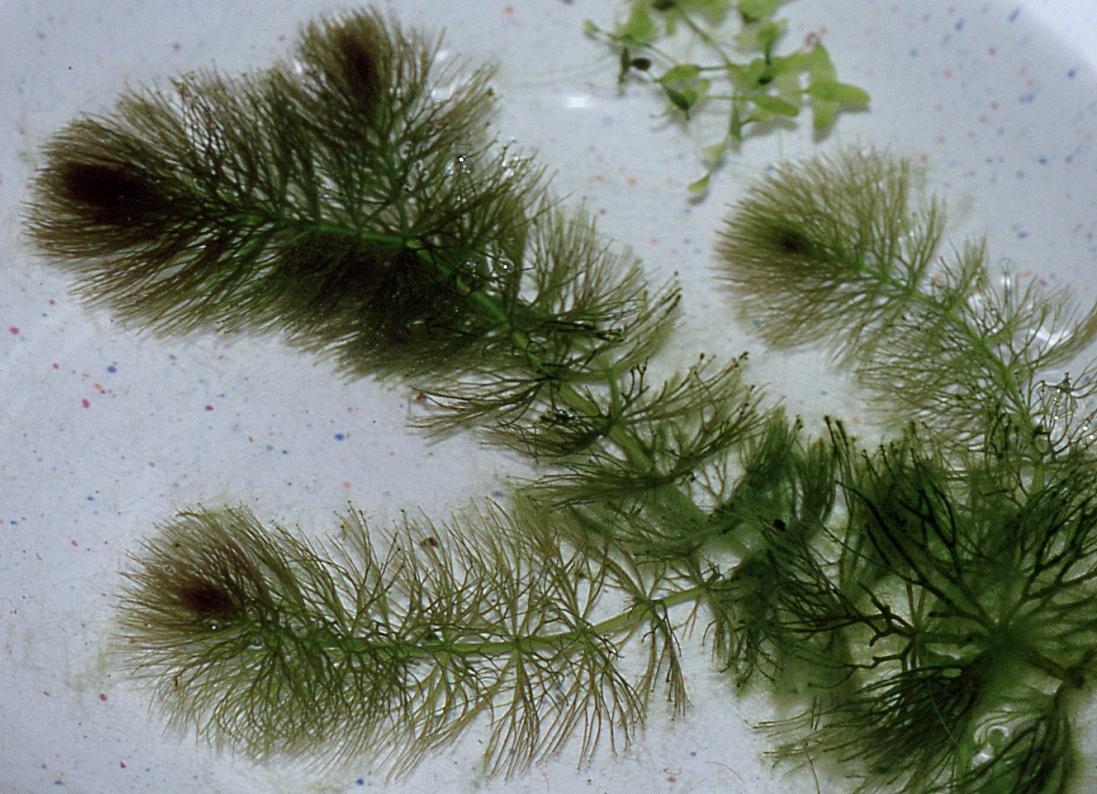


Key characteristics
- Growth habit: fully submerged, free‑floating or loosely rooted; stems can be long and branching.
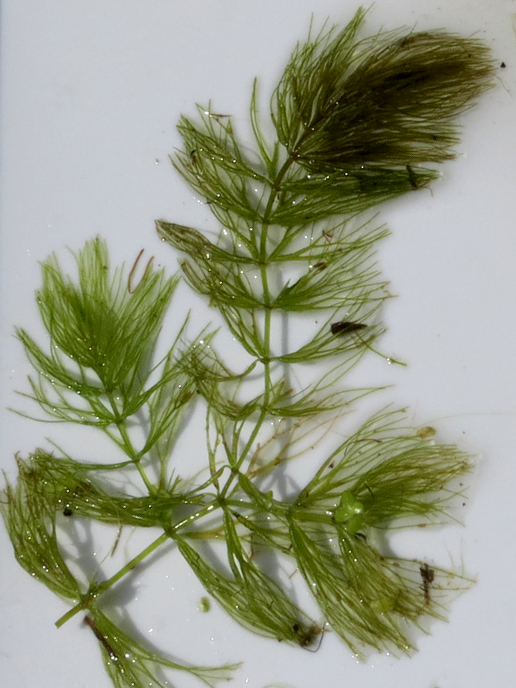
- Leaves: arranged in regular whorls at stem nodes, usually forked or pinnate in appearance and often brittle or stiff in some species; see images and descriptions for identification here.
- Roots: typically absent or reduced; the plants do not depend on soil anchorage.
- Reproduction: produce small, inconspicuous flowers and fruits adapted to aquatic life; pollination and seed dispersal occur in the water.
Because they remain submerged, Ceratophyllum leaves and stems lack the robust air tissues seen in floating plants and instead tolerate low light and low oxygen environments. Their dense growth can oxygenate water locally while shading deeper water and competing with algae.
Taxonomy and origins
Members of this genus are generally placed in the family Ceratophyllaceae and often treated as the single living genus in that family and its order, owing to a distinctive suite of morphological and reproductive traits. They are an ancient and specialized lineage of freshwater angiosperms, and their precise relationships to other flowering plants have been clarified by molecular studies, which highlight their uniqueness among aquatic plants.
Uses, ecology and management
Ceratophyllum plays important ecological roles: it provides food and cover for aquatic animals, acts as a substrate for invertebrates, and can improve water quality by uptake of nutrients. The common species Ceratophyllum demersum (often called common hornwort) is frequently used in aquaria and garden ponds for its hardiness. In some settings, dense growth becomes a nuisance, clogging irrigation channels or outcompeting native vegetation, and may require mechanical or biological control.
Notable distinctions and practical notes
Ceratophyllum is easily distinguished from many other pond plants by its whorled, forked leaves and lack of true roots. It should not be confused with non‑vascular hornworts of bryophytes, which are entirely different organisms. Identification at species level relies on fine details of leaf form, fruit shape and growth habit; field guides and local floras are useful for precise determination sources.
For aquarists and pond managers, Ceratophyllum can be a valuable, low‑maintenance plant but should be monitored to prevent overgrowth. Its adaptability to a range of fresh waters makes it a common and ecologically significant component of many freshwater systems.
Related articles
Author
AlegsaOnline.com Ceratophyllum — submerged freshwater plants (hornworts) Leandro Alegsa
URL: https://en.alegsaonline.com/art/18156