
Sanskrit: overview, history, structure, and cultural importance
Sanskrit is an ancient Indo-Aryan language of South Asia, foundational to classical Indian literature, liturgy, and the development of many modern Indo-Aryan languages.
Overview
Sanskrit is an ancient Indo-Aryan language with a long written and oral tradition that has shaped religious, literary and scholarly life in South Asia. It exists in two broad historical forms: Vedic Sanskrit, the language of the oldest religious hymns, and Classical Sanskrit, the standardized literary form codified by ancient grammarians. Though no longer a commonly spoken vernacular, Sanskrit remains a living liturgical and scholarly language and is among the official languages of India.
Image gallery
10 Images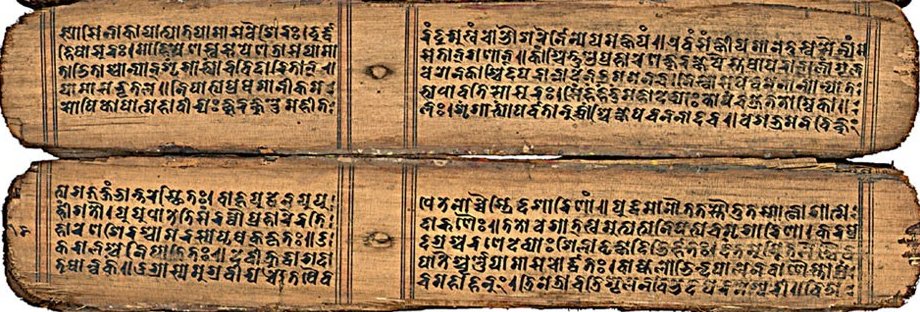


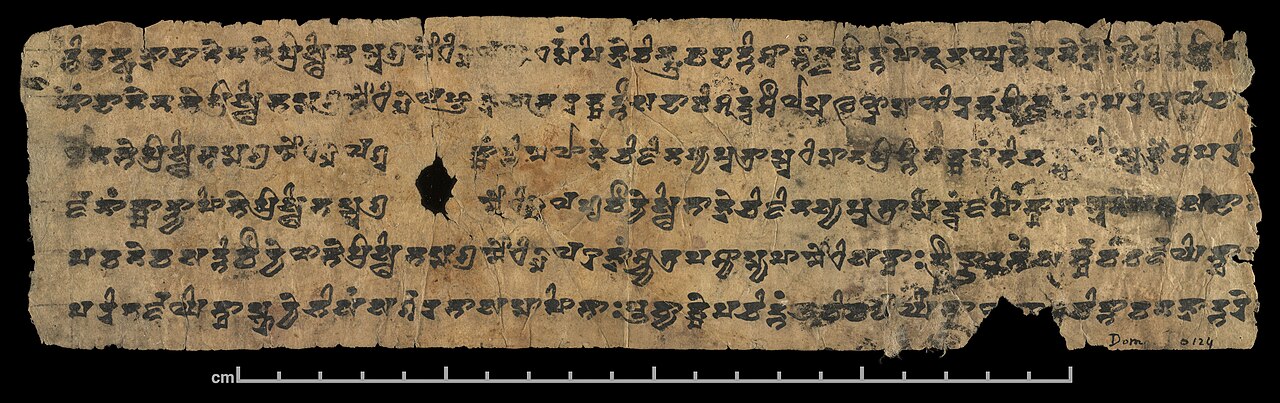


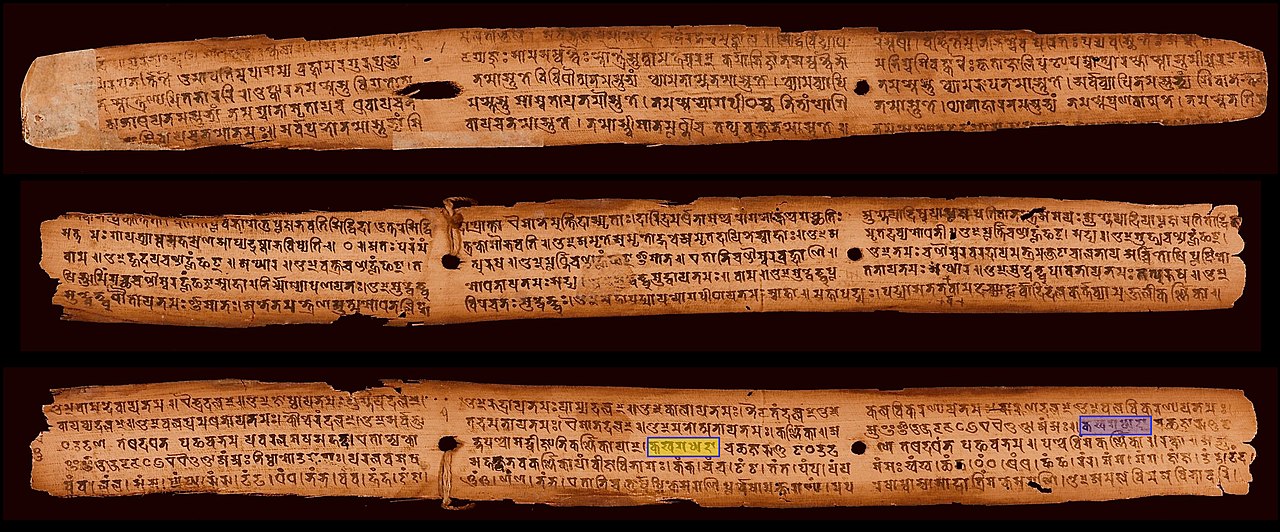
Characteristics
Sanskrit is noted for its systematic grammar and rich inflectional morphology. Key features include:
- Phonology and sound rules: a precise system of vowels and consonants with rules for pronunciation and combination (sandhi).
- Morphology: nouns decline for case and number; verbs conjugate for tense, mood, voice and person, producing a highly regular but complex paradigm.
- Syntax and style: relatively free word order due to inflection, permitting elaborate poetic and rhetorical devices.
- Standardization: Classical Sanskrit was codified into a literary standard by grammarians, most famously Pāṇini, which preserved the language in a stable form for centuries.
History and development
The roots of Sanskrit lie within the broader Indo-European family. Early religious collections known as the Vedas preserve the oldest attested form, Vedic Sanskrit, which differs in phonology and grammar from later Classical Sanskrit. Over time, grammarians and scholars stabilized the language; by the turn of the Common Era it functioned as a pan-Indian literary and scholarly medium used across regions and courts.
Modern historical linguistics traces Sanskrit’s ancestry back to Proto-Indo-European and situates it within the Indo-Aryan branch. The recognition of linguistic relationships between Sanskrit and classical European languages was famously articulated by scholars such as William Jones in the late 18th century, helping establish the concept of a family of related Indo-European languages that extends geographically from India to Europe.
Writing systems and transmission
Sanskrit has been recorded in many scripts. Historically inscriptions and early manuscripts used Brāhmī; later and modern texts commonly use Devanāgarī. It has also been written in the scripts of other regional languages and is often represented in scholarly work with Latin-based transliteration systems such as the International Alphabet of Sanskrit Transliteration (IAST).
Uses and cultural importance
Sanskrit is the liturgical language of several religious traditions and the repository of a vast corpus of texts, including the Vedas, Upanishads, classical epics, Puranas, philosophical treatises, scientific and technical works, and an extensive poetic and rhetorical literature. It influenced many later Indo-Aryan languages and contributed vocabulary and conceptual frameworks across South and Southeast Asia. Today it is used in ritual, education, classical arts, and academic study, and there are ongoing efforts to teach and revive it in various contexts.
Distinctive notes and modern context
While most languages of northern India, Pakistan, Nepal and Bangladesh belong to the Indo-Aryan family that descended from early forms related to Sanskrit, other major South Asian families — notably the Dravidian languages of southern India — are unrelated in origin though they show centuries of contact and borrowing. Sanskrit’s status combines continuity and specialized use: it is at once an ancient literary code, a medium of religious expression, and an object of modern linguistic and cultural study.
Further reading and related topics
- Hinduism — major religious tradition using Sanskrit in liturgy.
- Sikhism — tradition with Sanskrit-derived terminology and texts.
- Buddhism — many classical Buddhist works exist in Sanskrit.
- Jainism — shared use of classical languages including Sanskrit.
- Indo-Aryan languages — the language family that includes Sanskrit and its descendants.
- India — primary region where Sanskrit developed and was preserved.
- Pakistan — part of the broader historical region influenced by Sanskritic culture.
- North India — a core area for classical Sanskrit literature and learning.
- Nepal — another center where Sanskritical traditions remained strong.
- Bangladesh — region shaped historically by Indo-Aryan linguistic development.
- South India — home to Dravidian languages that interacted with Sanskrit.
- Hindi — a modern Indo-Aryan language with heavy Sanskrit influence.
- Urdu — a major modern language of South Asia sharing some vocabulary and history with Hindi.
- standardized dialect — reference to Classical Sanskrit as a learned standard.
- Central Asian — broader zone discussed in migration and contact theories.
- South Asia — the larger cultural and geographic context of Sanskrit’s development.
- Devanāgarī — the most common modern script for Sanskrit texts.
- Latin alphabet — used for transliteration and academic transcription.
- Latin — one of the classical European languages compared historically with Sanskrit.
- Greek — another classical language shown to be related to Sanskrit.
- European — denotes the continental linguistic context in comparative studies.
- Indo-European languages — the wider family connecting Sanskrit with many Eurasian languages.
Questions and answers
Q: What is Sanskrit?
A: Sanskrit is an ancient Indo-European language that is a sacred language of Hinduism, Sikhism, Buddhism and Jainism. It is the origin of most Indo-Aryan languages.
Q: How many people use it today?
A: Today, about 14,000 people in India use it as their daily language mostly for religious purposes.
Q: Is Sanskrit related to Dravidian languages?
A: No, the Dravidian languages of South India are separate from Sanskrit and are not derived from it.
Q: Are Hindi and Urdu derived from Sanskrit?
A: Yes, the two primary languages of Pakistan and India, Hindi and Urdu, are mainly derived from Sanskrit.
Q: What script is used to write Sanskrit?
A: The main script used to write Sanskrit is Devanāgarī but it can also be written in the scripts of various other Indian languages or sometimes even in the Latin alphabet. Historically, it was written in the ancient Brāhmī script.
Q: Who recognized similarities between European languages and Sanskrit?
A: William Jones recognized similarities between European languages such as Latin and Greek with Sanskrit while working as a judge in India during the 18th century. This led to recognition of Indo-European languages being related across Europe to India.
Q: What theory explains how Indo-European language came into South Asia? A: The Indo-European Aryan migration theory proposes that early 2nd millennium BC brought Indo-Europeans who migrated from Central Asian steppes into South Asia bringing with them their language -Sanskrit-.
Related articles
Author
AlegsaOnline.com Sanskrit: overview, history, structure, and cultural importance Leandro Alegsa
URL: https://en.alegsaonline.com/art/87083
Sources
- censusindia.gov.in : "Comparative speaker's strength of scheduled languages − 1971, 1981, 1991 and 2001"
- books.google.com : A companion to Sanskrit literature: spanning a period of over three thousand years, containing brief accounts of authors, works, characters, technical terms, geographical names, myths, legends, and twelve appendices
- india.gov.in : "Indian Constitution Art.344(1) & Art.345" · web.archive.org
- hindustantimes.com : "Sanskrit is second official language in Uttarakhand – The Hindustan Times"
- blogs.timesofindia.indiatimes.com : "Sanskrit as a language of science"
- timesofindia.indiatimes.com : "Markandey Katju: What is India?"