
Ceratonia — the carob genus of Mediterranean and Middle Eastern trees
Ceratonia is a small genus of evergreen legumes in Fabaceae, best known for the carob (Ceratonia siliqua). This article summarizes morphology, taxonomy, distribution, uses, cultivation and conservation.
Ceratonia is a small genus of evergreen, pod-bearing trees in the pea family (Fabaceae) native to the Mediterranean basin and adjacent parts of the Middle East. The genus is most widely represented by the cultivated carob, Ceratonia siliqua, whose edible pods have been used for food, animal fodder and industrial products for centuries. Ceratonia belongs to the subfamily Caesalpinioideae and was established as a genus by Carl Linnaeus in 1753. For much of botanical history the genus was treated as monotypic until the late 20th century when a second species was described from southwestern Arabia and the Horn of Africa.
Image gallery
5 Images


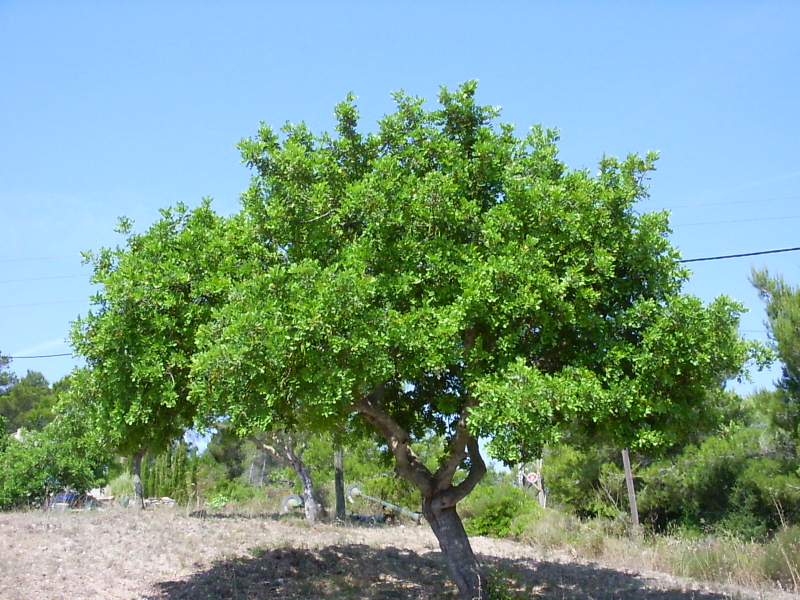

Distinctive characteristics
Species of Ceratonia are evergreen trees or large shrubs with glossy, leathery, compound leaves and robust branches. Leaves are alternate and pinnate, bearing several pairs of small, firm leaflets that reduce water loss in dry climates. Flowers are relatively small and borne in clusters; many trees have separate male and female flowers or combinations of flower types on different individuals, so fruit set may depend on local pollination dynamics. The fruit is an indehiscent legume pod that contains a sweet, fibrous pulp and a number of hard, smooth seeds. The durable pods are the most conspicuous part of the plant and are harvested for human and livestock use.
Taxonomy and species
The genus was described by Carl Linnaeus with Ceratonia siliqua designated as the type species. For centuries C. siliqua was the only recognized species. In 1979 botanists described a second species, Ceratonia oreothauma, from restricted populations in parts of Oman and Somalia. That taxonomic revision highlighted limited diversity within the genus and drew attention to the conservation importance of the wild populations. Modern treatments and regional floras provide identification keys and distribution records for the genus in authoritative databases.
Distribution and habitat
Ceratonia siliqua is native to the Mediterranean region and parts of the Levant and North Africa, where it grows on limestone soils, rocky slopes and in coastal lowlands. The species has been widely introduced to regions with similar climates, including parts of the Americas, southern Africa, Australia and other temperate subtropical areas, where it is grown for ornamental, agricultural and erosion-control purposes. The rarer species, C. oreothauma, is confined to mountain or escarpment habitats in southern Arabia and the Horn of Africa and is known from relatively few localities.
Cultivation and uses
The carob is cultivated for its sweet pods, harvested when mature and processed in various ways. Pod pulp is eaten fresh or dried and ground into carob powder, commonly used as a caffeine-free substitute for cocoa or as a sweetening ingredient. The seeds contain valuable polysaccharides from which locust bean gum (sometimes labelled E410) is extracted and used as a thickener and stabilizer in food and industrial applications. Pods are also used as livestock fodder, and trees are planted for shade, windbreaks and soil stabilization because of their drought tolerance and long lifespan. Propagation is possible by seed, but grafting and vegetative propagation are common in horticulture to preserve desirable cultivars.
Ecology and pests
Ceratonia trees are adapted to hot, dry summers and mild, wet winters typical of Mediterranean climates. They support a range of insect and bird species that feed on flowers and pods, and play roles in traditional agroecosystems. Cultivated and wild trees may be affected by pod borers and other insect pests; in some regions the carob moth and similar pests can reduce pod quality. In poorly drained soils trees may suffer from root diseases, so good drainage is important in cultivation. Management of pests, pruning for productivity and selection of appropriate cultivars are typical aspects of carob agriculture.
Conservation and research
Wild populations of Ceratonia, especially the less widespread C. oreothauma, are of conservation concern because of their restricted ranges and fragmentation. Conservation efforts focus on habitat protection, documentation of genetic diversity and careful study of wild stands to inform sustainable use and potential restoration. Ongoing research examines genetic variation, adaptation to arid environments and improvement of cultivars for yield and pod quality.
Cultural and historical notes
The carob has long cultural associations in Mediterranean and Middle Eastern societies. Common names such as "St. John's bread" reflect historical and religious references, while the hard, uniform seeds were historically used as weight standards in trade and contributed to the origin of the word "carat" for gemstone weight. Carob products—whole pods, syrups, powders and locust bean gum—continue to be important in regional cuisines, traditional medicines and modern food industries.
Further resources
- Taxonomic databases and plant checklists: Ceratonia overview.
- General accounts of legumes and their classification: legume resources.
- Descriptions and cultivation advice for tree species: tree cultivation guides.
- Family-level biodiversity projects and informational pages: pea family resources.
- Family and crop-use information: Fabaceae crop uses.
- Notes on native and endemic plant species: endemic species accounts.
- Regional floras and Mediterranean plant references: Mediterranean flora.
- Flora and horticultural guides for the Middle East: Middle Eastern flora guides.
- Subfamily treatments and phylogenetic resources: Caesalpinioideae information.
- Historical botanical literature and Linnaean works: Linnaeus and Species Plantarum.
- Type specimen records and herbarium resources: type specimen records.
- Regional plant conservation and country-specific notes for Oman: Oman flora notes.
- Conservation and botanical information for Somalia and the Horn of Africa: Horn of Africa plant resources.
Questions and answers
Q: What is Ceratonia?
A: Ceratonia is a small genus of flowering trees in the pea family, Fabaceae, endemic to the Mediterranean region and the Middle East.
Q: What is the best known member of Ceratonia?
A: The best known member of Ceratonia is the carob tree, which is cultivated for its fruits (called pods) and has been widely introduced to regions with similar climates.
Q: What subfamily does Ceratonia belong to?
A: Ceratonia belongs to the subfamily Caesalpinioideae.
Q: Who created the genus Ceratonia?
A: The genus Ceratonia was created by Carl Linnaeus and published in Species Plantarum 2: 1026 en 1753.
Q: What is the type specimen of Ceratonia?
A: The type specimen of Ceratonia is Ceratonia siliqua.
Q: Was Ceratonia considered monotypic for a long time?
A: Yes, Ceratonia was long considered monotypic (with only one species).
Q: When was the second species of Ceratonia identified and where was it found?
A: The second species of Ceratonia, Ceratonia oreothauma, was identified in 1979 from Oman and Somalia.
Related articles
Author
AlegsaOnline.com Ceratonia — the carob genus of Mediterranean and Middle Eastern trees Leandro Alegsa
URL: https://en.alegsaonline.com/art/18154
Sources
- ars-grin.gov : "Ceratonia L."
- tropicos.org : "'Ceratonia"
- theplantlist.org : Ceratonia in PlantList
- jstor.org : "Ceratonia oreothauma"