
Chamaerops — the European fan palm
Chamaerops is a small genus of palms represented by the European fan palm (Chamaerops humilis), a clumping, drought-tolerant palm native to parts of the western Mediterranean and widely used in gardens.
Overview
Chamaerops is a genus of flowering palms in the family Arecaceae. It is best known for a single widespread species, Chamaerops humilis, commonly called the European fan palm, Mediterranean dwarf palm or dwarf fan palm. This plant is notable as the only palm species native to continental Europe and occupies a distinctive place in Mediterranean landscapes and horticulture.
Image gallery
10 Images



Description and key characteristics
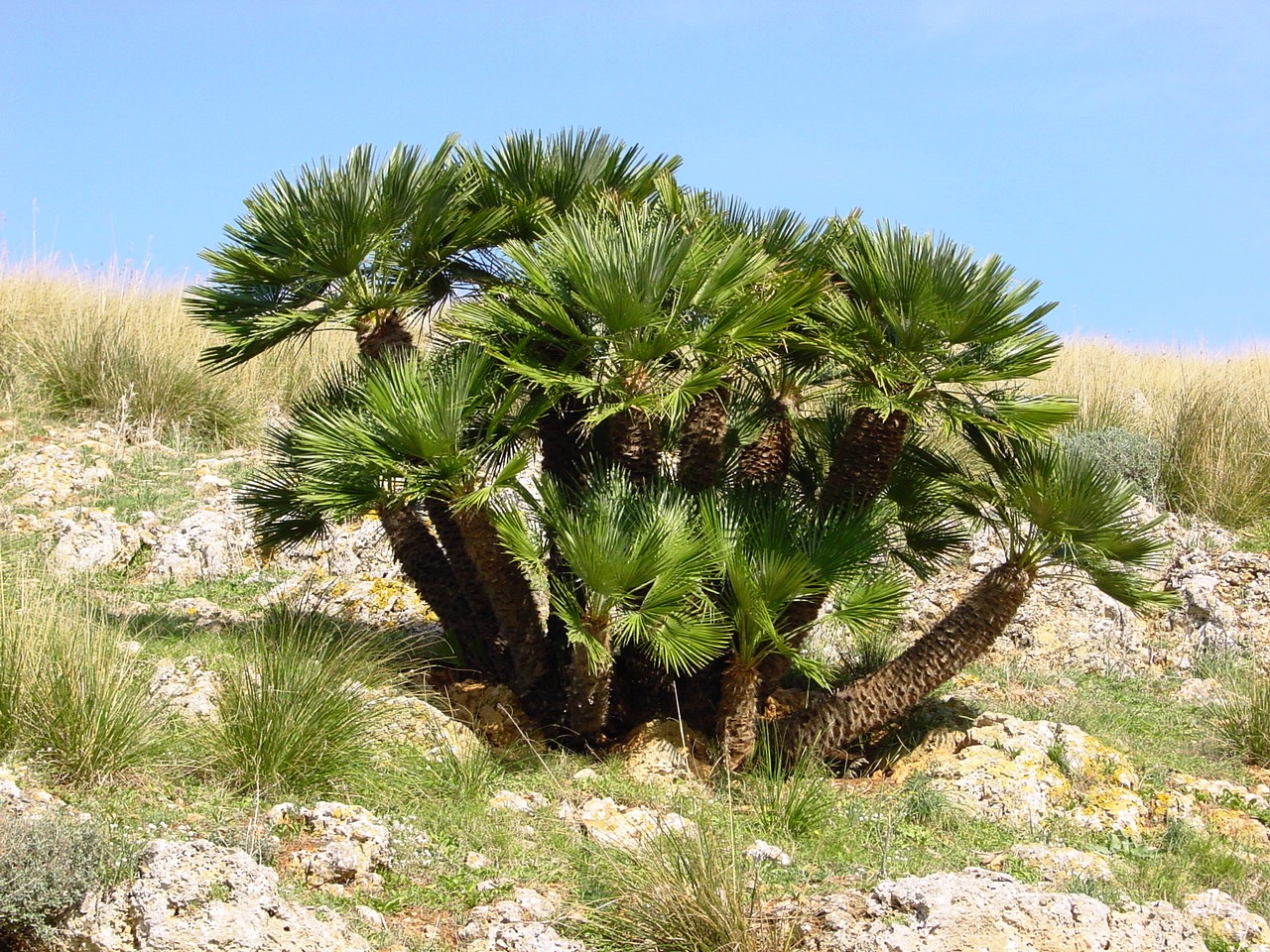
Chamaerops humilis grows as a multi-stemmed, shrub-like palm with a clumping habit. Multiple trunks arise from a single base and remain relatively close together rather than forming a single tall bole. Stems are slow-growing and commonly reach between two and five metres in height under typical conditions. Leaves are fan-shaped (palmate), with stiff segments that give the palm its characteristic silhouette; older plants often develop a fibrous skirt of old leaf bases.
- Growth form: clumping, multi-stem; shrub-like rather than a single-trunk tree.
- Leaves: palmate (fan-shaped) with rigid segments and a rough petiole.
- Reproduction: produces flowers and small fruit typical of palms; plants may form dense colonies.
Habitat, range and history
The species occurs naturally around the western Mediterranean region, including coastal and near-coastal areas of southern France, parts of Spain and Italy, and across northern Africa in countries such as Morocco. Populations favour dry, rocky slopes, coastal scrub and open woodlands where drought, heat and periodic salt exposure shape the vegetation. Human use and cultivation over centuries have extended its presence in gardens and planted landscapes well beyond its native range.
Cultivation, uses and significance
Chamaerops is valued in landscaping for its compact habit, tolerance of drought, and ability to withstand coastal exposure. Gardeners use it as an ornamental specimen, in mixed Mediterranean plantings, for erosion control on slopes, and in public plantings where a durable low tree or large shrub is wanted. Numerous cultivars have been selected for leaf colour or form; some horticultural selections are prized for blue-green foliage. It is hardy compared with many other palms, making it popular in temperate gardens with mild winters.
Distinctive facts and conservation
As a relic of warmer climates in Europe, Chamaerops humilis is often cited for its biogeographical interest and resilience. It is the only palm native to continental Europe, distinguishing it from other palms that are primarily tropical or introduced. In cultivation and restoration planting it is combined with other Mediterranean species to recreate native scrub and coastal habitats. For more specialized botanical or conservation information consult regional floras or plant databases via resources such as regional flora, plant databases and horticultural guides available from botanical gardens and conservation groups (garden resources, conservation organizations, botanical references, plant nurseries, landscape guides).
Related articles
Author
AlegsaOnline.com Chamaerops — the European fan palm Leandro Alegsa
URL: https://en.alegsaonline.com/art/18405