
Tidal energy: sources, technologies, history and impacts
Tidal energy converts the motion and height differences of tides and ocean currents into electricity. This article explains mechanisms, technologies, history, benefits, limits and environmental considerations.
Overview
Tidal energy, often called tidal power, harnesses the movement of seawater associated with the tides and with large-scale ocean currents to produce electricity. It is a form of hydroelectricity that exploits either the motion of water or the change in water level to turn turbines or drive mechanical systems. Because the driving forces are astronomical and predictable, tidal resources are more forecastable than many other renewable sources.
Image gallery
10 Images






How it works and main types
Tidal systems derive energy in two principal ways. Devices that capture the movement of flowing water extract kinetic energy, while structures that use the difference between high and low tides capture potential energy. Common approaches include:
- Barrages and tidal lagoons that enclose an estuary or bay to exploit head differences between incoming and outgoing tides.
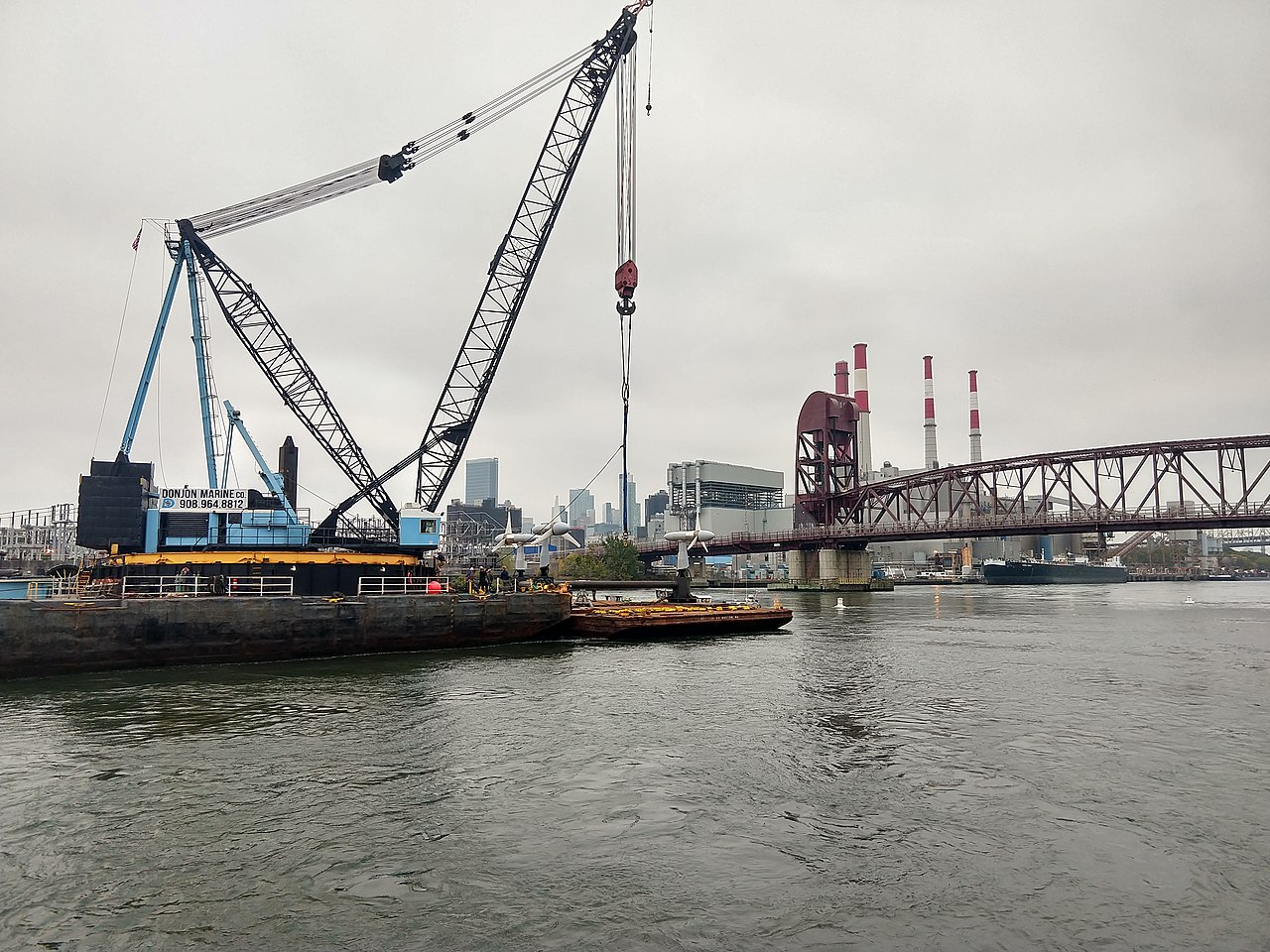
- Tidal-stream turbines placed in fast-flowing channels to act like underwater wind turbines, harvesting kinetic energy with minimal height difference.
- Guided-current devices and kite-like converters designed for open-ocean flows.
Barrages resemble dams in function and impact and are sometimes contrasted with conventional dams. Tidal stream devices aim to reduce habitat changes by leaving natural water exchange mostly intact.
History and development
Exploiting tidal motion is an old practice: medieval tide mills used trapped tidal water to operate millworks for grinding grain. Large-scale electricity-focused projects began in the 20th century and have diversified since, moving from protected estuary barrages toward smaller, modular stream turbines and experimental open-ocean systems. Modern engineering emphasizes reduced environmental impact and lower lifecycle costs.
Advantages and uses
Tidal energy contributes to renewable energy portfolios because tidal forces are continuous and reliably timed, improving grid scheduling. It produces no direct air emissions or combustion byproducts, reducing pollution associated with fossil fuels. Because the resource is tied to astronomical cycles, tidal schemes can provide stable power and predictable contributions to regional electricity generation. Compared with variable sources like wind power and solar power, tides offer determinism that can lower balancing costs for grids.
Challenges, impacts and siting
Despite benefits, tidal projects face technical, environmental and economic challenges. Barrages and poorly designed installations can alter estuarine habitats, sediment transport and fisheries. Turbine arrays must balance energy capture with navigation, marine life interactions and maintenance in corrosive, debris-rich environments. Siting requires careful assessment of resource strength, ecological sensitivity and connection costs to the electrical grid.
Typical assessment and deployment steps
- Resource mapping to measure flow speeds and tidal range.
- Environmental baseline studies for habitats, sediment and species.
- Technology selection (barrage, lagoon, stream turbine or open-ocean device).
- Design, permitting and stakeholder engagement to reduce local impacts.
- Construction, grid integration and adaptive monitoring once operating.
Outlook and notable facts
Interest in tidal energy has increased as designers create smaller, scalable turbines and improved foundations for deep-water deployment. The ultimate source of tidal energy is orbital dynamics: most tidal energy derives from the Moon's gravitational pull and the interaction that gradually transfers angular momentum between Earth and the Moon, a process that also slightly affects the length of the day. Continued innovation aims to make tidal installations cost-competitive while minimizing ecological footprints; in many coastal regions, tidal systems are being considered as part of diversified, predictable renewable portfolios for future energy systems.
For further technical summaries and case studies, consult introductory resources on tidal stream power and engineering reviews of tidal hydroelectricity.
References and resources: general primers on the physics of tides, measurements of ocean currents, and reviews of kinetic energy converters and potential energy schemes are useful starting points for practitioners and students.
Additional reading: policy discussions about integrating predictable power into grids, technology comparisons with wind power and solar power, and historical accounts of tide mills help place tidal energy in wider energy transitions.
External technical portals: introductory overviews, site-selection guidance and recent deployments can be found through engineering and ocean energy consortiums; specific project pages often link to environmental assessments and performance data for electricity generation cases and ongoing research into tidal stream power.
Related articles
Author
AlegsaOnline.com Tidal energy: sources, technologies, history and impacts Leandro Alegsa
URL: https://en.alegsaonline.com/art/99795
Sources
- commons.wikimedia.org : Tidal power