
Gristmill: history, design, and role in grinding grain
An overview of the gristmill — its purpose, main parts, power methods (water, wind, animal), historical development, and cultural importance in producing flour from grain.
A gristmill is a facility that grinds cereal crops into meal or flour for human and animal consumption. The term "grist" originally referred to grain that a customer brings to a mill for grinding, and by extension to the resulting ground product. Traditionally a local point of food processing and trade, gristmills were a key piece of rural infrastructure before industrialized milling became widespread.
Image gallery
10 Images




Overview
At its simplest, a gristmill converts whole kernels into smaller particles suitable for baking, cooking, or animal feed. The process combines mechanical shear and pressure delivered by a pair of millstones or by later roller mechanisms. A mill typically receives unprocessed grain through a hopper and releases processed flour or meal after sifting. Many surviving historical examples are water-powered, though wind, animal, and steam power have also been used.
Main components and their function
- Hopper and feed: a funnel that holds grain and meters it downward into the grinding surfaces.
- Millstones: usually a stationary bed stone and a rotating runner stone, with carved grooves (called dressing) to channel and shear the grain.
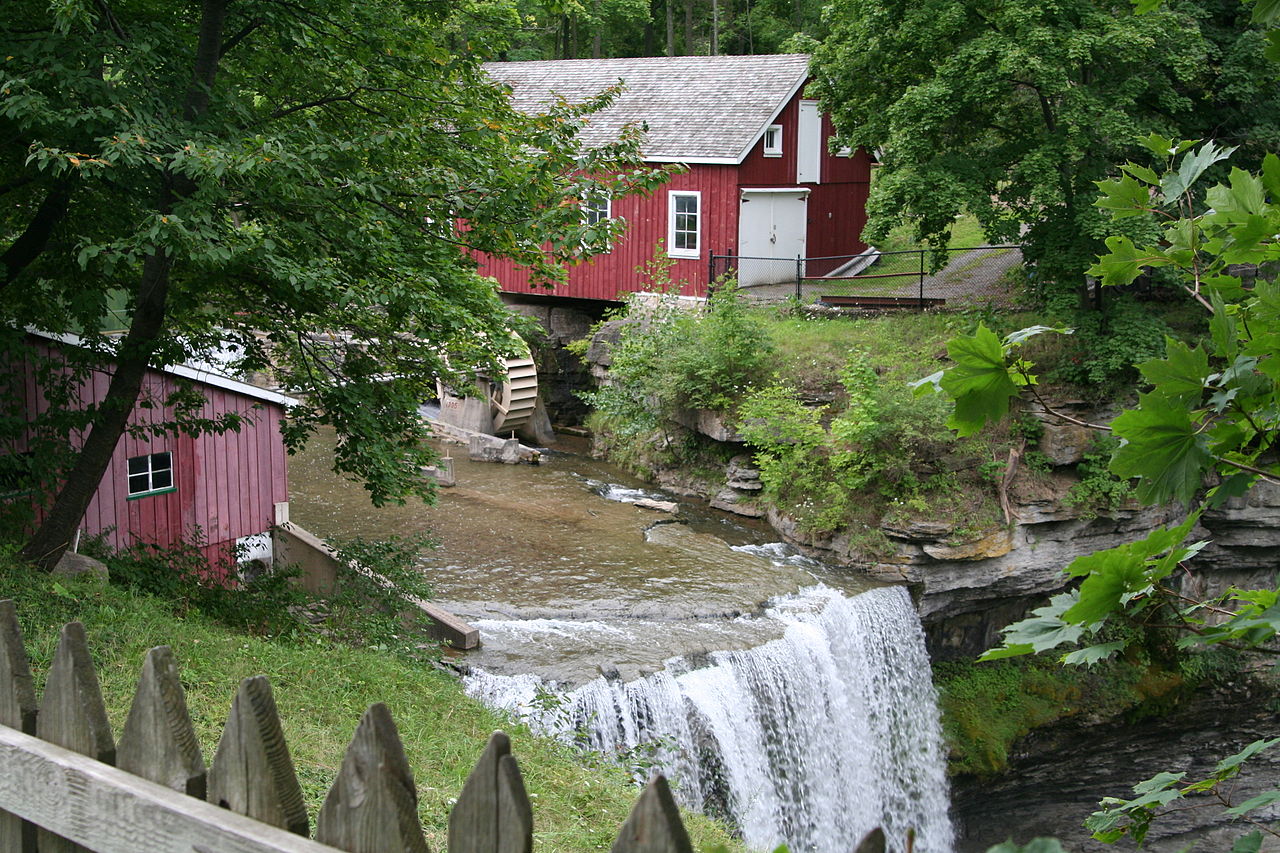
- Power source: waterwheels are common in older mills (watermill), but windmills and other power forms exist.
- Transmission: shafts, gears and axles transfer power from the driving wheel to the stones; an axle or shaft is a central element.
- Gearing and controls: gears regulate speed and torque; the action of a gear train determines how many stones can be driven and at what speed.
Mechanisms and drive systems
Power is transmitted to the runner stone by several traditional arrangements. A single-geared drive uses one set of gears to turn a single stone and was typical where a vertical waterwheel supplied direct power. A spur-wheel configuration employs a large horizontal gear (the spur) to feed multiple stones. A layshaft drive puts a horizontal shaft (layshaft) between the wheel and stones, with gears on the shaft driving individual millstones. Each system balances simplicity, durability, and the capacity to run several stones from one power source.
History and development
Gristmills have ancient antecedents and were widespread in classical and medieval societies. In many regions they developed into community centers where farmers brought grain to be milled for a fee or toll. Technological advances over centuries improved stone quality, gearing, and sifting. By the 19th century, industrial roller mills and mechanized sifting began to supplant traditional stone grinding in large-scale production, though stone mills remained valued for particular textures and flavors.
Uses, social role and distinctions
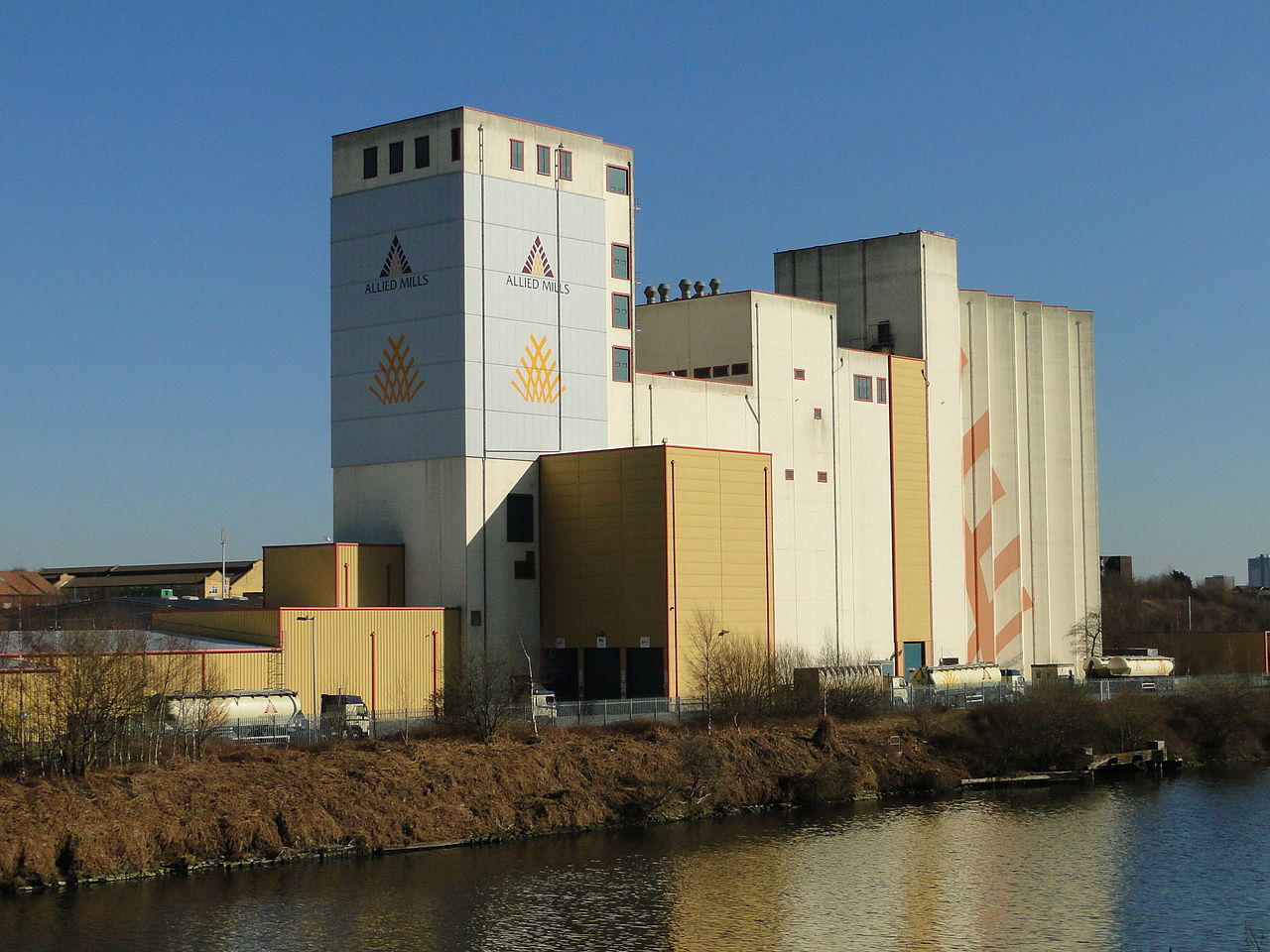
Beyond producing basic foodstuffs, gristmills shaped local economies: the miller was often a central figure and milling rights could be tied to land tenure. The distinction between a gristmill and a flour mill can be a matter of scale and product: small gristmills traditionally handled locally grown grain for nearby communities, while larger flour mills pursued finer, standardized products for wider markets. Preservation of historic gristmills today highlights their cultural importance and offers insight into pre-industrial food systems.
Notable facts
Surviving mills are studied for their mechanical ingenuity and regional adaptations. Millstones may be named by material (e.g., buhrstone) and are periodically "dressed" to maintain cutting surfaces. Restored gristmills frequently demonstrate how a sequence of simple mechanical elements — wheel, axle, gears, stones, and sifters — converted a raw agricultural product into a staple of daily life.
Related articles
Author
AlegsaOnline.com Gristmill: history, design, and role in grinding grain Leandro Alegsa
URL: https://en.alegsaonline.com/art/40965