
Tidal stream power: generating electricity from moving tidal currents
Tidal stream power converts the kinetic energy of tidal currents into electricity using underwater turbines. This article explains technology, siting, history, benefits, limitations and environmental considerations.
Overview
Tidal stream power is a form of marine renewable energy that captures the kinetic energy of moving water in tidal currents and converts it to electricity. Devices called tidal stream generators or tidal turbines operate much like submerged wind turbines: rotating blades or rotors are driven by the flow of water and turn a generator to produce electrical power. Because seawater is much denser than air, the potential power from a moving column of water is substantially higher than from the same-speed wind, making tidal streams an attractive resource where strong currents occur.
Image gallery
6 Images


How it works and main components
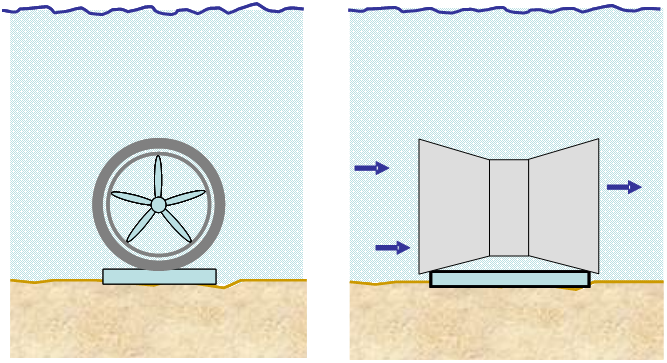
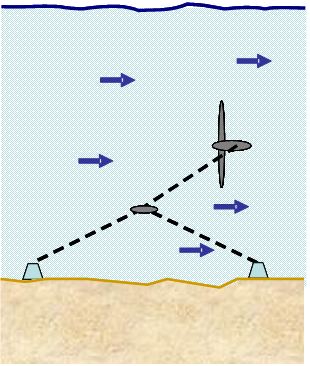
Tidal stream systems generally consist of one or more turbines mounted on a seabed foundation, a floating platform, or a tethered structure. Each turbine includes a rotor, gearbox or direct-drive generator, nacelle, and electrical connection to export cables. Arrays of turbines are grouped and connected to subsea cabling that transmits power to shore and into the grid. Supporting systems address anchoring or foundations, electrical converters, and access for maintenance. Designs vary from horizontal-axis rotors similar to wind turbines to vertical-axis or oscillating devices developed for specific sites.
History and development
Interest in tidal energy dates back centuries, but modern tidal stream concepts emerged with rising attention to alternative energy in the late 20th century. Research accelerated after the 1970s energy crises and has continued through pilot projects, prototype testing, and small commercial arrays. Over recent decades developers have focused on improving turbine reliability, reducing costs, and demonstrating environmental compatibility. Demonstration installations and research sites have been used to validate performance in different tidal regimes.
Development timeline and projects
Site selection and resource characteristics
Effective tidal stream generation depends on locating turbines where natural flows are concentrated. Typical sites include tidal channels, straits between islands, headlands, bay entrances, and narrow passages where acceleration produces sustained currents. Water speeds typically need to be high enough throughout the tidal cycle to be economical; in practice sites with reliable flows even near neap tides are preferred. Careful hydrographic, bathymetric, and environmental studies guide placement to avoid navigation hazards and minimize ecological impacts.
Advantages, limitations and environmental considerations
- Advantages: predictable tidal cycles offer reliable generation forecasts; high energy density of water yields strong per-unit output; relatively low visual impact compared with onshore wind or tidal barrages.
- Limitations: can require high capital and installation costs, challenging maintenance in the marine environment, and limited suitable locations near demand centers.
- Environmental factors: compared with large tidal barrages, tidal stream devices tend to have lower broad-scale ecological effects, but developers must assess local impacts on marine mammals, fish, seabed ecology, and sediment transport. Mitigation includes careful siting, monitoring, and slow-rotating designs.
Environmental assessment guidance
Importance and distinctions
Tidal stream power is one of several tidal energy approaches—others include tidal barrages and tidal lagoons. It is often portrayed as the least invasive of the three because it does not require large dams or extensive coastal structures. It complements other renewables by providing predictable generation tied to astronomical tidal cycles rather than weather. As technology matures, arrays of tidal turbines may contribute to coastal energy systems where currents are strong, grid access feasible, and environmental risks manageable.
For further reading and technical references, consult specialist reviews and field studies that summarize device performance, costs, and environmental monitoring results. Practical deployment requires multidisciplinary planning spanning engineering, marine science, and regulatory permitting.
Questions and answers
Q: What is tidal stream power?
A: Tidal stream power is electricity generated from the tidal movement of water.
Q: What is a tidal stream generator?
A: A tidal stream generator is a machine that extracts energy from moving water in tides.
Q: How do tidal stream generators draw energy from water currents?
A: Tidal stream generators draw energy from water currents in the same way that wind turbines draw energy from air currents.
Q: What makes tidal stream power a cheaper and less ecologically damaging source of power generation?
A: Tidal stream power is the cheapest and the least ecologically damaging among the three main forms of tidal power generation.
Q: When was tidal stream power first conceived?
A: Tidal stream power was first conceived in the 1970s during the oil crisis.
Q: Why can an individual tidal turbine generate more power than a similarly rated wind energy turbine?
A: The potential for power generation by an individual tidal turbine can be greater than that of similarly rated wind energy turbines due to water being about 800 times the density of air, which allows water to provide more power than air pushing against a similar turbine at the same speed.
Q: Where should tidal stream systems be located?
A: Tidal stream systems need to be located in areas with fast currents where natural flows are concentrated between obstructions, for example at the entrances to bays and rivers, around rocky points, headlands, or between islands or other land masses.
Related articles
Author
AlegsaOnline.com Tidal stream power: generating electricity from moving tidal currents Leandro Alegsa
URL: https://en.alegsaonline.com/art/99798
Sources
- esru.strath.ac.uk : "Tidal power"
- time.com : time.com
- nyserda.org : "Roosevelt Island Tidal Energy (RITE) Environmental Assessment"
- depts.washington.edu : "Northwest National Marine Renewable Energy Center"