
Potential energy
Stored energy of a system due to position, configuration, or state within a force field; includes gravitational, elastic, electric and chemical forms and underpins many physical and engineering analyses.
Potential energy is the energy stored in a physical system because of the positions, arrangement, or internal state of its parts within a force field. It is typically contrasted with kinetic energy, the energy of motion. The concept is central to physics and to many applied sciences because it provides a way to account for the capacity of a system to perform work when the configuration changes.
Image gallery
7 Images




Definition and basic examples
At its simplest, potential energy is the work required to bring a system from a chosen reference configuration to its current configuration, stored so that it can be released later. Lifting an object in a gravitational field stores gravitational potential energy; stretching or compressing a spring stores elastic potential energy; assembling charges stores electric potential energy. The International System uses the SI unit for energy, the joule (J).
Common forms and formulas
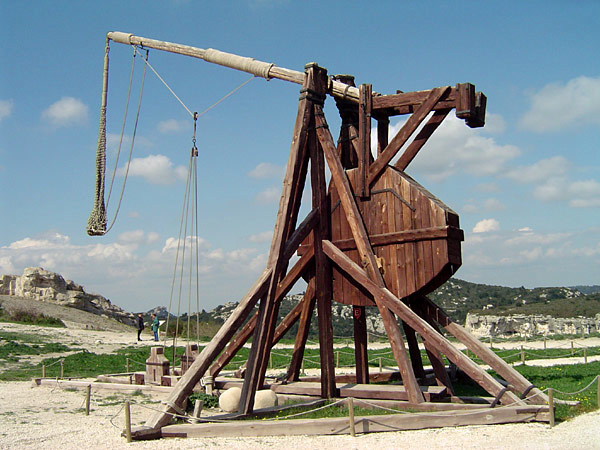
- Gravitational potential energy: near Earth's surface often written U = mgh, where m is mass, g the gravitational acceleration, and h the height above a reference level. More generally, for point masses the potential follows an inverse distance law.
- Elastic potential energy: for an ideal spring U = 1/2 k x² where k is the spring constant and x the displacement from equilibrium.
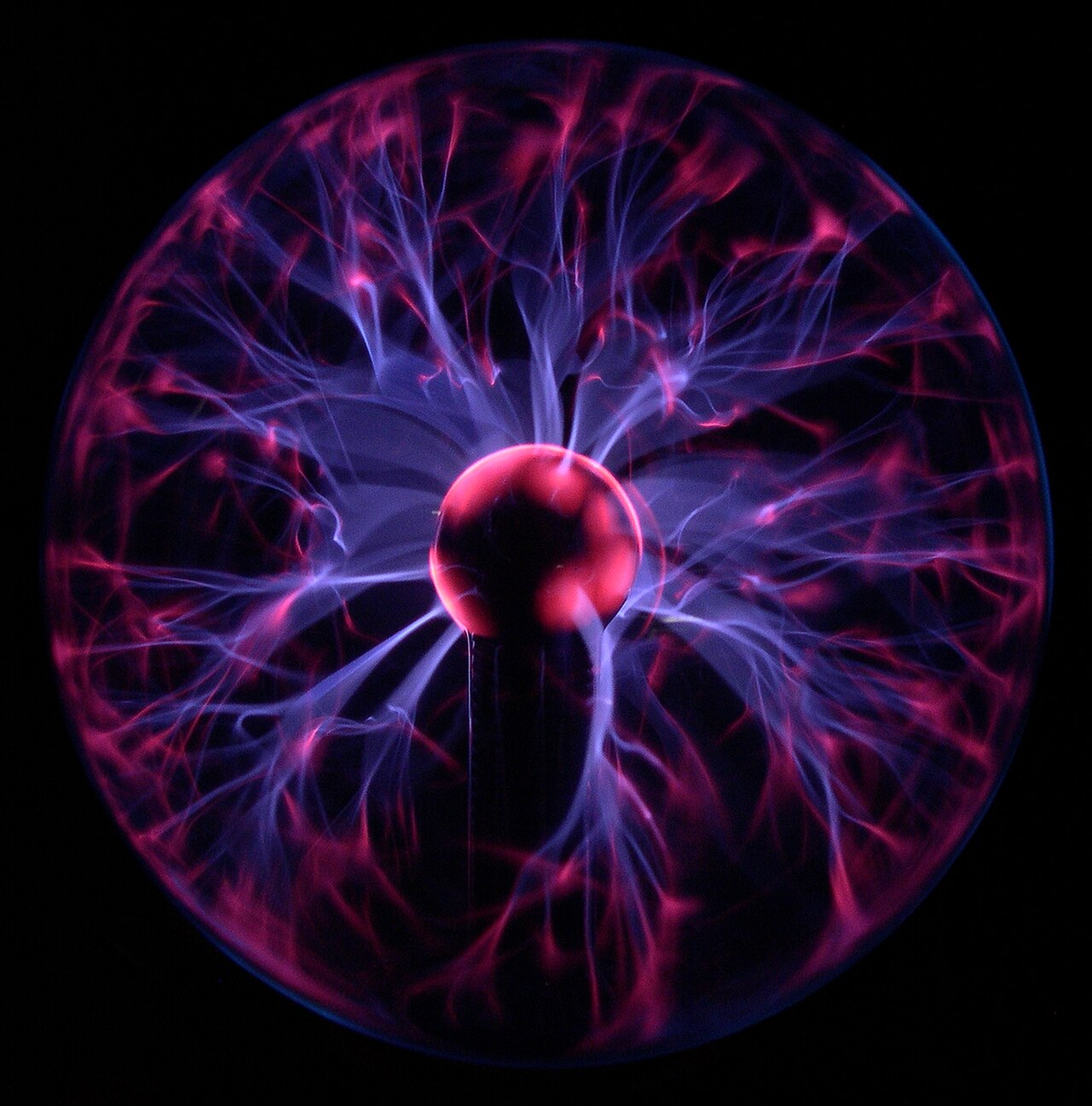
- Electric potential energy: depends on charges and their arrangement in an electric field; moving a charge between points requires or releases work depending on the field and path.
- Chemical and nuclear potential energy: stored in atomic and subatomic configurations and released in chemical reactions or radioactive processes; this form is central in chemistry and energy technologies.
Mathematical structure and conservative forces
Potential energy is most naturally defined for conservative forces, for which work between two points does not depend on the path taken. For such forces there exists a scalar potential function U(x) with the property that the force is the negative gradient: F = -∇U. Only differences in potential energy are physically meaningful, so one normally sets U = 0 at a convenient reference. The interplay between potential and kinetic energy underlies the law of conservation of energy, which states that in a closed system total energy remains constant, although non-conservative forces like friction convert mechanical energy into heat.
Reference level and sign conventions
The value of potential energy depends on the chosen zero point. For gravity it is common to choose U = 0 at ground level or at infinite separation for isolated masses; electric potentials may be defined relative to infinity or another reference conductor. Because the zero is arbitrary, potential energy can be positive or negative; relative differences determine work and motion.
Applications and practical considerations
Potential energy is a practical tool in engineering, design, and analysis. Civil engineers account for gravitational potential when assessing stability and loads in bridges and dams. Mechanical designers use stored elastic energy in springs for clocks, vehicles, and safety devices. In electrical engineering, energy stored in fields is important for capacitors and power systems. In planetary science and astronomy, gravitational potential energy helps explain orbits, tides and formation processes.
Experimental observation and measurements
Basic laboratory demonstrations include mass-and-spring systems and pendulums, which show conversion between potential and kinetic energy. Measuring work done against a field allows estimation of stored potential energy; unit conversions and dimensional analysis use the SI framework and joule measurements. Educational resources and guided experiments are available for hands-on study at general science outlets and institutional labs (object experiments, field demonstrations at force field examples).
Extensions in chemistry and physics
In chemistry the concept is expanded to potential energy surfaces that map how molecular energy changes with atomic positions; these surfaces guide reaction mechanisms and spectroscopy. In classical field theory and in quantum mechanics the idea of potential remains central: potentials enter the equations of motion and wavefunctions, influencing bound states and scattering. For applied topics consult introductory treatments and specialized references on gravitational theory, elasticity, electrostatics, and chemical thermodynamics.
Key distinctions and reminders
Potential energy is a property of a system configuration rather than an isolated object; two masses or two charges share potential energy because of their mutual arrangement. It is a scalar quantity, transformed into other energy forms through work. When modeling, identifying whether forces are conservative determines whether a potential function exists and whether mechanical energy is conserved in the absence of dissipative processes.
For broad introductory reading and worked examples consult textbooks and reputable educational sites linked above to deepen understanding of definitions, units and common problem-solving techniques. For practical engineering or experimental work, use domain-specific resources and measurement standards to ensure correct application of potential energy concepts in design and analysis (mass-related topics, general energy, and practical unit conversion guides at SI resources).
Questions and answers
Q: What is potential energy?
A: Potential energy is the stored or pent-up energy of an object. It is often contrasted with kinetic energy and is the energy which an object has due to its position in a force field or which a system has due to the way its parts are arranged.
Q: What are some common types of potential energy?
A: Common types of potential energy include gravitational potential energy, elastic potential energy, and electric potential energy.
Q: What is the SI unit for measuring energy?
A: The SI unit for measuring energy is the joule (symbol J).
Q: How does work become stored as potential energy?
A: Work becomes stored as potential when it is performed by an external force that works against the force field of the potential. This work is then stored in the force field as potential energy.
Q: How does potential change into kinetic?
A: When an external force that was working against a force field of a given position is removed, this causes the body to move back to its initial position, reducing any stretch on a spring or causing a body to fall. At this point, any existing potential changes into kinetic and total amount of overall stays constant due to law of conservation of Energy.
Q: How do physicists define Potential Energy?
A: Physicists say that Potential Energy can be defined as difference between energies of an object in given position and reference position.
Related articles
Author
AlegsaOnline.com Potential energy Leandro Alegsa
URL: https://en.alegsaonline.com/art/78435
Sources
- books.google.com : An introduction to fluid mechanics
- books.google.com : Textbook of engineering physics, Part 1
- books.google.com : Physics of the human body