
Wind power: principles, development, uses, and impacts
Wind power converts the kinetic energy of moving air into electricity. This article covers how turbines work, types of installations, history, advantages, limitations, and notable deployment trends.
Overview
Wind power is the conversion of the kinetic energy in moving air into a more useful form, most commonly electricity. It is a renewable, low‑emission source of energy used at scales from a single small turbine to large arrays of utility‑scale machines. Wind resources vary by location and time, so modern wind generation is usually integrated with other energy sources and grid management tools.
Image gallery
10 Images




How wind power works
At its simplest, a wind turbine captures the flow of wind with blades that turn a rotor. That rotational motion drives a generator, which produces electrical current. Turbines include rotor blades, a nacelle housing the gearbox and generator, a tower, and control systems that adjust blade pitch and yaw to optimize output and protect the machine in strong winds.
Types and deployment
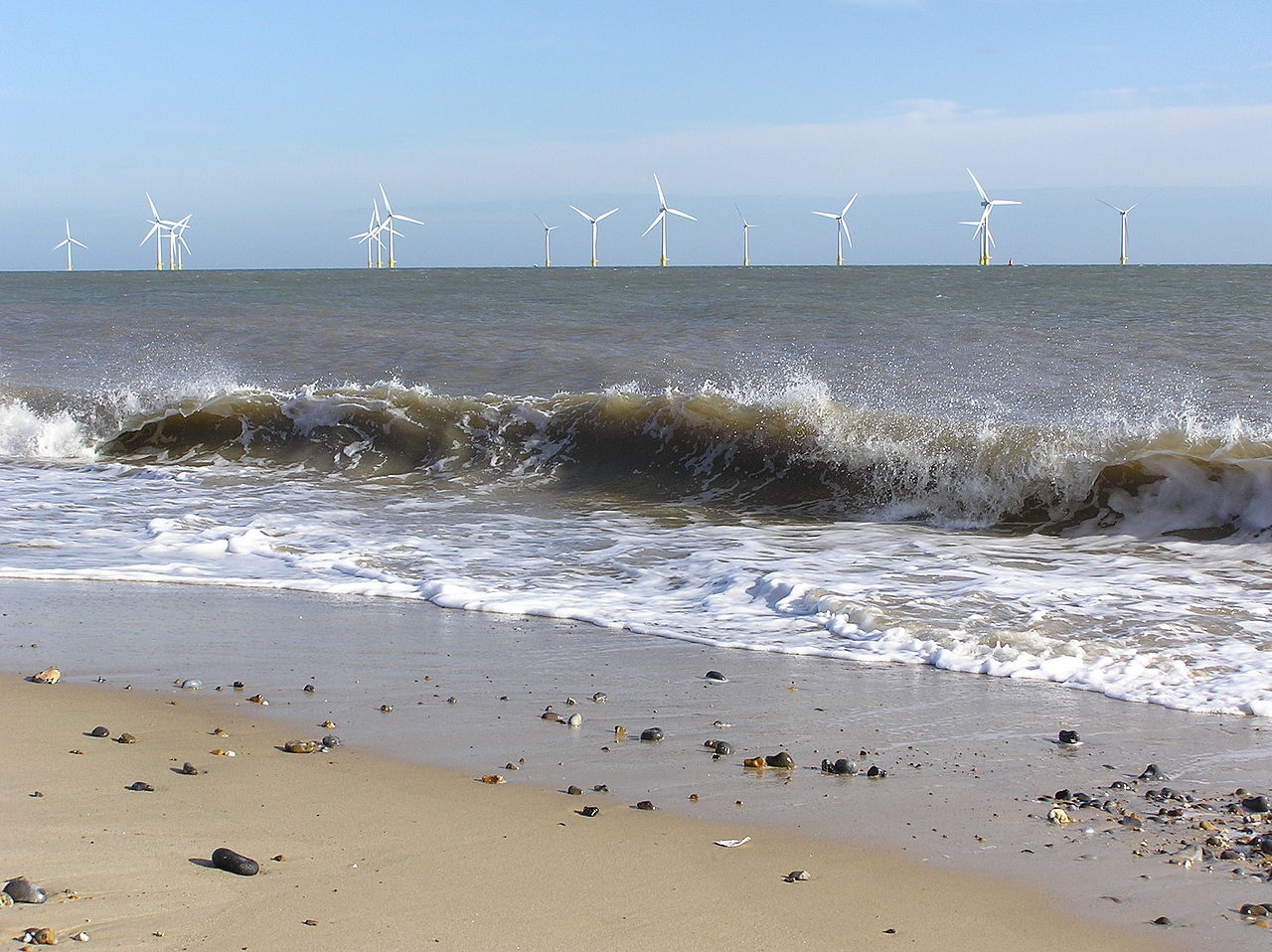
There are two broad deployment categories: onshore and offshore. Onshore turbines are sited on land and tend to be less expensive to build but face constraints from land use and local siting. Offshore turbines are placed in bodies of water where winds are typically stronger and steadier, allowing larger machines and higher capacity factors. Wind power is also used in small, distributed installations for remote or off‑grid applications.
History and global growth
Commercial wind power expanded rapidly in the late 20th and early 21st centuries. By the mid‑2010s global installed capacity had grown into the hundreds of gigawatts and supplied a growing share of electricity worldwide. Deployment has been strong in Europe and increasingly in North America and Asia, with notable national examples: in 2012 wind supplied about 30% of electricity in Denmark, roughly 20% in Portugal, and 18% in Spain. Growth continues as technology, finance, and policy evolve, including in the United States.
Benefits and challenges
- Advantages: low operational emissions, scalable installations, declining costs for turbines and installation, and rapid deployment compared with some other generation options.
- Challenges: variability and intermittency of wind, need for transmission and storage solutions, local environmental and visual impacts, and siting conflicts over land and wildlife.
Modern wind projects are paired with grid upgrades, energy storage, and forecasting to reduce variability and improve reliability. As part of a diversified energy mix, wind power contributes to reduced greenhouse gas emissions and enhanced energy security while remaining subject to planning, environmental assessment, and community engagement to manage its impacts.
Further reading: technical introductions cover turbine aerodynamics, grid integration strategies, and comparative lifecycle analyses. For practical and policy resources see national energy agencies and international renewables organizations.
Questions and answers
Q: What is wind power?
A: Wind power is the conversion of the energy in wind into a more useful form of energy, like electricity.
Q: Is wind power a renewable source of energy?
A: Yes, wind power is a renewable source of energy.
Q: What is the benefit of using wind power as a source of energy?
A: Wind power helps to cut down on the pollution of earth's air.
Q: How much wind power capacity was there in June 2014?
A: Wind power capacity was 336 GW in June 2014.
Q: How much did wind energy production account for total worldwide electricity usage?
A: Wind energy production accounted for about 4% of total worldwide electricity usage.
Q: Which countries extensively use wind power?
A: Wind power is widely used in European countries, and more recently in the United States and Asia.
Q: What was the percentage of electricity generation by wind power in Denmark, Portugal, and Spain in 2012?
A: In 2012 wind power accounted for approximately 30% of electricity generation in Denmark, 20% in Portugal and 18% in Spain.
Related articles
Author
AlegsaOnline.com Wind power: principles, development, uses, and impacts Leandro Alegsa
URL: https://en.alegsaonline.com/art/108480
Sources
- gwec.net : GWEC, Global Wind Report Annual Market Update
- news.bbc.co.uk : "Wind power in the UK"
- gwec.net : Global wind energy markets continue to boom – 2006 another record year
- gwec.net : Global Wind 2008 Report
- ieawind.org : IEA Wind Energy: Annual Report 2012