
Congo River (Zaire River)
Major Central African river, second-longest in Africa. It drains a vast rainforest basin, has enormous discharge, and has been central to regional transport, ecology and history.
Overview
The Congo River, historically also called the Zaire River, is the principal waterway of Central Africa. Measuring roughly 4,700 km (about 2,922 miles), it is the second-longest river on the continent after the Nile. The Congo drains one of the world’s largest tropical rainforests, second in area only to the Amazon, and is renowned for its exceptionally large volume of discharge and expansive watershed.
Image gallery
10 Images

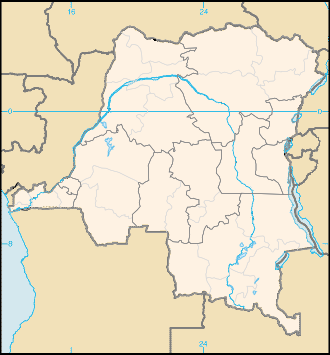


Physical characteristics and course
The river system is fed by numerous tributaries and headwaters originating in highland regions. Its mean annual discharge ranks among the highest on Earth, trailing only the Amazon, and its watershed is comparable in scale to the great basins of other major rivers such as the Mississippi River. Because much of the basin straddles the equator, rainfall patterns in different parts of the basin are staggered and the overall river flow remains relatively steady year‑round.
Sources, major tributaries and route
Many headstreams arise in the East African Rift highlands and the surrounding mountains. Traditionally the Chambeshi and the upper Lualaba are taken as principal sources; waters from lakes such as Lake Tanganyika and Lake Mweru also contribute to the upper system. Below the Boyoma Falls the Lualaba becomes known as the Congo. The river flows generally westward from Kisangani then turns southwest, receiving major tributaries including the Ubangi River. It expands into the Pool Malebo (Stanley Pool), beside which sit the capitals Kinshasa and Brazzaville, before cutting through a series of cataracts and canyons and reaching the Atlantic near the mouth at Muanda.
Basin, ecology and importance
The Congo Basin supports enormous biodiversity and one of the globe’s largest contiguous tracts of tropical rainforest. Its forests are home to endemic mammals, birds, fish and an intricate aquatic ecology shaped by the river’s currents, floodplains and seasonal lakes. The basin’s soils, fisheries and forests sustain millions of people and provide ecosystem services that are globally significant for carbon storage and climate regulation.
Human history, names and states
The river’s name derives from the historic Kingdom of Kongo at its mouth, and it has long been central to the identities of the modern states that border it; both the Democratic Republic of the Congo and the Republic of the Congo carry its name. During the 20th century the river and the country now called the DRC were frequently referred to by the name Zaire. Rivers and pools along its length have been focal points for settlement, trade and cultural exchange for centuries.
Navigation, barriers and energy potential
Navigation on the Congo is a mixture of long navigable stretches and abrupt interruptions. Cataracts such as the Livingstone Falls create natural barriers that require portage or rail links, while extensive stretches are used for inland shipping and local transport. The river’s vast flow has long attracted interest for hydroelectric development; its gradients and volume present both opportunities for large-scale power generation and challenges related to environmental and social impacts.
Notable features and facts
- Length and rank: Roughly 4,700 km, second in Africa to the Nile.
- Discharge: Enormous mean flow, second only to the Amazon in volume (see discharge).
- Basin size: A vast watershed comparable to other continental systems like the Mississippi.
- Equatorial position: Basin straddles the equator, moderating seasonal extremes.
- Headwaters and lakes: Linked to East African Highlands and mountains, and to lakes such as Tanganyika and Mweru.
- Drainage network: Includes major tributaries like the Ubangi and others that sustain floodplains and fisheries.
- Political geography: Borders or traverses countries whose identities are tied to the river, including the Democratic Republic of the Congo and the Republic of the Congo.
- Cities: Large urban centers such as Kinshasa and Brazzaville stand on opposite banks at the Pool Malebo.
The Congo River remains a subject of scientific study, conservation concern and economic interest. Its size, steady flow, and position within the African continent make it one of the planet’s most consequential rivers for biodiversity, climate and human livelihoods.
Questions and answers
Q: What is the Congo River also known as?
A: The Congo River is also known as the Zaire River.
Q: How long is the Congo River?
A: The overall length of the Congo River is 4,700 km (2,922 miles), making it the second longest river in Africa after the Nile.
Q: What rainforest area does the river flow through?
A: The Congo River and its tributaries flow through the second largest rain forest area in the world, which is second only to the Amazon Rainforest in South America.
Q: What other river has a larger watershed than that of the Congo?
A: The Amazon River has a larger watershed than that of the Congo.
Q: Where did its name come from?
A: The name of "Congo" comes from an old Kingdom called Kongo which was located at its mouth.
Q: What two countries are named after it?
A: The Democratic Republic of the Congo and Republic of Congo are both named after it.
Q: Where does it begin and end? A: It begins in East African Rift Highlands and mountains, Lake Tanganyika and Lake Mweru which feed into Lualaba River below Boyoma Falls. It ends at Muanda town near Atlantic Ocean.
Related articles
Author
AlegsaOnline.com Congo River (Zaire River) Leandro Alegsa
URL: https://en.alegsaonline.com/art/22504