
Smallpox: variola virus, disease, history, vaccination and eradication
Contagious viral disease caused by variola virus. Overview of causes, symptoms, history, vaccination and global eradication, plus modern legacy and biodefense concerns.
Overview
Smallpox was a severe contagious disease caused by the variola virus. Before its eradication, it produced fever and a characteristic pustular skin rash and was associated with high fatality in some forms. For a general introduction see overview sources. Estimates of mortality and outcomes vary by strain and period; summaries of fatality rates are discussed in epidemiological reviews (mortality data), and its status as a once-widespread epidemic disease is treated in public health histories (epidemic records).
Image gallery
10 Images


Virology and clinical features
The agent is a member of the poxvirus family and is referred to as the variola virus (Poxviridae overview). Two principal forms of the virus are recognized: Variola major (the more severe form) and Variola minor (a milder variant) — further details appear in taxonomic summaries (variola species). The term "variola" derives from historical terminology for spots and pocks (nomenclature).
Smallpox infected only humans in its later history, although poxviruses circulate in animals and the origin likely involved animal-to-human events (host range and origin). Survivors frequently experienced scarring and, in a proportion of cases, visual impairment because of eye involvement (sequelae, ocular complications).
History and impact
Throughout history smallpox caused outbreaks and was a major cause of death and disability. Modern counts for the 20th century indicate very large numbers of deaths; historians and health organizations discuss these impacts in demographic context (twentieth-century mortality). The last known naturally acquired case was recorded in the late 1970s, after a coordinated global control effort.
Vaccination, control and eradication
Prevention of smallpox began with the observation that infection with a related animal virus could protect against the human disease. Edward Jenner used material from cowpox to initiate the first widely adopted vaccination approach, a development described in histories of the vaccine and Jenner's work (Edward Jenner, cowpox). The term "vaccine" derives from the Latin vaccina, meaning related to cows (etymology).
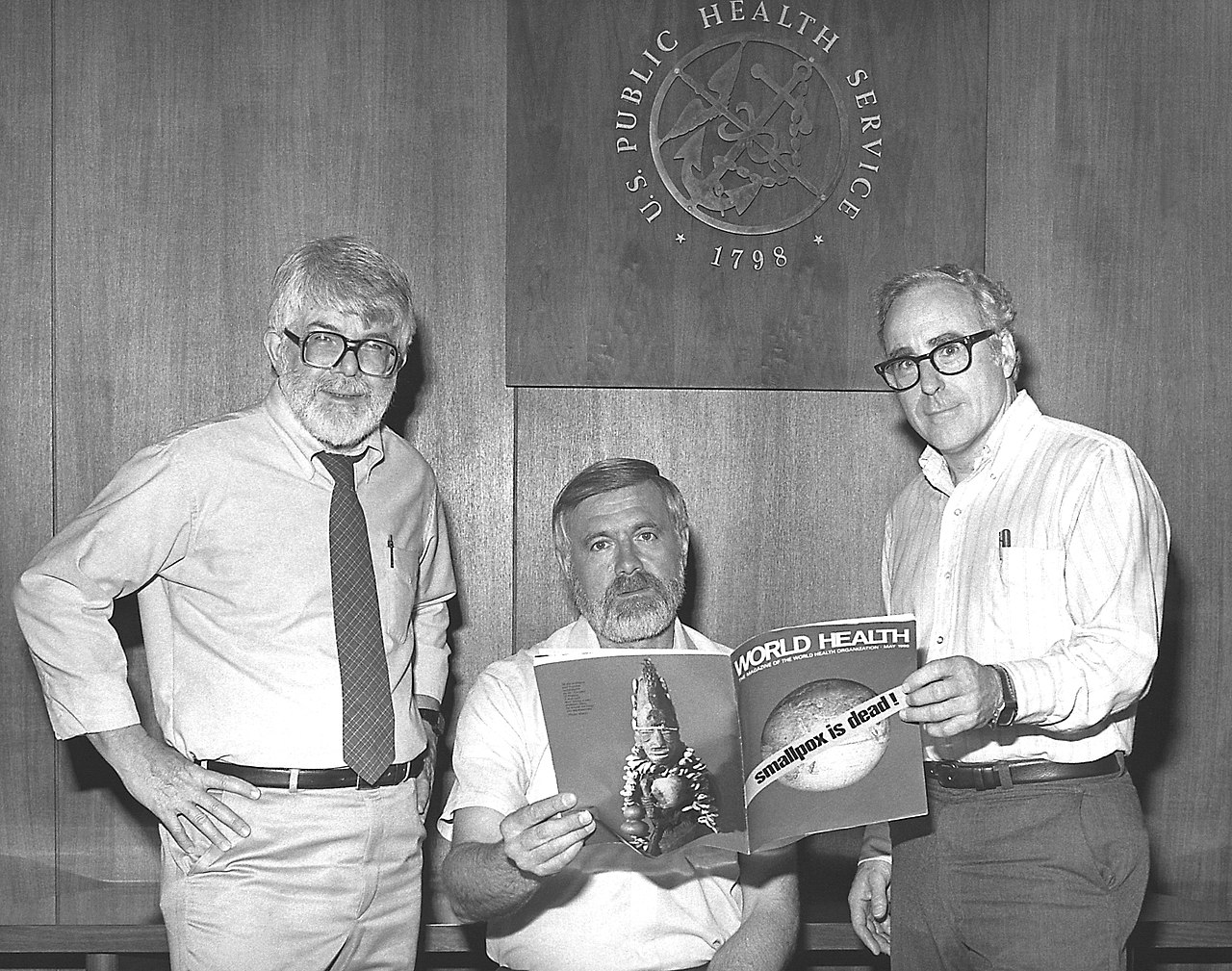
A sustained and coordinated global vaccination campaign led by the World Health Organization culminated in certification of eradication; the WHO maintains records and historical summaries of the program (WHO resources, certification). Routine vaccination ended in most countries after eradication, and live variola virus is retained under strict containment in a small number of high-security laboratories.
Uses, legacy and contemporary concerns
After eradication smallpox continued to be relevant to public health policy, research and security discussions. There are ongoing debates and protocols about retained viral stocks, risk assessment and preparedness. Concerns about deliberate use in conflict or terrorism have been raised in policy literature (biodefense discussions). Technical and ethical reviews of containment, research and emergency vaccination strategies are available in specialist sources (vaccine history and policy).
Characteristics and notable facts
- Clinical hallmark: prodromal fever followed by a progressive, often confluent, pustular rash.
- Two primary etiologic variants: Variola major and Variola minor (taxonomy).
- Transmission was primarily person-to-person by respiratory droplets and contaminated materials.
- Eradication was achieved by targeted vaccination, surveillance and containment coordinated by public health agencies (WHO, certification).
- Legacy topics include scarring and blindness in survivors (sequelae, eye damage), and the origin of the word "vaccine" (etymology).
For further background, readers can consult historical overviews and current reviews on virology, eradication and preparedness efforts (nomenclature, virus family, historical impact, general review, mortality summaries, epidemic history, host studies, cowpox relationship, Jenner biography, vaccine programs, security analyses, clinical complications, survivor outcomes, vaccine etymology, eradication certification, WHO archives).
Related articles
Author
AlegsaOnline.com Smallpox: variola virus, disease, history, vaccination and eradication Leandro Alegsa
URL: https://en.alegsaonline.com/art/91192
Sources
- cnn.com : CNN.com
- who.int : WHO smallpox FAQ