
Social distancing (physical distancing): purpose, measures, history and effects
Non-pharmaceutical practice to reduce person-to-person spread of respiratory and contact-transmitted infections; covers mechanisms, common measures, history, benefits, harms and distinctions.
Social distancing, often called physical distancing, refers to strategies that reduce close contact between people to slow the spread of contagious diseases. The primary aim is to lower the rate at which infections pass from person to person so that fewer people are ill at the same time and health services are less overwhelmed. This approach is one component of public health response and is usually combined with vaccination, testing, treatment, mask use and hygiene measures. For an overview of transmission dynamics see more on disease spread.
Image gallery
10 Images





How it works
Social distancing interrupts the pathways that many respiratory and contact-transmitted pathogens use. It reduces opportunities for exposure to respiratory droplets produced by coughing, sneezing or speaking, and it limits direct physical contact and shared use of contaminated surfaces. It is less effective against infections transmitted primarily through contaminated food, water or insect vectors. For distinctions among modes of transmission consult pathogen transmission guidance and surface and fomite research.
Common measures
Measures range from individual behaviors to community-wide policies. Typical actions include:
- Keeping physical distance during interactions and reducing occupancy in public places.
- Canceling or postponing large gatherings such as concerts, sporting events and conferences.
- Closing or modifying attendance at schools, workplaces and places of worship, and promoting remote work or learning.
- Isolation of people known to be infected (isolation guidance) and quarantine of those exposed (quarantine guidance).
- Travel advisories and restrictions to limit long-distance spread.
- Targeted measures such as cordons sanitaires or protective sequestration to shield vulnerable groups.
History and development
Physical distancing has been used for centuries in various forms, but it became prominent in modern public health during influenza pandemics and later outbreaks of severe respiratory illnesses. Public health authorities adapted the approach during events such as the 1918 influenza pandemic, SARS in 2003, and the global COVID-19 pandemic, refining guidance on timing, duration and combinations with other interventions. The term "physical distancing" emerged to emphasize maintaining distance while preserving social connections through remote technologies.
Benefits, limitations and harms
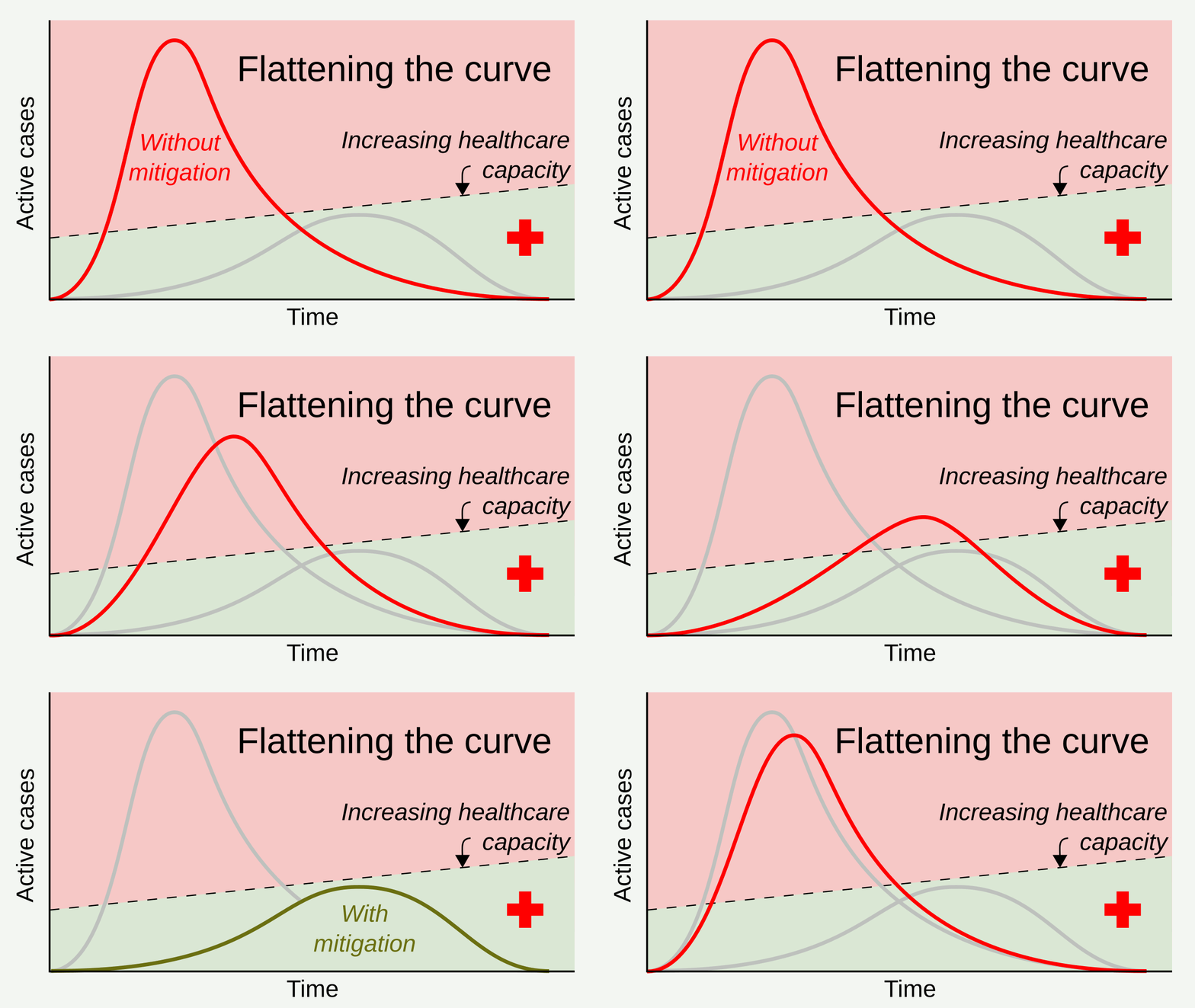
When implemented well and at the right time, distancing can "flatten the curve"—reducing peak demand on healthcare systems and saving lives. Limitations include reduced effectiveness for non-respiratory transmission routes, variable compliance, and the need for complementary measures like masks and hand hygiene. Distancing policies can produce significant economic, educational and mental-health consequences, disproportionately affecting low-income groups, workers unable to work remotely, and people needing social support. For resources on social and economic impacts see impact studies.
Practical considerations and notable facts
Decisions about which distancing measures to use balance epidemiological benefits with social costs. Short, targeted interventions combined with strong testing, contact tracing and support for affected individuals tend to be more sustainable than prolonged, blanket closures. Clear communication, financial assistance, accessible testing, and attention to mental-health services improve adherence and reduce harms. For policy frameworks and legal aspects consult public health policy resources and operational guidance.
Summary: Social (physical) distancing is a flexible set of tools to reduce person-to-person transmission of many infectious diseases. Its success depends on timing, scope, complementary measures and support systems that mitigate social and economic harms.
Related articles
Author
AlegsaOnline.com Social distancing (physical distancing): purpose, measures, history and effects Leandro Alegsa
URL: https://en.alegsaonline.com/art/91426
Sources
- washingtonpost.com : "Social distancing could buy U.S. valuable time against coronavirus"
- churchofjesuschrist.org : Pandemic Planning – Social Distancing Fact Sheet
- cidrap.umn.edu : "Information about Social Distancing"
- cdc.gov : "Interim Pre-Pandemic Planning Guidance: Community Strategy for Pandemic Influenza Mitigation in the United States—Early, Targeted, Layered Use of Nonpharmaceutical Interventions"
- ncbi.nlm.nih.gov : "Morbidity and mortality characteristics of Asian strain influenza"
- doi.org : 10.2307/4590751
- jstor.org : 4590751
- pubmed.ncbi.nlm.nih.gov : 19316351
- ncbi.nlm.nih.gov : "Effect of school closure on the incidence of influenza among school -age children in Arizona"
- doi.org : 10.1177/003335491012500612
- pubmed.ncbi.nlm.nih.gov : 21121230
- reuters.com : "Closing schools won't stop pandemics: study"
- doi.org : 10.1097/jom.0b013e3181f43844