
Sphygmomanometer: instrument for measuring blood pressure
A sphygmomanometer measures arterial blood pressure by inflating a cuff and recording systolic and diastolic values. Types include mercury, aneroid and digital; proper technique and cuff size affect accuracy.
Overview
A sphygmomanometer is the clinical instrument used to determine arterial blood pressure by applying a pressurizable cuff to a limb and recording the pressure at which blood flow changes. Readings are reported as two numbers — systolic pressure (the peak during heart contraction) and diastolic pressure (the lowest pressure during relaxation). Values are expressed in millimetres of mercury (mmHg), a convention that reflects the original mercury manometers used in early devices.
Image gallery
8 Images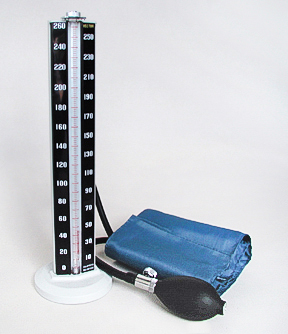




Design and main components
Most sphygmomanometers have several common parts: a fabric cuff that wraps around the upper arm (or sometimes wrist or thigh), an inflatable bladder inside the cuff, a means of inflation (a rubber bulb for manual models or an electric pump for automatic devices), and a pressure indicator. The indicator can be a vertical mercury column (mercury sphygmomanometer), an aneroid gauge with a mechanical dial, or a digital display that reports computed values. When using the auscultatory technique, a separate stethoscope is used to listen for characteristic sounds generated as cuff pressure is released.
How measurement works
In the common auscultatory method, the cuff is inflated until arterial blood flow is temporarily occluded. As pressure is slowly released, the first audible pulse sound (Korotkoff sound) marks the systolic pressure; when sounds disappear or markedly change quality, that point is taken as the diastolic pressure. Automatic oscillometric devices do not rely on sound: they detect small oscillations in cuff pressure caused by arterial wall motion and use algorithms to estimate systolic and diastolic values. Proper technique — correct cuff size and placement at heart level, the patient rested and seated quietly, and avoiding recent caffeine or smoking — improves reliability of readings.
Types, accuracy and safety
Mercury sphygmomanometers have long been regarded as a reference standard because of their simple, direct measurement, but environmental and safety concerns have reduced their use. Aneroid gauges are portable and widely used in clinics but require routine calibration because mechanical parts can drift. Digital oscillometric monitors are popular for home use and ambulatory monitoring; they are convenient but can vary in accuracy depending on the model, the patient's blood flow characteristics, and arm movement. Selecting the correct cuff size is crucial: cuffs that are too small overestimate pressure, and overly large cuffs can underestimate it.
History and development
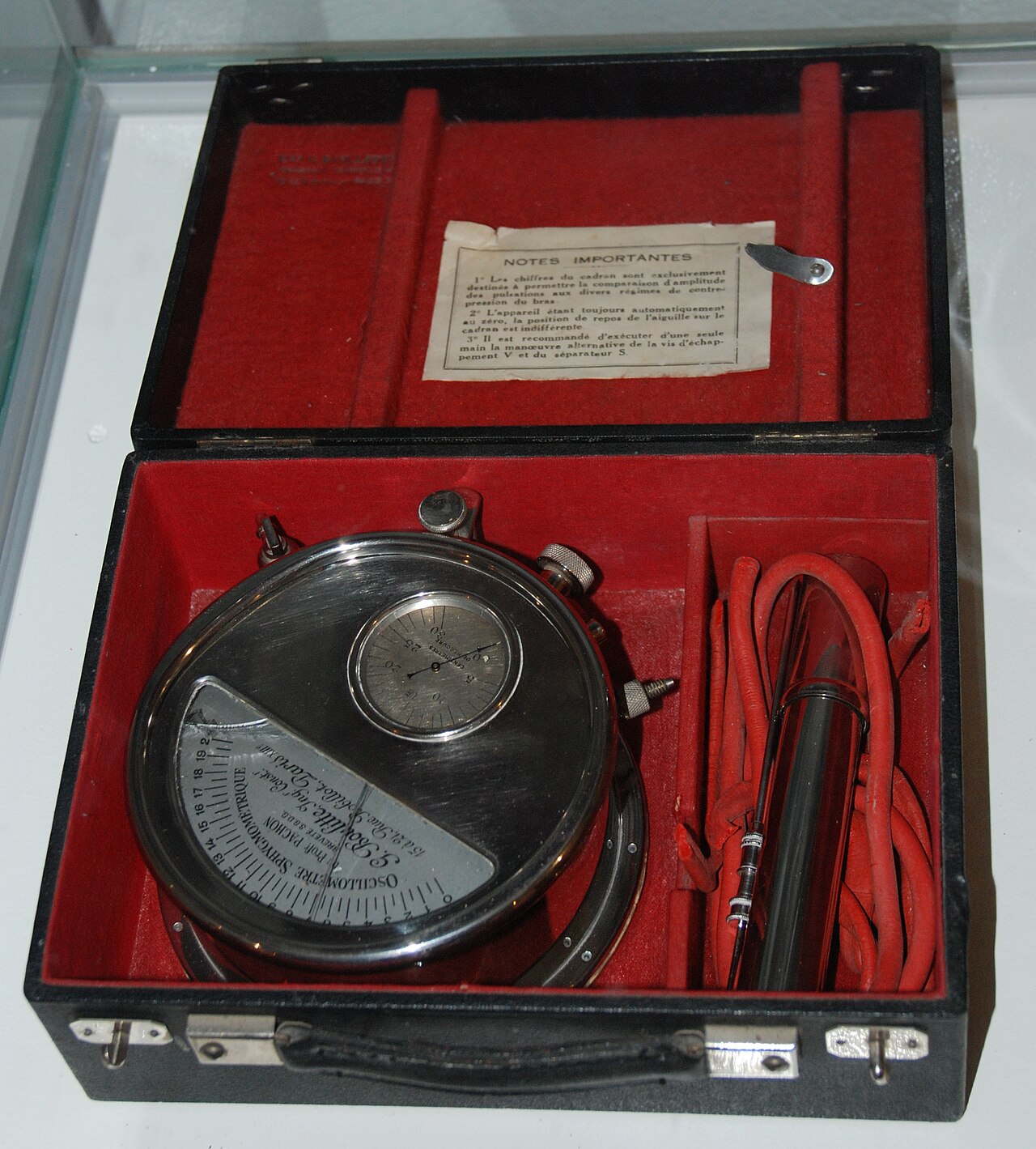
Early sphygmomanometer concepts appeared in the late 19th century. An Austrian physician produced one of the first pressure instruments in 1881 that contributed to instrument-based blood pressure measurement. The modern cuff-based technique was advanced in the 1890s and early 20th century with the introduction of the inflatable arm cuff and the adoption of the auscultatory method; the audible sounds used to mark systolic and diastolic pressures were described by Korotkoff in 1905. Since then, improvements in materials, portable design and electronics led to the automatic and ambulatory monitors commonly used today.
Clinical uses and notable facts
Sphygmomanometers are essential for screening and managing high blood pressure (hypertension), a major risk factor for heart attack, stroke and other cardiovascular conditions. They are used in hospitals, clinics, pharmacies and homes. Ambulatory blood pressure monitors provide multiple readings over 24 hours and can reveal patterns missed by single clinic measurements. For accurate diagnosis and treatment decisions, clinicians often rely on repeated measurements, standardized procedures and, when needed, comparison with calibrated reference devices.
Further reading and resources
- General overview of blood pressure measurement
- Cuff design and sizing guidance
- Components: bladders, bulbs and gauges
- Auscultatory technique and Korotkoff sounds
- Oscillometric monitors and algorithms
- Practical tips for accurate home measurement
- Clinical protocols and positioning
- Mercury manometer history and standards
- Aneroid gauge maintenance and calibration
- Digital device evaluation and validation
- Ambulatory blood pressure monitoring
- Historical timeline of blood pressure instruments
- Environmental considerations for mercury devices
- Standards and regulatory guidance
- Patient education resources on hypertension
Related articles
Author
AlegsaOnline.com Sphygmomanometer: instrument for measuring blood pressure Leandro Alegsa
URL: https://en.alegsaonline.com/art/92648