
Saint Lawrence River: geography, history, and significance
Overview of the Saint Lawrence River: course, cities, navigation, ecology, history, and its role linking the Great Lakes to the Atlantic Ocean.
Overview
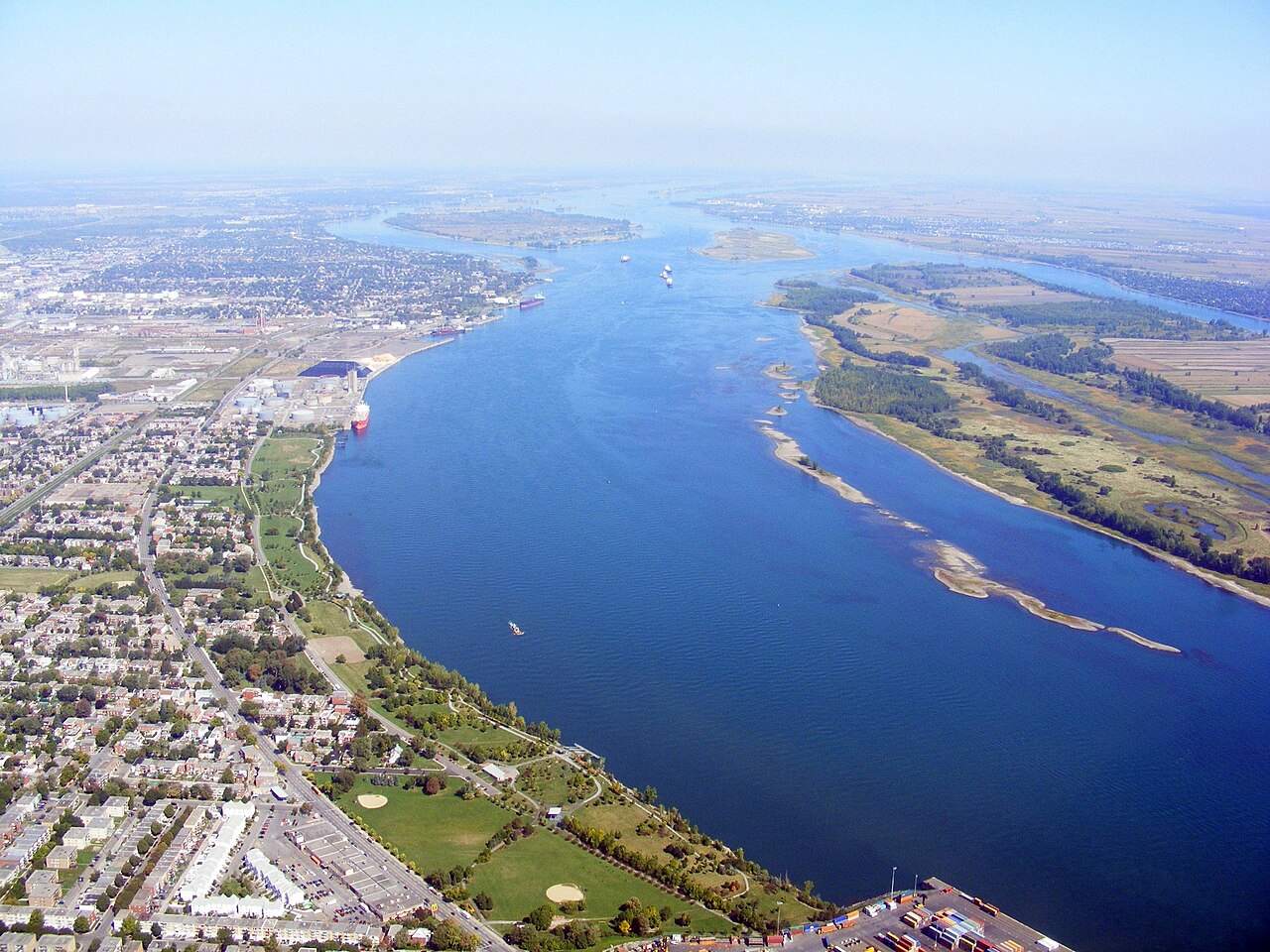
The Saint Lawrence River is one of the principal waterways of eastern North America. Known in French as the fleuve Saint‑Laurent and by several Indigenous names such as Kahnawáʼkye and Kaniatarowanenneh, it links the interior basin of the continent to the sea. The river system functions as the main outlet of the Great Lakes and flows through regions of eastern North America, shaping settlement, transportation and ecology for millennia. As a large river and estuarine complex, it crosses and borders political territories in both Canada and the United States, including the Canadian provinces of Quebec and Ontario and the U.S. state of New York (state jurisdictional boundaries vary along parts of the course).
Image gallery
10 Images





Course and physical characteristics
The main stem begins at the outflow of Lake Ontario near Kingston and proceeds northeast, widening into a complex estuary before opening into the Gulf of Saint Lawrence and the Atlantic Ocean. Including its estuary, the river and connected channels measure more than three thousand kilometres of navigable and ecological corridor. The upper reaches are characterized by freshwater flow and a series of rapids and channels; downstream the river becomes broader and brackish as tides and saltwater from the gulf influence the estuary area. The term estuary describes the wide transitional zone where riverine and marine environments meet, creating important habitat gradients.
Major cities and landmarks
Numerous urban centres and historic sites are situated on the riverbanks. Important cities include Montreal, an island metropolis; Quebec City, a fortified and historic port on the narrowing of the estuary; Kingston at the outlet of Lake Ontario; and Trois‑Rivières, whose name reflects the local channel pattern. The river has long supported ports, shipyards and riverfront industry, and remains a focal point for commerce and tourism.
History and cultural significance
Indigenous peoples used the Saint Lawrence as a transportation and trade corridor long before European contact. European exploration in the 16th century opened the waterway to sustained contact and settlement; the riverʼs name and many place names reflect this layered history. Over centuries the valley shaped patterns of colonization, military strategy and economic development. Today the river continues to hold cultural importance for Indigenous nations, francophone and anglophone communities, and new urban and rural populations.
Navigation, infrastructure and economy
To permit large vessels to transit between the Atlantic and the inland seas, mid‑20th century engineering projects including locks, canals and channel improvements were developed as part of the Saint Lawrence Seaway. These works allow ocean‑going ships to reach ports far inland, supporting international trade, regional industry and recreational navigation. The river corridor also supports fisheries, hydroelectric development on tributaries, and a network of smaller harbours and marinas.
Ecology and environmental issues
The Saint Lawrence basin supports diverse ecosystems ranging from freshwater marshes and hardwood floodplains upstream to tidal flats and marine habitats in the estuary and gulf. It is an important migratory route for fish species and a wintering and feeding area for birds and marine mammals, including populations of beluga in the lower estuary. Industrialization, urban growth, agricultural runoff and shipping have introduced pollution, habitat loss and invasive species; these pressures are the focus of ongoing binational conservation and management initiatives. Scientific monitoring, habitat restoration and coordinated policy between federal, provincial and state authorities aim to balance economic use with ecological protection.
Governance, research and public engagement
Management of the river involves multiple jurisdictions and stakeholders. Provincial and state agencies, national governments, Indigenous authorities, municipal governments and non‑government organizations collaborate on navigation safety, water quality, fisheries, and emergency response. For more detailed information on regulations, research programs and regional initiatives consult provincial sources and official agencies, whose publications provide technical reports, maps and guidance for the public.
Contemporary challenges and outlook
Climate change, including altered precipitation patterns and warming waters, presents emerging challenges for flood risk, ice cover, species distributions and infrastructure resilience. Continued investment in monitoring, adaptive management and cross‑border cooperation will shape how the Saint Lawrence supports people and nature in the decades ahead. The river remains a vital link between inland North America and the Atlantic, with enduring importance for commerce, culture and biodiversity.
Related articles
Author
AlegsaOnline.com Saint Lawrence River: geography, history, and significance Leandro Alegsa
URL: https://en.alegsaonline.com/art/85810
Sources
- atlas.nrcan.gc.ca : Rivers