
Great Lakes (North America)
A concise overview of the five interconnected freshwater lakes of eastern North America: geography, origin, uses, environmental challenges, and distinguishing facts.
Overview
The Great Lakes are a system of five vast freshwater lakes in east-central North America that form the largest group of freshwater lakes by surface area. Together they contain about 21% of the world's surface fresh water and supply drinking water, transport routes, and recreational opportunities to millions of people. They lie within a shared basin that spans the United States and Canada and are central to regional culture, economy, and ecology. For a general reference to their grouping see the five large lakes and their continental setting at east-central North America.
Image gallery
10 Images


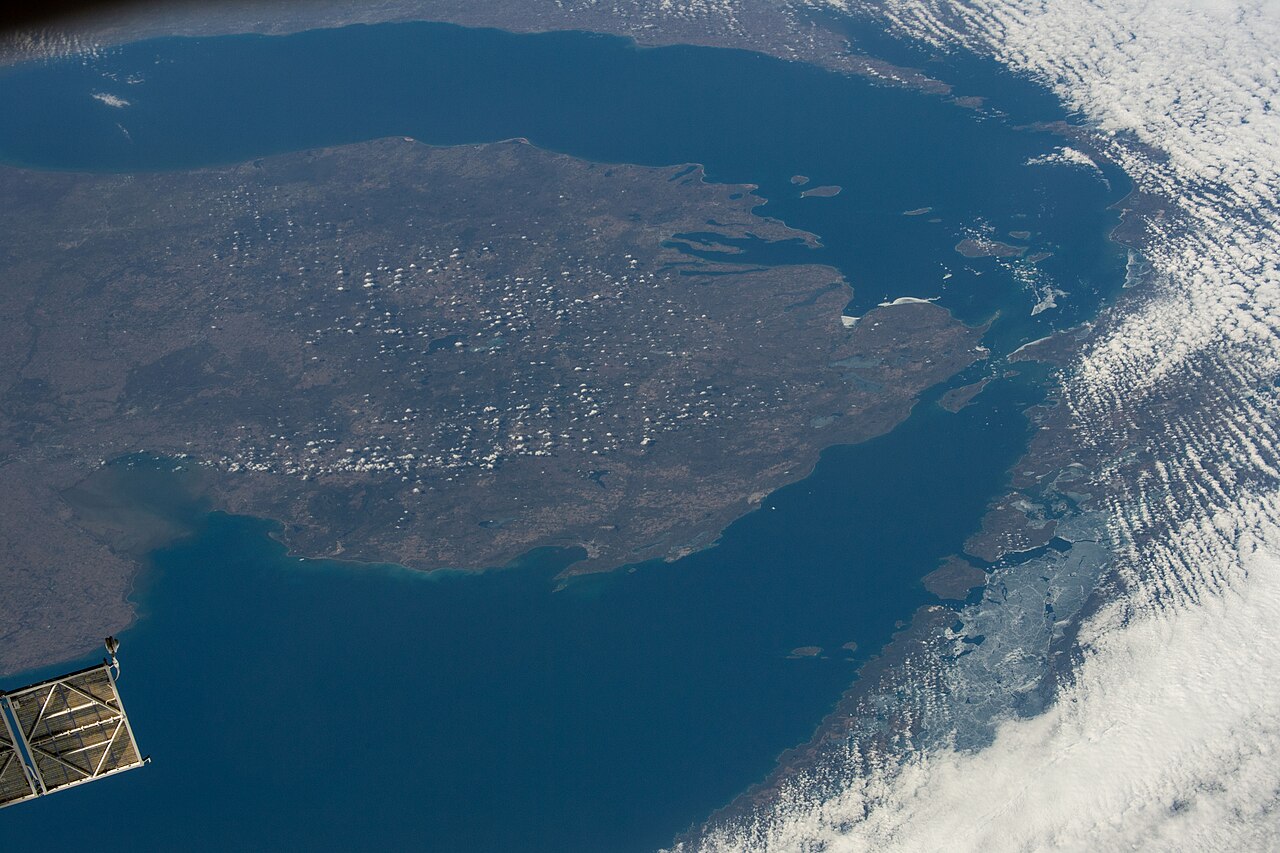
Names and connections
The lakes are hydraulically linked by rivers and straits and they drain toward the Atlantic Ocean via the St. Lawrence River. Their combined volume and area make them a globally significant repository of fresh water, accounting for roughly 21% of the world's surface fresh water supply.
Formation and geography
The basins occupied by the Great Lakes were carved by continental glaciers during the last Ice Age; retreating ice and meltwater left deep troughs that later filled, producing varied shorelines, islands, and offshore shoals. The region includes riverine corridors, wetlands, and coastal plains, and features well-known falls and rapids where rivers flow between lakes. Lake Michigan is the only one located entirely within the United States; the others border both the U.S. and Canada.
Uses and importance
The lakes support commercial shipping, with a series of canals and locks that allow ocean-going vessels to access inland ports and industrial centers. They are vital for municipal water supplies, agriculture, fisheries, and tourism. Cities and ports along the shores have historically relied on the lakes for transportation of raw materials and manufactured goods, as well as for recreation and waterfront economies.
Environmental challenges and management
The Great Lakes face pressures from invasive species, nutrient runoff that can cause algal blooms, industrial pollution, habitat loss, and climate-driven changes in water level and temperature. Both countries cooperate through binational agreements and agencies to monitor water quality, control invasive organisms, and restore habitat. Continued governance, scientific monitoring, and community engagement are central to maintaining the lakes' ecological health and the services they provide.
Notable facts and distinctions
In addition to their collective global importance, individual lakes have distinguishing features: some are the largest by surface area or volume among freshwater lakes, one contains unique deep basins and another is connected to famous waterfalls. The Great Lakes remain a focus of scientific study, conservation efforts, and cultural identity for the regions that surround them.
For introductory maps, management information, and detailed studies, consult regional resources linked to more specialized entries and agencies through official portals such as regional lake authorities and binational programs referenced at cross-border initiatives.
Related articles
Author
AlegsaOnline.com Great Lakes (North America) Leandro Alegsa
URL: https://en.alegsaonline.com/art/40519
Sources
- epa.gov : "Great Lakes – U.S. EPA"
- biology.usgs.gov : "LUHNA Chapter 6: Historical Landcover Changes in the Great Lakes Region"
- epa.gov : "Great Lakes: Basic Information: Physical Facts"
- jsonline.com : jsonline.com/news/wisconsin/lakes-michigan-huron-hit-record-low-level-dq8loc2-189903561.h…
- encyclopedia.chicagohistory.org : "Seiches"
- greatlakeseducation.org : "Our threatened Great Lakes"
- glc.org : "Great Lakes aquatic nuisance species"
- pbs.org : "Tiny mussels invade Great Lakes, threaten fishing industry"