
Relative humidity
Relative humidity describes how much water vapor air contains compared with the maximum it could hold at that temperature; it affects weather, comfort, and many technical processes.
Overview
Relative humidity (RH) is a common way to express the amount of water vapor present in air relative to the maximum amount that air can hold at the same temperature. It is usually given as a percentage: 0% indicates essentially dry air, while 100% means the air is saturated and additional cooling or added vapor will cause condensation. Because the capacity of air to hold water vapor depends strongly on temperature, RH can change even when the absolute amount of moisture stays constant.
Image gallery
10 Images



Physical basis and formula
Conceptually, RH is the ratio of the actual partial pressure (or mass) of water vapor to the saturation vapor pressure (or saturation mixing ratio) at the same temperature, multiplied by 100 to convert to percent. A simple expression used in meteorology and engineering is RH = (actual vapor pressure / saturation vapor pressure) × 100%. When air is cooled to its dew point, the saturation vapor pressure equals the actual vapor pressure and RH reaches 100%, allowing condensation to form as dew, fog, or cloud droplets.
Measurement and common instruments
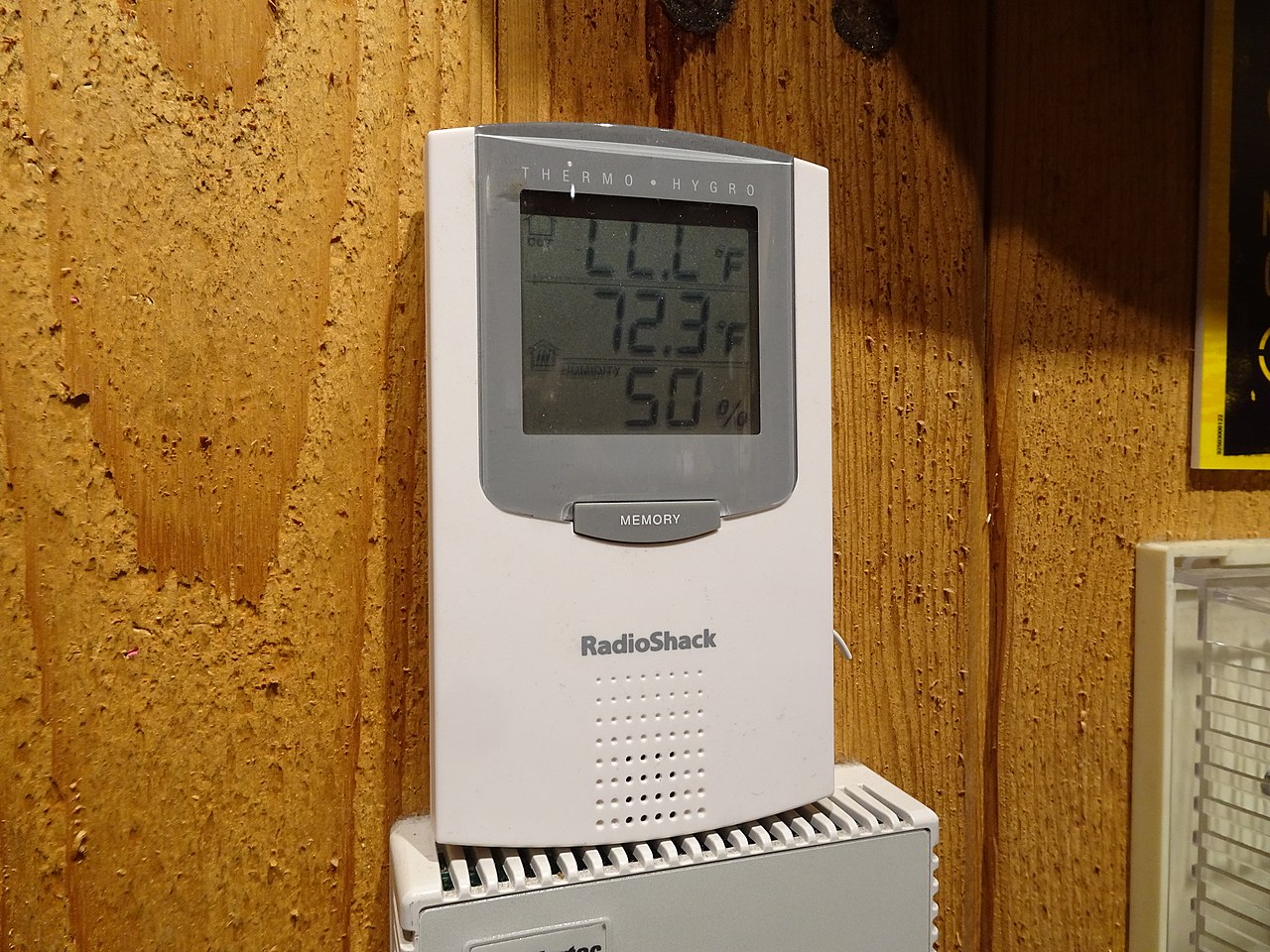
Relative humidity can be measured directly by electronic sensors that respond to moisture, or indirectly using thermodynamic methods. Common instruments and techniques include:
- Hygrometers (mechanical and electronic), which use materials or circuits that change with moisture.
- Sling psychrometers and wet‑and‑dry bulb thermometers, which infer RH from temperature differences.
- Capacitive, resistive, and chilled‑mirror sensors used in weather stations and HVAC equipment.
Effects, examples and importance
Relative humidity influences comfort, health, materials, and weather. Typical practical effects include:
- Human comfort: low RH can dry skin and mucous membranes; high RH can make temperatures feel warmer and promote mold growth.
- Building and materials: persistent high RH can damage wood, textiles, and stored goods; low RH can cause shrinkage and static electricity.
- Weather and climatology: RH is a key factor in cloud and precipitation formation and in forecasting fog and dew.
- Industrial processes: many manufacturing, storage, and laboratory operations require RH control for quality and safety.
Distinctions and notable points
Relative humidity is different from absolute humidity and specific humidity, which measure the actual amount of water vapor per unit volume or mass of air. RH is temperature dependent: warming a parcel of air lowers its RH if no moisture is added, while cooling it raises RH. Because of this dependence, indoor heating in winter often reduces RH and can make environments feel drier even though outdoor moisture content may be unchanged. Typical comfort ranges are often cited around 30–60% RH, but precise targets depend on activity, occupancy, and building design.
Further reading and resources
- Basic definition and explanation
- Meteorological usage and charts
- Weather reports and humidity
- Temperature effects on humidity
- Water vapor properties
- Relative humidity calculations
- Impacts on indoor air quality
- Dew and condensation phenomena
- Dew point concepts
- Condensation and physics
- Precipitation mechanisms
- Rain formation and humidity
- Snow formation and cold air effects
Related articles
Author
AlegsaOnline.com Relative humidity Leandro Alegsa
URL: https://en.alegsaonline.com/art/82005