
Rhythmite (rhythmic sedimentary layering)
Rhythmite: repeated layers of sediment or sedimentary rock produced by regular environmental cycles (annual varves, tides, seasonal floods), used to read past environments and climate.
Overview
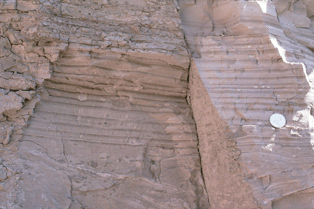
A rhythmite is a sequence of sediment or sedimentary rock deposited in a regular, repeating pattern. These repeating units can form at annual, seasonal, tidal, or multi-year frequencies and record the cyclic behavior of the environment at the time of deposition. Scientists study rhythmites to reconstruct past processes such as climate change, glacial melt, tidal regimes, and flood rhythms.
Image gallery
5 Images


Characteristics and types
Rhythmites vary in thickness, composition and regularity. One well known type is the varve, a pair of layers representing one year of deposition in some lakes. Other rhythmites are formed by tidal action, producing thin alternations that reflect daily or monthly tidal cycles. Rhythmic sequences also arise from seasonal floods, storm deposits, or repeated volcanic ash layers.
How they form
Formation depends on a cyclic forcing and a depositional environment capable of preserving the cycles. Fine suspended material laid down in calm water can form varves, while alternating grains and mud may indicate ebb and flood currents. Rhythmites can develop in lakes, estuaries, continental shelves and some floodplains. The raw material is ordinary sediment or consolidated sedimentary rock whose arrangement preserves the repetition.
Importance and uses
Rhythmites are valuable for dating and environmental reconstruction. Varve sequences may provide annual chronologies used in paleoclimatology. Tidal rhythmites can reveal paleotidal ranges and bedform migration. In addition, rhythmites help correlate rock layers across regions and can indicate cyclic drivers such as orbital changes, seasonal runoff, or regular storm patterns.
Distinctions and notable facts
- Not all layered rocks are rhythmites: rhythmic appearance must reflect a repeating depositional signal rather than later chemical banding or deformation.
- Short-term rhythmites record daily to seasonal processes; long-term rhythmicity may reflect astronomical or climatic cycles.
- Modern tidal and lacustrine settings provide contemporary analogs for interpreting ancient rhythmites, since tides and other cyclic processes still produce similar patterns today.
Because they preserve consistent, repeated signals, rhythmites are a key tool in stratigraphy and environmental geology for reading Earth's recent and ancient history.
Related articles
Author
AlegsaOnline.com Rhythmite (rhythmic sedimentary layering) Leandro Alegsa
URL: https://en.alegsaonline.com/art/82565